
State-run Hindustan Aeronautics Limited (HAL) has been knocked out of the race to develop India’s fifth-generation fighter aircraft under the Advanced Medium Combat Aircraft (AMCA) programme. Three consortiums
have been shortlisted, with the final player expected to be selected in the next three to four months. The first prototype is expected in the next three to four years.
“We were surprised by the private sector response. We’ve done the initial pre-qualification and there are three remaining. Thereafter, you can expect the RFP to be issued to all three companies for submitting cost bids for production of five prototypes of the AMCA aircraft,” Defence Secretary Rajesh Kumar told CNBC-TV18.
While the Defence Secretary did not name the shortlisted firms, sources said multiple public and private entities had participated in the process, including HAL, Tata Advanced Systems, Adani Defence, Larsen & Toubro in partnership with Bharat Electronics Limited, and other consortiums. HAL, however, failed to make the final cut.
The Defence Secretary also indicated that the first AMCA prototype is expected to roll out in the next three to four years, with production timelines linked to successful testing and evaluation.
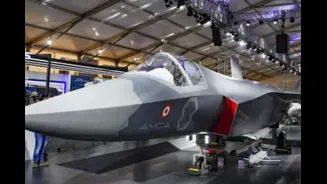
The Advanced Medium Combat Aircraft is India’s indigenous fifth-generation stealth fighter project aimed at meeting the long-term combat needs of the Indian Air Force.
The AMCA programme is being steered by the Aeronautical Development Agency under the Defence Research and Development Organisation (DRDO). The aircraft is envisaged as a twin-engine stealth fighter with advanced avionics, sensor fusion, internal weapons bays, long-range strike capability and manned-unmanned teaming, and is expected to form the backbone of the IAF from the mid-2030s.
HAL’s exclusion is significant given its central role in India’s combat aviation ecosystem. The PSU is currently responsible for manufacturing and sustaining the Light Combat Aircraft Tejas, upgrading the Su-30MKI fleet, producing the HTT-40 basic trainer, and delivering Light Combat Helicopters and Advanced Light Helicopters to the armed forces.
However, several HAL-led programmes have faced delays over the years, particularly the LCA Tejas Mk-1A, where production ramp-up has lagged behind Indian Air Force expectations due to supply chain and engine availability issues. The Tejas Mk-2 programme is also yet to take flight, even as timelines have been revised. These delays have repeatedly drawn scrutiny from the government and the IAF at a time when fighter squadron strength remains under pressure.
Officials familiar with the AMCA evaluation process said technical capability, financial strength, order book, and the ability to absorb complex aircraft design and manufacturing were key criteria, with an emphasis on ensuring dedicated capacity for the ambitious project.
CNN-News18 reached out to HAL for a response on its exclusion from the AMCA race, but the company had not responded till the time of filing this report.