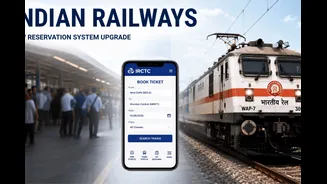








Indian Railways is upgrading its decades-old Passenger Reservation System (PRS) with a new cloud-enabled platform aiming to end the familiar frustration of website crashes and slow responses during Tatkal
rushes.
The cloud-enabled upgrade, developed by the Centre for Railway Information Systems (CRIS), can process over 1.5 lakh ticket bookings per minute, nearly five times the current capacity of about 32,000 and handle more than 40 lakh enquiries per minute, up from around 4 lakh. Between June 2025 and June 2026, passengers booked 65.08 crore reserved tickets, with 89% (57.90 crore) purchased online. Around 20.5 lakh passengers use the system daily, and 73% of transactions are cashless.
Rollout started in August 2026 on a train-by-train basis, with gradual load testing to ensure stability. The new IRCTC beta website, launched in mid-July 2026, is part of the transition. Early data shows improvements: Tatkal bookings completed within the first three minutes rose by over 5%, those within five minutes by about 3%.
What Is Changing For Train Travellers?
The existing PRS can process around 32,000 bookings per minute. The upgraded system is designed to handle over 1.5 lakh bookings a minute, almost five times the current capacity. Its enquiry-handling capacity is also expected to rise from around 4 lakh to more than 40 lakh enquiries per minute, covering services such as seat availability, PNR status, RAC and waitlist updates.
For passengers, the biggest difference could be during rush periods. Tatkal booking often sees a huge surge in simultaneous users, which can slow down or disrupt the existing system. The higher-capacity PRS is designed to manage these traffic spikes more effectively, potentially making it easier for travellers to complete bookings during peak demand.
Will IRCTC Become Faster?
The upgrade is being introduced gradually rather than switching all trains to the new system at once. The new IRCTC beta website, launched in July 2026, has a simpler interface, fewer booking steps and seat availability across classes. Early data reported by Business Today showed improvements in Tatkal bookings completed within the first three and five minutes.
The new infrastructure is also being tested under different traffic loads before more booking traffic is moved to it. This phased approach is intended to minimise disruption while the system is scaled up.
For travellers, the changes mean faster, more reliable booking, especially during peak windows. The system features a multilingual, user-friendly interface and greater scalability.
Tatkal And Advance Booking
Some passenger-facing changes have already been introduced. The Advance Reservation Period (ARP) was reduced from 120 days to 60 days, while Aadhaar authentication and OTP verification have been added to Tatkal bookings to improve transparency and limit automated or unauthorised bookings.
The scale of the upgrade is significant. Between June 2025 and June 2026, around 65.08 crore reserved tickets were booked through PRS, with nearly 89% booked online. As more trains shift to the upgraded platform, travellers can expect faster booking, improved response during peak demand and a more user-friendly reservation experience.