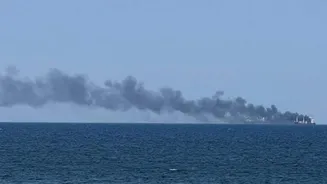








India’s crude oil imports from Russia and Latin America rose sharply during the April-June quarter, while purchases from the Middle East declined as supply disruptions linked to the Iran war affected shipments
through the Strait of Hormuz, according to a Reuters report.
India, which had earlier reduced Russian oil purchases to avoid the risk of higher US tariffs, increased imports from Moscow after Washington granted a temporary waiver. The additional Russian supplies helped bridge the shortfall from Gulf producers caused by restricted flows through the strategically important waterway.
At a time when several global buyers continue to avoid Russian crude because of Western sanctions and geopolitical concerns, Indian refiners have stepped up purchases to record levels. The move has provided Russia with a dependable market while allowing Indian refiners to secure crude at comparatively lower prices.
According to a Bloomberg report, more than 2.3 million barrels of Russian crude worth $5.14 billion reached Indian ports in June. Shipments in July are expected to remain close to those levels as Russia continues redirecting exports after losing much of its European market.
Discounted crude
The biggest reason behind India’s higher imports from Russia is the lower price of Russian crude. Russian oil continues to be sold at a discount compared to several other grades of crude, making it attractive for Indian refiners. Lower crude costs improve refinery margins while helping maintain stable fuel supplies in one of the world’s fastest-growing energy markets.
The latest rise has also been driven by disruptions in the Middle East following the Iran war. Tensions in the region have affected shipping routes and reduced the availability of Gulf crude. As a result, Indian refiners have increased purchases not only from Russia but also from Latin American producers to diversify supplies. During the April-June quarter, imports from the Middle East fell significantly.
In June, Russian crude accounted for around half of India’s total oil imports, further strengthening Moscow’s position as New Delhi’s largest supplier. The increase also comes as Brent crude climbed above $90 per barrel amid escalating US-Iran tensions.
Reuters reported that India’s Russian oil imports reached about 2.70 million barrels per day in June, with Russia supplying more than half of the country’s total crude imports during the period.
India a key market for Russia
India’s growing demand for discounted crude has become increasingly important for Russian exporters.
Since European countries imposed sanctions after the Ukraine war, Russia has increasingly relied on Asian buyers. Before 2022, India imported only limited volumes of Russian oil. It has since emerged as one of Moscow’s biggest customers.
Steady purchases by Indian refiners have helped Russia maintain export volumes despite restrictions on Western shipping, insurance and financial services.
Russian oil sanctions
Questions over sanctions continue to surround Russian oil trade, but Indian officials have repeatedly maintained that purchases are based on commercial considerations.
Earlier this year, a temporary US waiver allowed certain Russian crude shipments to continue. Even after the waiver expired, India indicated that its procurement strategy would remain centred on energy security, competitive pricing and supply availability rather than political developments.
Industry observers say India’s diversified sourcing strategy and adequate crude inventories have reduced immediate concerns over supply disruptions.
Will it keep petrol prices in check in India?
Record imports of discounted Russian crude are expected to help keep petrol prices relatively stable, but only as long as discounted supplies continue to reach India.
Cheaper Russian crude provides refiners with lower-cost feedstock, easing pressure on domestic fuel prices. However, it does not automatically translate into lower petrol prices because retail fuel rates are also influenced by international benchmark crude prices, refining costs, freight charges, inventory cycles and government taxes.
If discounted Russian oil remains available, it could cushion India against disruptions in the Middle East and delay any sharp increase in fuel prices. However, if discounts narrow, sanctions tighten or shipping risks increase again, India’s fuel import bill could rise quickly.
For now, the surge in Russian crude imports offers India an important buffer against supply disruptions caused by the Iran conflict. But it is not a permanent shield, and a prolonged global oil shock could still put upward pressure on petrol prices.