





The Union government, in the past few days, has been urging both households and commercial establishments—a byname for restaurants, hotels, temples, gurudwaras, mosques and churches—to embrace Piped Natural
Gas (PNG) for their cooking needs.
PNG hasn’t been the first choice of an average Indian for a variety of reasons. The USA utilises a massive network of over three million miles of pipelines to transport natural gas to approximately 78.3 million residential, commercial, and industrial consumers. Natural gas, largely methane, is predominantly used for space heating, water heating, cooking, and industrial processes, representing about 30 per cent of total US energy consumption. Contrast this with Piped Natural Gas (PNG) in India with just over 1.47 crore (14.7 million) domestic households and over 45,000 commercial enterprises connected. That natural gas pipeline network expanded from 15,000 km in 2014 to over 24,000 km in 2024 testifies to a lot of work to be done ahead.
To be sure, the Petroleum and Natural Gas Regulatory Board (PNGRB) has authorised City Gas Distribution (CGD) networks in 307 geographical areas, covering roughly 88 per cent of India’s territory—an impressive figure in itself. However, people in these areas continue to opt for LPG, drawn by government subsidies and hindered by right-of-way issues affecting PNG pipeline infrastructure. That said, Gujarat is cited as a leader, with a much higher share of gas in its energy basket compared to the national average. Major cities like Delhi, Mumbai, Pune, and Hyderabad have established extensive networks.
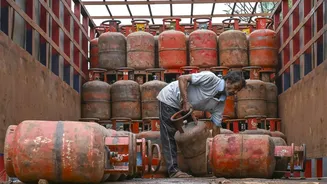
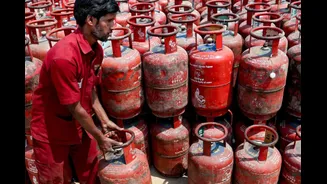
PNG is often more affordable than market-priced LPG (except for beneficiaries of subsidy) and eliminates the need for booking refills, offering 24/7 supply. LPG logistics are quite cumbersome, warranting handling, loading and unloading at several points till its culmination in the consumer’s kitchen. Its noisy handling causes discomfort to neighbours besides damaging the floors. Being lighter than air, PNG disperses rapidly in case of a leak, making it safer than LPG. Yet most connections in India are concentrated in large metropolitan areas. Adoption in Tier-2 and Tier-3 cities has been slower due to complex infrastructure, lower population density, and high initial setup costs. Laying pipelines in crowded cities is technically challenging, and obtaining permissions as said earlier (“Right-of-Way”) is slow. The government has a challenging task of weaning away 33 crore LPG connections towards PNG.
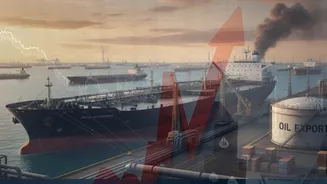
India is relatively more self-sufficient in PNG compared to LPG. PNG is domestically produced to a greater extent and supported by diverse sourcing, whereas LPG is highly import-dependent. India produces roughly 50 per cent of its own natural gas (around 95 million standard cubic meters per day), which is primarily used for the PNG network and power sectors. In contrast, it imports over 60 per cent of its LPG requirements, with approximately 90 per cent of those imports originating from the Gulf region (primarily Qatar), making it highly vulnerable to shipping disruptions in the Strait of Hormuz as the current crisis and hostilities in the Middle East has proved.
To be sure, due to recent supply concerns, India has ramped up its domestic LPG production by 30 per cent, which allows for access to roughly 52 per cent of its requirements, but the country still remains largely dependent on imports compared to the PNG sector. In any case, the production mix of 52 per cent for LPG may not be sustainable as it is at the cost of other joint or byproducts.
Where does induction stove figure in all these? In the US, in households in a few states, instead of gas stoves, people install electric stoves in kitchens. In India, kitchens by and large are energised by LPG, which is why we have been witnessing panic bookings and hoarding by black-market operators these last few days. That said, it must be conceded that induction stoves are catching the eyes of housewives and restaurants. Yours sincerely ordered one online at the first hint of the crisis reported from Bengaluru. Ever since, they have become a scarce commodity, so much so that their prices are going through the roof as are the share market quotations of companies manufacturing them. Every crisis provides an opportunity. This time around it has provided an opportunity for induction stove manufacturers who would in years ahead try to spread their footprints. The electricity subsidy culture started by Tamil Nadu and adapted with greater alacrity by the then AAP government in Delhi should tantalise customers into buying induction stoves, enticed by the prospect of accommodating the extra power consumption within the subsidy limit. After all, if the rich can resort to tax planning, the poor and the middle class can resort to energy consumption planning.
The writer is a senior columnist. He tweets @smurlidharan. Views expressed in the above piece are personal and solely those of the author. They do not necessarily reflect News18’s views.