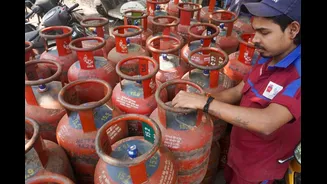








India’s state-run oil marketing companies are weighing a plan to ration household LPG supplies as disruptions around the Strait of Hormuz due to the ongoing West Asia conflict begin to affect domestic
stocks.
According to a report in The Economic Times, the proposal involves filling standard 14.2-kg cylinders with about 10 kg of LPG so that existing supplies can be spread across more households during the current strain.
An industry executive quoted in the report said the idea is aimed at conserving available fuel while ensuring that households continue to receive refills. The discussion comes as cargo movement through the crucial energy corridor has slowed considerably amid the ongoing tensions involving Iran, affecting LPG shipments bound for India.
India relies on imports for roughly 60% of its LPG requirement, and recent supply data indicate a sharp slowdown in arrivals. No new cargoes are currently reported to be heading to Indian ports, while only a limited number of vessels managed to cross the strait last week, bringing volumes estimated to meet barely a day of national demand. Several LPG carriers bound for India are also waiting in the Persian Gulf for clearance.
Typically, a 14.2-kg cylinder lasts about 35 to 40 days in an average household. Officials cited in the report suggested that even a 10-kg refill could last close to a month, allowing authorities to distribute limited supplies more evenly during the crunch.
If the measure is introduced, cylinders would carry revised labels indicating the reduced quantity, and prices would be adjusted accordingly. However, companies would need to modify bottling processes and may require regulatory approval before implementing the plan.
The pressure on supplies has increased after partial LPG allocations to commercial users resumed, further tightening inventories. Meanwhile, officials from the Ministry of Petroleum and Natural Gas have acknowledged concerns, describing the situation as “worrisome” while maintaining that household availability remains stable for now. Industry leaders caution that if the crisis persists, supply conditions could become more challenging in the weeks ahead.