
Finance Minister Nirmala Sitharaman will present the Union Budget 2026-27 on Sunday, February 1. The Budget, set to be presented from 11 am, will define how the government will spend on different sectors
like defence, welfare, infrastructure, education and healthcare during the financial year starting April 1, 2026.
This will be the ninth consecutive Union Budget for Sitharaman, continuing her record of presenting the most Budgets on the trot. The annual Budget signals how the government will proceed on taxation, public spending and policy priorities at a time of global uncertainty and geopolitical tensions.
Will The Stock Market Be Open On February 1?
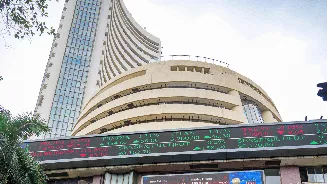
The Bombay Stock Exchange (BSE) and the National Stock Exchange (NSE) are normally closed on Sundays. However, the stock markets will remain open on February 1.
The NSE, in a notification, detailed the special timings for its February 1 trading session. The pre-open session will run from 9 am to 9:08 am, with a random closure at the last minute. The normal market schedule will run from 9:15 am to 3:30 pm.
“Further, Members are requested to note that “T0” session shall not be scheduled for trading on 01-Feb-2026 due to settlement holiday,” the notice read.
Why Is The Stock Market’s Budget Session Crucial?
The Budget is one of the most important documents detailing the country’s economic path for the next financial year. The document lays out the government’s earnings and its approach to taxes and public spending, as well as the sectors it will focus on most.
The Budget may put forward changes in income tax slabs, standard deductions and other exemptions that can directly affect the income and savings decisions of the general public. For businesses, the Budget defines the government’s stance on corporate taxation, infrastructure spending and support to different sectors.
The proposals detailed in the Budget have an immediate impact on the mood of the stock market. Allowing the BSE and NSE to remain open on Budget Day enables stock prices and market sentiment to adjust in real-time, avoiding sharp volatility once trading resumes the next day.
Projections of future earnings and economic expansion drive equity markets. Budget proposals can reshape expectations of future profits and economic expansion among firms through changes in spending priorities, subsidies, and fiscal deficit targets.
The Budget trading session will give a key idea of the markets’ initial response to the government’s plans. For investors, February 1 will be crucial in terms of gauging how the market will function over the next few days post the Budget.