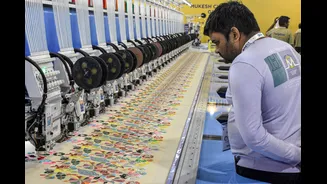







Surat’s sprawling textile industry is scaling back operations, with processing mills now set to remain closed two days every week, signaling mounting stress in one of India’s largest manufacturing hubs.
The decision was taken unanimously by the South Gujarat Textile Processors Association (SGTPA) after an urgent meeting, as industry players grapple with rising costs, supply disruptions and weakening demand.
Controlled Production To Limit Losses
Industry bodies say the move is aimed at controlling output to prevent further financial strain. With input costs rising sharply and margins shrinking, running units at full capacity is no longer viable. A calibrated reduction in production, they argue, could help stabilise prices and prevent deeper losses.
The strategy is also meant to balance demand and supply, as orders slow and inventories build up. For now, the two-day shutdown is being seen as a temporary corrective step rather than a long-term structural change.
West Asia War Hit Raw Material Supply
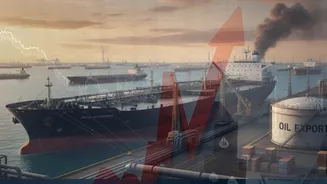
At the heart of the slowdown is the ripple effect of the ongoing war in West Asia. Surat’s textile ecosystem, especially its synthetic segment, relies heavily on petrochemical-based raw materials and energy inputs linked to global oil and gas markets.
ALSO READ | Iran War Not Ending Soon? US Says It Has ‘Plenty Of Funds’, No Tax Hike On Cards
Disruptions in supply chains have led to a spike in prices of key inputs such as polyester-based raw materials and chemicals, constraints in gas availability which is critical for high-temperature processes like dyeing, printing and finishing, and increased logistics costs and delays in shipments.
Together, these factors have pushed up overall production costs, making it difficult for units to sustain normal operations.
Energy Crunch Adds To Pressure
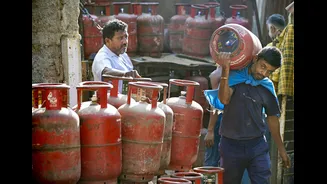
Textile processing is an energy-intensive activity, and the industry’s dependence on PNG, LPG and coal has made it particularly vulnerable. Any fluctuation in fuel supply or pricing has a direct impact on output and profitability.
With gas supplies tightening and prices rising, units are being forced to either cut back production or absorb higher costs, both of which are squeezing already thin margins.
Demand Slowdown And Export Stress
The pressure is not limited to costs alone. Demand has weakened, both domestically and in export markets. Trade disruptions linked to the conflict have affected key routes and hubs, slowing shipments and stretching payment cycles.
While a large share of Surat’s production caters to the domestic market, the export segment, though smaller, plays a crucial role in cash flow. Delays and uncertainty in this segment are adding to the liquidity stress faced by businesses.
Labour Concerns Resurface
The slowdown is beginning to reflect on the ground as well. Surat’s textile sector, which employs lakhs of workers across hundreds of processing units, is seeing early signs of strain in its workforce.
Rising living costs, especially linked to fuel, are making it harder for daily wage workers to sustain themselves in the city. This, combined with uncertainty around workdays due to reduced operations, is raising concerns about labour availability and retention.
Industry Seeks Govt Support
With multiple pressure points converging, industry stakeholders are looking to the government for relief. Key demands include:
- Reduction in gas prices
- Subsidies or support for energy-intensive units
- Policy measures to ease input costs and stabilise supply
- A fragile equilibrium
Surat’s textile industry has weathered multiple global shocks in recent years, but the current situation underscores its deep exposure to global supply chains and energy markets.
For now, the two-day weekly shutdown offers breathing room. But the sector’s outlook will depend on how long the geopolitical crisis persists, and whether cost pressures and demand disruptions ease in the coming months.