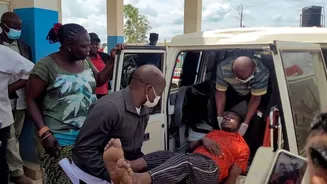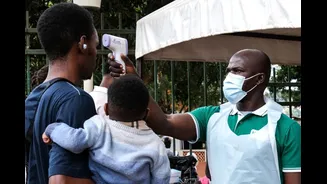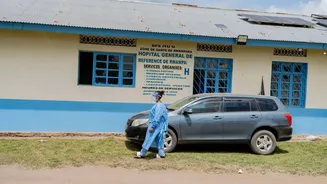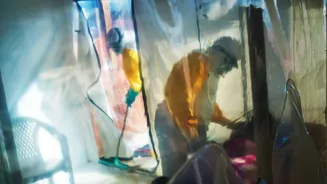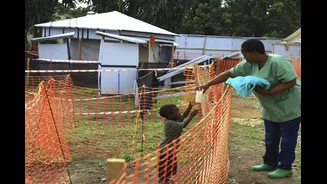








The World Health Organisation (WHO) has officially declared the accelerating Ebola outbreak in Central Africa a Public Health Emergency of International Concern. Driven by the rare Bundibugyo strain, the virus
has quickly breached remote borders, with suspected infections surging past 500 and confirmed cases emerging in major urban centres like Kinshasa and Kampala. WHO Director-General Tedros Adhanom Ghebreyesus has explicitly warned of the worrying “scale and speed” of this expansion.
As global anxiety mounts, public panic is frequently being fuelled by an old enemy: medical misinformation. Because the world is still collectively traumatised by the Covid-19 pandemic, many are mistakenly applying coronavirus rules to a completely different biological threat.
To clear the air, here are the seven biggest myths people still believe about Ebola and the actual science behind them.
Myth 1: Ebola is Airborne and Spreads Through Casual Conversation
The most pervasive fear is that you can contract Ebola simply by breathing the same air as an infected person. This is completely false. Unlike Coid-19 or measles, Ebola is not an airborne virus. It does not hang in respiratory droplets or travel through ventilation systems.
Transmission requires direct, physical contact with the bodily fluids—such as blood, vomit, sweat, or saliva—of someone who is actively symptomatic, or through heavily contaminated surfaces like needles and bedding. If you are standing a few feet away from an Ebola patient who isn’t coughing up blood, you cannot catch the virus through the air.
Myth 2: People Without Symptoms Can Silently Spread the Virus
Covid-19 taught the world to fear the “asymptomatic spreader”—individuals who felt perfectly fine but were actively passing the virus to dozens of others. Ebola simply does not operate this way.
An individual infected with Ebola is only contagious once they begin showing physical symptoms, such as a sudden fever, intense weakness, muscle pain, or vomiting. As the disease progresses and the viral load inside the body peaks, the person becomes increasingly contagious. You cannot catch Ebola from someone who is merely incubating the virus and feeling healthy.
Myth 3: The Existing Ebola Vaccines Will Easily Contain This Outbreak
Many assume that because science successfully developed highly effective vaccines like Ervebo during past crises, the world has a ready-made safety net. Unfortunately, this is a dangerous misconception.
The current 2026 emergency is being driven by the rare Bundibugyo ebolavirus strain, not the more common Zaire strain. While existing vaccines work beautifully against the Zaire variant, they offer absolutely zero protection against the Bundibugyo species. Currently, there are no licensed vaccines or targeted therapeutics available for this specific strain, meaning health workers must rely entirely on rigorous isolation and supportive clinical care.
Myth 4: Ebola is a Swift and Immediate Death Sentence
Due to its terrifying depiction in popular culture, many believe that contracting Ebola guarantees an agonising, immediate fatality. While it is true that the virus is incredibly lethal—carrying historical mortality rates between 40 and 70 per cent—it is not universally fatal.
When patients receive early diagnostic screening and rapid, aggressive supportive therapy, their chances of survival rise significantly. Intravenous rehydration, electrolyte balancing, and blood transfusions to maintain organ function allow the human immune system the critical time it needs to fight back and clear the pathogen.
Myth 5: The Virus Can Easily Spread via Imported Goods and Packages
With cases reaching urban transport hubs, a wave of digital anxiety has surfaced regarding international shipping and cargo. People worry that handling products or parcels imported from Central Africa could expose them to the disease.
In reality, the Ebola virus is extremely fragile when outside the human host. It dries out and degrades rapidly when exposed to sunlight, ambient air, and standard chemical disinfectants. It cannot survive a prolonged international transit journey on cardboard, plastic, or manufactured steel goods.
Myth 6: Once a Patient Recovers, They Are Instantly Defeating the Threat
There is a common assumption that once a patient survives the acute phase of the illness and is discharged, the danger to the community drops to zero. Medical archives show a more complicated reality.
The virus can occasionally hide inside immunologically privileged sites in the human body—such as the eyes, central nervous system, or seminal fluids—long after it has cleared from the bloodstream. Health agencies emphasise that survivors must follow strict barrier protection protocols for months following recovery, as the virus can remain active and transmissible through intimate contact well after a clinical cure.
Myth 7: Complete Border Closures Are the Only Way to Save Other Nations
Whenever a global health emergency is declared, the instinctive public reaction is to demand total border shutdowns and immediate travel bans to isolate the affected countries. However, epidemiologists warn that this strategy consistently backfires.
Drastic travel bans cause widespread economic panic, which actively incentivises people in hot zones to cross borders illegally via unmonitored, informal jungle routes. This makes tracking and testing completely impossible. The WHO explicitly advises against stopping trade or travel, urging nations instead to focus on airport screening, strict contact tracing, and bolstering hospital infection control.