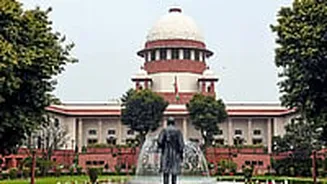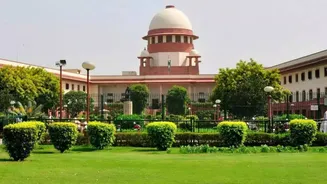









The Supreme Court has observed that judicial officers are not government servants and form a “distinct and separate class” as it considered a proposal to increase the retirement age of District Judges
from 60 to 62 years.
A bench of Chief Justice Surya Kant, Justice Joymalya Bagchi and Justice V Mohana made the observation while dealing with one of the objections raised by some State governments to the proposed enhancement.
The top court was told that some states had opposed the proposal because government employees in those states retire at a lower age. The states had also cited the possibility of additional financial burden.
Rejecting the first argument, the bench said judicial officers constitute a separate class even though they are appointed under the constitutional scheme by state governments.
“Judicial officers are not government servants. Though they are appointed under the constitutional scheme by the State Government, they constitute a distinct and separate class,” the bench said.
It also pointed out that different retirement ages already exist for different categories of professionals, including doctors and professors, and stressed the importance of experience in deciding the retirement age of professionals.
The bench also rejected the other objection raised by States, that increasing the age with cause additional financial burden. It observed that retiring a judicial officer entails payment of retirement benefits and pension while the resulting vacancy has to be filled and salary paid to a new officer. It said that continuation of an experienced judicial officer could therefore result in lesser financial liability.
The bench said both reasons cited by state governments for opposing the proposal were “untenable” and asked them to independently reconsider increasing the retirement age of judicial officers from 60 to 62 years.
“It seems to us that both the reasons assigned by the State Governments for declining to enhance the age of retirement are untenable”, the top court said.
It asked the States to independently revisit the proposal to enhance the retirement age from 60 to 62 years, irrespective of the retirement age prescribed for government employees.
The Supreme Court had on July 22 asked High Courts to take a time-bound decision on the proposal. As an interim arrangement, it said judicial officers could continue beyond 60 where the state government and the concerned High Court agreed to the increase.
The apex court also clarified that any eventual decision to raise the retirement age would apply retrospectively to superannuation taking place on or after April 1, 2026.
During Wednesday’s hearing, the bench was informed that Telangana had increased the retirement age of judicial officers to 61 years. Tamil Nadu said it had no objection to increasing it to 61, while Madhya Pradesh was willing to consider the proposal based on a recommendation of its High Court Full Court.
Himachal Pradesh, Jharkhand and Nagaland were among the states that had opposed the proposal, citing financial implications, while Assam and Delhi sought more time to take a decision.
The Supreme Court also referred to its 1991 judgment in the All India Judges’ Association case, in which it had directed that the retirement age of judicial officers be increased to 60 years.