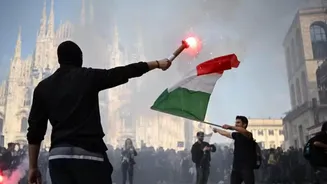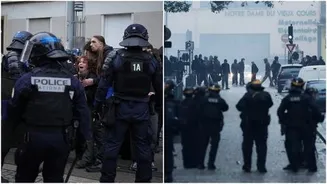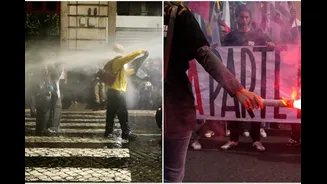






Police in Rome used water cannons and tear gas to disperse protesters during demonstrations across Italy on Saturday, October 24, as authorities stepped up security to prevent a repeat of the violence
and looting that marred protests the previous weekend, according to the Associated Press (AP).
Clashes broke out in central Rome near Piazza della Repubblica after demonstrators reportedly threw bottles at police as a march attempted to proceed towards government buildings.
Police responded with water cannons and tear gas, while officers also carried out operations to push back the crowd, videos on social media showed.
ITALY POLICE DRENCH ANTI-GOVERNMENT PROTESTERS with WATER CANNONS in ROME https://t.co/wRL92CDATD
— RT (@RT_com) October 24, 2026
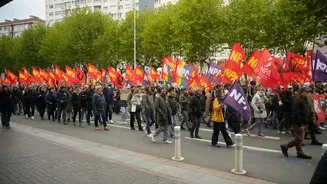
The clashes came amid demonstrations in several Italian cities, including Milan, Turin, Bologna and Florence. The protests involved a range of issues, including opposition to war and rearmament, education, corruption and the cost of living.
According to AP, a separate anti-war march took place in central Rome on Saturday. Organisers had urged participants to keep their faces uncovered and their hands visible, seeking to distance the demonstration from potential unrest.
However, tensions escalated near Piazza della Repubblica, where protesters and police briefly clashed. Organisers attempted to hold the crowd back, but the confrontation continued as police used tear gas and eventually turned a water cannon on the demonstrators.
Security Tightened Across Italian Cities After Previous Weekend’s Violence
The use of water cannons in Rome came as authorities deployed additional security personnel across Italy, following clashes and looting during demonstrations the previous weekend.
In Milan, Prime Minister Giorgia Meloni announced the deployment of an additional 500 soldiers, supplementing hundreds already stationed in the city.
They were deployed alongside around 5,000 police officers and other security personnel, while authorities used drone surveillance, railway station checks and rapid-response units to monitor potential unrest, AP reported.
The measures followed incidents in which shops were broken into and goods, including sneakers, athletic wear and sporting equipment, were targeted.
Luxury boutiques in Milan’s fashion district boarded up their windows ahead of Saturday’s demonstrations, although many shops reopened later in the day.
AP reported that the Milan march remained largely peaceful, while brief clashes occurred in Rome and Turin. In Turin, police used tear gas after demonstrators threw bottles and fireworks at officers, according to Anadolu Agency, citing ANSA.
Italian authorities also carried out more than 150 searches in Milan, nearby Monza and 20 other cities as part of investigations into alleged threats and plans to attack police, damage vehicles and set buildings on fire, Anadolu Agency reported, citing ANSA.
Interior Minister Matteo Piantedosi said security had been reinforced in cities considered particularly sensitive and that authorities would respond firmly to violence.
The issues driving the protests varied between countries, ranging from education and corruption to housing costs, pensions and opposition to war and military spending.