





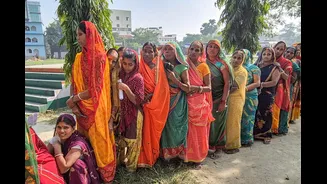
West Bengal is gearing up for one of the most fiercely contested state elections in recent years. The Election Commission of India announced the schedule on March 15, 2026, confirming that voting across
all 294 assembly constituencies will be conducted in two phases, on April 23 and April 29, 2026. Results will be declared on May 4, 2026, just three days before the current assembly’s term expires on May 7.
With over 70.4 million registered voters set to head to the polls, the stakes could not be higher.
The Two-Phase Breakdown
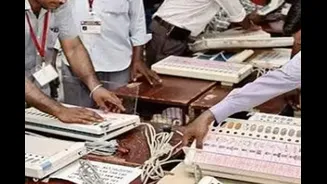
Unlike Tamil Nadu, which votes in a single phase, West Bengal’s 294 seats are split across two polling days. The first phase on April 23 and the second on April 29 cover constituencies spread across the state’s districts. All votes will be counted simultaneously on May 4, delivering a complete verdict on the same day.
Who Has Declared Candidates?
All major parties have now announced their lineups, with some still filling in the remaining gaps.
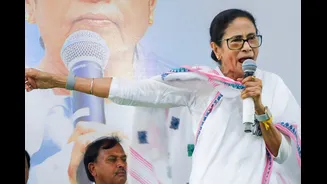
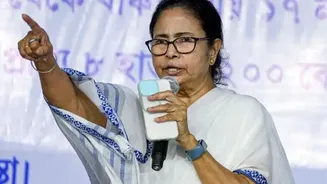
The Trinamool Congress declared candidates for 291 of the 294 seats, leaving the three Darjeeling hill constituencies to their ally, the Bharatiya Gorkha Prajatantrik Morcha. Among the 291 TMC nominees, 52 are women, 95 represent Scheduled Castes and Scheduled Tribes, and 47 belong to minority communities. The party dropped 74 sitting MLAs, retained 135 in their existing seats and shifted 15 to new constituencies. Chief Minister Mamata Banerjee will contest from Bhabanipur, as she did in 2021.
Also Read: West Bengal Elections 2026: How ‘Street Fighter’ Mamata Banerjee Channeled Her ‘Didi’ Power
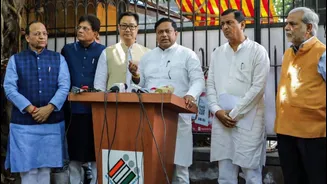
The BJP released candidates across three lists. The first list of 144 names came on March 16, followed by a second list of 111 on March 19, and a third list of 19 candidates on March 25, bringing their total to 274. Leader of Opposition Suvendu Adhikari has been fielded from Bhabanipur, setting up a direct clash with Mamata Banerjee, and also from Nandigram, his traditional stronghold.
The Left Front announced candidates across four lists, beginning with 192 names on March 16. CPI(M) anchors the alliance with the largest share of seats, alongside the All India Forward Bloc, CPI and RSP among others.
The Indian National Congress, contesting independently without any alliance, announced 284 candidates on March 29. Veteran leader Adhir Ranjan Chowdhury has been fielded from Baharampur, his traditional base. Former MP Mausam Noor, who recently rejoined the Congress, will contest from Malatipur. The party has also fielded Pradeep Prasad from Bhabanipur, meaning that particular constituency will see a three-cornered fight between Mamata Banerjee, Suvendu Adhikari and the Congress nominee.
Also Read: West Bengal Election 2026: Dates, Seats And What’s At Stake For Each Party
Dates To Remember:
Schedule announced: March 15, 2026
Phase 1 polling: April 23, 2026
Phase 2 polling: April 29, 2026
Counting and results: May 4, 2026
Current assembly term ends: May 7, 2026
What The Numbers Look Like Heading In
In the 2021 assembly elections, the TMC swept back to power with 215 seats out of 294, while the BJP won 77. The Congress drew a complete blank. The Left Front, which had governed Bengal for 34 consecutive years before 2011, failed to win a single seat. This election is as much about whether the BJP can mount a genuine challenge to the TMC’s dominance as it is about whether the Congress and Left can claw back any relevance in a state they once ruled.
A majority requires 148 seats. Right now, only one party looks anywhere close to that number going in.