






In the present digital day and age, with increased screen time and gadget use, the number of individuals developing myopia, or near-sightedness, requiring spectacles is on the rise. Clear and perfect vision
is a basic and minimal requirement for overall quality of life. Wearing spectacles is uncomfortable for most people because of issues like slipping, smudging or fogging of glasses, heavy glasses, sports or social events, lack of confidence or the fear of being ridiculed. Even contact lenses are a temporary solution and come with their own set of risks and complications.
Dr Minal Kanhere, Consultant Cornea, Cataract and Refractive Surgeon, Dr Agarwals Eye Hospital, Chembur shares all you need to know:
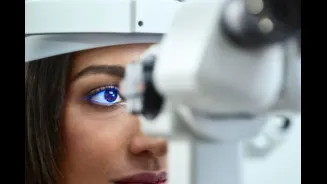
It is for this reason that most people want to opt for a permanent solution to get rid of spectacles. This can be achieved by means of refractive eye surgery. However, most people are faced with the dilemma of having to decide which surgery to go for. The first step is to visit your ophthalmologist for a detailed check-up of the eyes, including proper spectacle power and a dilated retina examination, followed by corneal tomography which gives detailed information about the thickness and curvature of the cornea. Following this, your ophthalmologist will be able to determine which procedures would be suitable for you. Here’s a simple guide to today’s popular procedures:
LASIK (Laser Assisted In Situ Keratomileusis): This is the most commonly preferred technique. It involves the creation of a flap of the cornea which is lifted. A special laser is then used to reshape the cornea, causing correction of the power, followed by replacement of the flap. It has the advantages of having a painless, quick one-day visual recovery and good quality of vision. With LASIK, both the options of the conventional microkeratome (small blade) LASIK as well as the newer femtosecond (bladeless) LASIK are available. However, LASIK can only be done if the corneal thickness falls within a certain safe range.
PRK (Photo Refractive Keratectomy): This technique involves removal of the thin outermost layer of the cornea called the epithelium, either with a special solution or laser, followed by laser correction of the power. A contact lens is then placed on the cornea to allow the layer to heal and grow back. The visual recovery after PRK is longer, taking about 5-7 days. It also has the disadvantage of eye pain and discomfort till the recovery is complete. This method is currently preferred in cases where the corneal thickness is not adequate for LASIK and in patients who are involved in sports activities/undergoing defence exams.
SMILE (Small Incision Lenticule Extraction): This is a newer technique in which a femtosecond laser is used to create a small lenticule of the cornea. This lenticule is then removed through a small incision, which leads to correction of the power. SMILE has the advantage of having no flap, therefore fewer risks of complications and a quick, painless recovery. Another advantage is that it is suitable for persons involved in high-contact sports and vigorous physical activities, as there is no chance of flap displacement.
ICL (Implantable Collamer Lens): In this procedure, a special type of lens is implanted in the eye in front of the natural crystalline lens through a small incision. This procedure is performed in cases of very high spectacle power or thin corneas which are not amenable to LASIK, PRK or SMILE. It has the added advantage of being a reversible procedure.
Achieving spectacle-free clear and comfortable vision is definitely possible, especially with so many options available which can cater to different requirements and clinical scenarios. However, it is very important to select the right surgery for the best results. With the right choice, results are excellent with high patient satisfaction and comfort. Your ophthalmologist can help you understand and determine which of these procedures is most suitable for you.