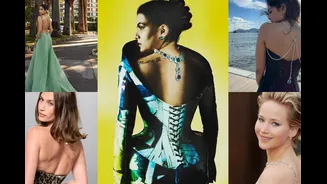


There’s something absolutely incredible about a necklace that only reveals itself when you walk away. Once a red‑carpet flourish, the back‑necklace (a chain, lariat or sautoir meant to tumble down the spine)
has become a bona fide lifestyle moment. From Bollywood premieres to the Met Gala and Cannes, celebrities have been wearing diamonds and heirlooms down the spine, making us believe that placement is as radical, if not more, than the design itself.
Why Everyone’s Turning Their Backs
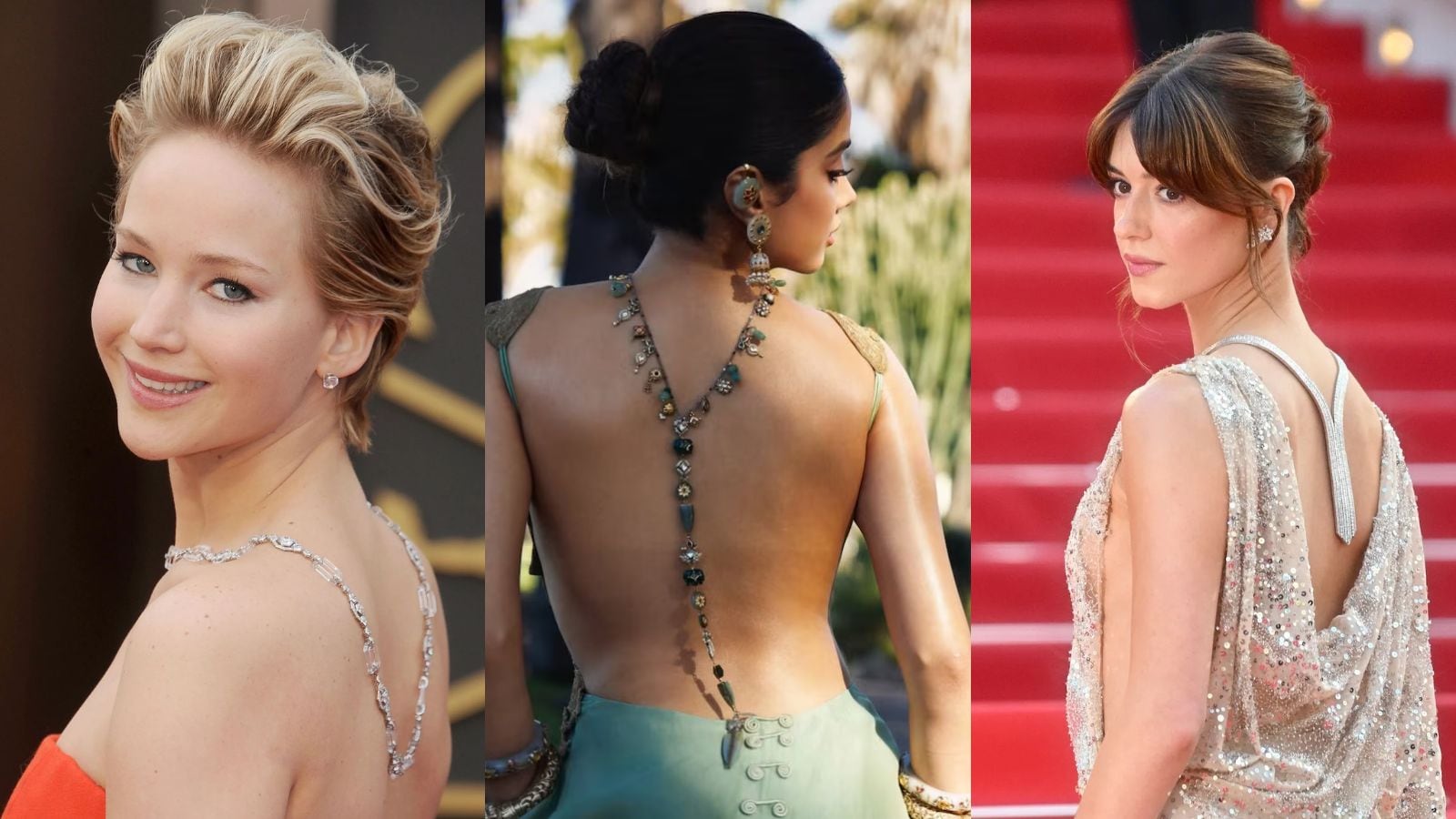
The idea isn’t new. Diamonds have long been coaxed into unexpected silhouettes but the past decade has heightened the moment. Jennifer Lawrence helped popularise the backwards sweep of a long sautoir at the 2013 Oscars, where a cascading 74‑carat necklace trailed down her back and became inseparable from the memory of her victorious walk. She repeated the gambit the next year in another strapless Dior gown, cementing the look.
Across the Atlantic, stylists and stars took to the trick: Sabrina Carpenter’s 2025 Grammys halter dress was anchored by a Chopard sautoir that hung like a river of light down her back; Daisy Edgar‑Jones at Cannes opted for a Boucheron high‑jewellery tie that draped through a cowl‑backed Balenciaga; and Vittoria Ceretti turned a diamond sautoir into a Met Gala statement in 2026. In Hollywood rooms and after‑parties, Hailey Bieber, Bella Hadid and Zoe Saldana have validated the look for both formal events and late‑night glamour, while Michelle Yeoh and Margaret Qualley carried the aesthetic in earlier seasons with pieces from Boucheron and Chanel.
When High Jewellery Thinks Like Tailoring
In India too, the trend has been making waves this year, especially on global platforms. Ananya Birla’s Met Gala after‑party look repurposed familial art into a sculptural corset that revealed a statement diamond, ruby and emerald necklace at the back, a move that fused personal collection with a modern, armour‑like silhouette.
It is the perfect reveal. Open‑back dresses, cowl backs and halter necks make for cinematic exits, and a pendant that drips down the nape instantly becomes the visual mic drop.
This shift from accessory to architecture is intentional. Kalyan Jewellers describes the idea as crafting jewellery to “become one with” couture. For Kalyani Priyadarshan’s Cannes debut, the house conceived a lariat as a sculptural back‑jewel, designed to define the silhouette rather than simply complement it. Crafted in 14K white gold and anchored by a 52‑carat pear‑shaped blue sapphire, two 15‑carat pink morganites and 945 natural diamonds, the cascading piece was handcrafted over 40 days to fuse movement, architecture and high‑jewellery precision.
Ramesh Kalyanaraman, Executive Director at the brand adds that the look is a clean example of jewellery functioning as part of a gown’s construction, not merely its embellishment. “The piece was envisioned as the defining element of the silhouette, bringing together high jewellery, movement, and architecture in a way that felt both modern and cinematic. At a time when global red carpets are increasingly embracing jewellery as part of the silhouette rather than an accessory to it, the look reflects our continued exploration of high jewellery as a form of visual storytelling.”
A Playful, Wearable Future
Beyond glamour, the back necklace signals a wider redefinition of jewellery’s role in dressing. Houses such as Kalyan and CaratLane are treating gems as architectural components of couture, while brands and consumers demand versatility and storytelling. Piyush Seth, Chief Category, Merchandising, and Design Officer at CaratLane opines on the ‘rise of back jewel’, and says, “This trend reflects how consumers today are styling jewellery in more unconventional and fashion-forward ways. Necklaces worn backwards, especially with deeper necklines and occasion wear, create a subtle yet striking statement that feels elegant and modern.
What’s interesting is that this trend also shifts focus toward versatility—customers now want pieces that can be styled multiple ways rather than worn traditionally. We’ve always believed jewellery should adapt to personal style and self-expression, and trends like these reinforce how contemporary consumers are redefining everyday luxury on their own terms.” As it trickles into occasion-wear beyond the red carpets of the world, you can expect more convertible designs, smarter clasps and accessible price points for this once‑niche look.