






The Supreme Court has cleared the Uttar Pradesh government’s proposed Kukrail Night Safari and Day Zoo project in Lucknow, paving the way for what is expected to be India’s first night safari.
The Rs 1,510-crore
project is planned inside the ecologically sensitive Kukrail Reserve Forest and will be developed over 855.07 acres in two phases. The first phase will include the night safari and an eco-tourism zone, while the day zoo is proposed in the second phase.
The approval, however, comes with strict conditions. The Supreme Court has directed the state government to comply with all safeguards imposed by the Central Empowered Committee, the Central Zoo Authority and the Ministry of Environment, Forest and Climate Change.
A three-judge Bench comprising Chief Justice of India Surya Kant and Justices Joymalya Bagchi and V Mohan passed the order on July 15. The order was uploaded on the court’s website on Saturday.
What The Supreme Court Said
The Supreme Court clarified that its permission did not exempt the Uttar Pradesh government from obtaining the statutory approvals required under other laws.
“We clarify that this permission is confined to the requirement of prior permission of this court as per the order dated February 19, 2024 and shall not dispense with, dilute or override any statutory approval, clearance, consent or permission required under any other law,” the court said in its order.
The project will require separate clearances under laws including the Forest (Conservation) Act, the Water Act, the Air Act and the Biological Diversity Act, as well as the applicable environmental impact assessment framework.
The state government cannot begin any part of the project that requires a separate clearance until the approval has been secured. The court also warned that deviations from the prescribed conditions would be viewed seriously.
Regular Inspections To Monitor Compliance
The Supreme Court has directed the Central Empowered Committee to periodically inspect the project site and verify compliance with the environmental and wildlife safeguards imposed by different authorities.
The committee has been asked to conduct its first inspection on or before October 28, 2026, and submit a status report to the court.
The Uttar Pradesh government must cooperate with the committee and provide all documents, records and information sought during the inspection.
The court has also invited suggestions from the parties involved and public-spirited individuals on environmental safeguards, implementation and compliance monitoring.
What The Kukrail Night Safari Will Offer
The night safari will be designed to allow visitors to observe nocturnal animals during the hours when they are naturally active.
According to The Indian Express, the facility will use a special lighting system that mimics natural moonlight, allowing people to see the animals without causing them discomfort.
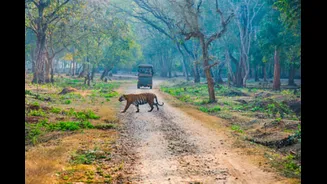
Visitors will travel through the safari in battery-operated vehicles, while the route and trail are being finalised.
The project plan includes theme-based zones inspired by wildlife landscapes in India and other countries, naturalistic animal habitats, night trails and forest trails.
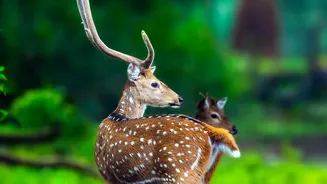
Habitats are proposed for species including Asiatic lions, Bengal tigers, leopards, hyenas, flying squirrels and gharials. These enclosures will incorporate elements such as grasslands, wetlands, rock formations and native vegetation to recreate natural ecosystems.
The master plan also includes conservation breeding facilities, wildlife interpretation and education centres, cafeterias, an auditorium and a 7D theatre.
The facility is expected to receive around 4,000 visitors on weekdays and nearly 8,000 visitors on weekends and public holidays.
Project To Be Developed In Two Phases
The Kukrail project will be developed in two phases, with the night safari and eco-tourism facilities forming the first phase.
The second phase will include a day zoo. However, the existing Nawab Wajid Ali Shah Zoological Garden, commonly known as Lucknow Zoo, will not be shifted to Kukrail.
The Central Empowered Committee rejected the Uttar Pradesh government’s proposal to relocate the 72-acre zoo from the city centre to the reserve forest. The government had cited space constraints while proposing the relocation. The committee, however, noted that several recognised zoos across India operate on smaller plots and have upgraded their facilities without moving elsewhere.
It also observed that Lucknow Zoo’s present site serves as an important green lung in the heart of the city and that shifting it would deprive the city of significant environmental benefits.
Concerns Over Tree Felling
The scale of the proposed tree felling was among the major issues examined during the environmental scrutiny of the project.
In its report submitted to the Supreme Court on November 27, 2025, the Central Empowered Committee said the project site had 24,274 trees, significantly higher than the 12,346 trees earlier reported by the state government, according to Hindustan Times.
Under the state’s original proposal, 4,808 trees were to be felled, 877 translocated and 18,586 retained.
The committee’s report took serious note of the proposed tree removal while rejecting the relocation of Lucknow Zoo and the creation of an Adventure Zone.
Of the total project area, around 610.34 acres, or approximately 71 per cent, is expected to retain green cover.
Why The Adventure Zone Was Rejected
The Central Empowered Committee also refused permission for an Adventure Zone proposed as part of the project.
It said forest land could not be used for non-forestry recreational activities of this nature. The proposed zone also lacked approval from the Central Zoo Authority and was considered inconsistent with the environmental character and design of the night safari.
Project Faced Years Of Scrutiny
Chief Minister Yogi Adityanath announced the project in July 2022, and the Uttar Pradesh Cabinet approved it the following month.
The proposal subsequently received approvals from the State Wildlife Board and the Central Zoo Authority in 2023. However, its location inside the Kukrail Reserve Forest meant it also required forest, wildlife, environmental and judicial clearances.
The Supreme Court-appointed Central Empowered Committee inspected the site, examined the proposal and sought modifications before the court granted its conditional permission.
The scrutiny centred on the ecological importance of the 2,027.4-hectare Kukrail Reserve Forest, one of Lucknow’s largest protected green areas. The plantation forest was developed in the 1950s and is named after the Kukrail stream, a tributary of the Gomti River. Efforts are also underway to revive the stream.
Home To India’s First Gharial Conservation Centre
The Kukrail forest houses the Kukrail Gharial Rehabilitation Centre, established in 1975 to conserve the critically endangered gharial.
Over the past five decades, the centre has bred gharials and released them into rivers across India. It also has research laboratories, veterinary facilities and rescue enclosures for gharials and turtles.
The Uttar Pradesh government has maintained that the night safari will function not only as a tourist attraction but also as a centre for wildlife conservation, breeding, research and public education.
If completed as planned, the Kukrail facility will become India’s first night safari and is proposed to be the fifth such destination globally after night safari facilities in Singapore, Thailand, China and Indonesia.