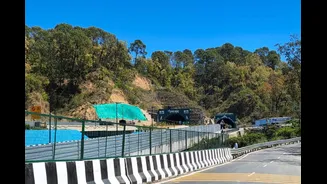





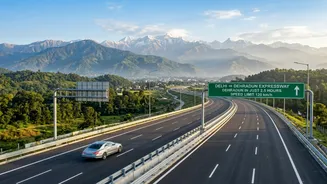
Road trips from Delhi to tourist hubs in Uttarakhand like Dehradun, Mussoorie and Rishikesh will get significantly easier now with Prime Minister Narendra Modi set to inaugurate the Delhi-Dehradun expressway
on Tuesday, April 14.
The expressway, which starts from Akshardham in Delhi, will reduce the travel time between Delhi and Dehradun to around 2.5 hours from the six hours it took previously.
NCR Cities To Dehradun Travel Time
Among other NCR cities besides Delhi, those living in Ghaziabad will enjoy the shortest travel to Dehradun, while those coming from Gurgaon will have to account for additional 1.5 hours to reach Akshardham.
Here’s a look at the estimated travel time from various NCR cities to Dehradun on the new Delhi-Dehradun expressway:
- Delhi to Dehradun – 2.5 hours
- Ghaziabad to Dehradun – 2 hours, 15 minutes
- Noida to Dehradun – 2 hours, 45 minutes
- Faridabad to Dehradun – 3.5 hours
- Gurgaon to Dehradun – 4 hours
The expressway also significantly boosts access to key tourist destinations. Travel time to Mussoorie has been reduced to around 4 hours from nearly 7 earlier, while a dedicated spur has improved connectivity to Rishikesh and Haridwar, cutting the journey to about 2 hours.
Apart from NCR cities, those traveling from Meerut to Dehradun can access the expressway via Baghpat.
Delhi-Dehradun Expressway: The 4 Phases
The expressway itself is divided into four main phases. The first phase starts from Akshardham in Delhi and goes up to Baghpat near the Eastern Peripheral Expressway at approximately 32km. This section covers the Delhi and Ghaziabad areas.
The second phase starts from the Eastern Peripheral Expressway and goes to Saharanpur East Bypass, an 118-km stretch. This is a greenfield section, covering Baghpat, Baraut, Shamli, and other areas. It includes seven major interchanges and several underpasses.
The third phase is 40km long and starts at Saharanpur Bypass, stretching till Ganeshpur (NH-307).
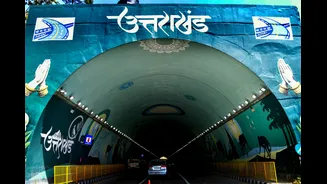
The fourth phase covers 20km and begins from Ganeshpur, finally reaching Dehradun. This section includes tunnels and elevated flyovers to protect wildlife in the Rajaji National Park area.