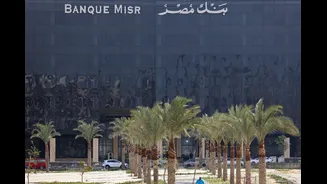






The United Arab Emirates will conduct an urgent forensic examination of the local branches of Egypt’s state-run Banque Misr after US authorities accused the bank’s UAE operations of facilitating Iranian
shadow-banking activity involving an estimated $1.8 billion.
The Central Bank of the UAE said Saturday that it had decided to conduct a “special and urgent examination” of Banque Misr’s branches in the country, including a forensic and in-depth review of transactions during the period identified by US authorities.
The probe will focus particularly on banking transactions involving companies named in the US statement, the UAE central bank said.
The move came a day after the US Treasury’s Financial Crimes Enforcement Network (FinCEN) proposed cutting Banque Misr’s UAE branches off from the US financial system, accusing the bank of being a significant conduit for Iranian shadow banking.
Why Is Banque Misr Being Probed?
According to FinCEN, 103 companies potentially linked to Iranian shadow-banking networks conducted approximately $1.8 billion in transactions through accounts at Banque Misr UAE between January 2024 and June 2026. FinCEN said the activity included about $520 million during the most recent 12-month period. The agency said the UAE operation had become a “significant conduit” for Iranian shadow banking and described the $1.8 billion as potential Iranian shadow-banking funds.
The US allegation goes beyond ordinary commercial transactions. FinCEN said customers involved in the activity included potential Iranian front companies and financial facilitators, including entities linked to Iran’s Ministry of Defense and the Islamic Revolutionary Guard Corps (IRGC). The agency said it had identified evidence of money laundering and sanctions-evasion activity involving Iranian networks and concluded that Banque Misr UAE posed a primary money-laundering concern under US law.
It is important to note that the $1.8 billion figure refers to potential Iranian shadow-banking funds and transactions identified by FinCEN; it does not mean the US has alleged that Banque Misr itself laundered $1.8 billion. The US regulator’s allegation concerns the bank’s role in processing transactions involving companies it believes were connected to Iranian shadow-banking networks.
What Action Has The US Taken?
FinCEN has proposed a special measure that would effectively bar US financial institutions from maintaining correspondent accounts with Banque Misr UAE. The proposed action is aimed specifically at Banque Misr’s UAE operations and does not target the bank’s headquarters or domestic operations in Egypt. Egypt’s central bank has also stressed that the US action does not affect Banque Misr’s operations inside Egypt or its other overseas branches. The US move is part of Washington’s wider campaign to restrict Iran’s access to the international financial system and dollar transactions.
What Is Banque Misr?
Banque Misr is one of Egypt’s largest banks and is state-owned. Founded in 1920, it has a major presence in Egypt as well as operations in several countries. Its UAE operations are therefore only one part of the wider banking group. FinCEN’s proposal specifically concerns Banque Misr UAE. The UAE branches have around $6 billion in assets and maintain direct correspondent relationships with US financial institutions, according to the US regulatory filing.
UAE Central Bank Says It Will Investigate
The Central Bank of the UAE said banks operating in the country are subject to UAE laws and regulations and warned that licensed banks must not expose the country’s financial system to reputational risks or misuse its financial infrastructure. The regulator said it routinely examines banks’ anti-money laundering and counter-terrorism financing systems, including sanctions-screening procedures. But in the case of Banque Misr, it has ordered a special examination covering the period highlighted by US authorities.
The UAE central bank is also studying its options regarding the status of Banque Misr in the country if the proposed US measure eventually takes effect. It said any decision would be taken after the relevant procedures under US law are completed and would take into account the bank’s obligations towards its customers in the UAE.
Banque Misr, meanwhile, said it was reviewing the US Treasury notice. Egypt’s central bank said the US action was limited to the UAE operation and would not affect the country’s domestic banking sector. The UAE investigation will now determine whether the transactions identified by Washington also breached the country’s own banking, anti-money-laundering or sanctions-related rules.