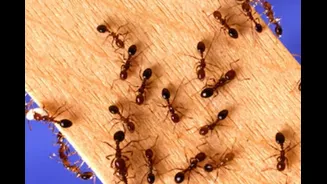

Did you know an estimated 20 quadrillion ants are living on Earth, written out as 20,000,000,000,000,000? The sheer scale of that number is staggering. What’s even more astonishing is how these tiny, seemingly
fragile creatures have managed to dominate nearly every corner of the planet.
A new study by researchers from the University of Maryland and Cambridge University has uncovered the secret behind ants’ evolutionary triumph. Published in Science Advances, the research reveals a surprising strategy: ants chose quantity over quality to win the evolutionary race.
Instead of evolving stronger individual bodies, ants evolved to produce more bodies, turning weakness at the individual level into strength at the collective level.
Quality Vs Quantity
You may have heard the playful question: Would you rather fight one horse-sized duck or a hundred duck-sized horses? While it sounds humorous, this dilemma captures a serious biological debate: is it better to be strong alone or weak in large numbers?
Ants have answered this question decisively. They chose numbers.
Why Ants Are Everywhere
Rather than building large, powerful bodies, ants evolved into small, expendable workers that function as part of a massive collective. This is why ants thrive everywhere, from kitchen floors to dense rainforests like the Amazon.
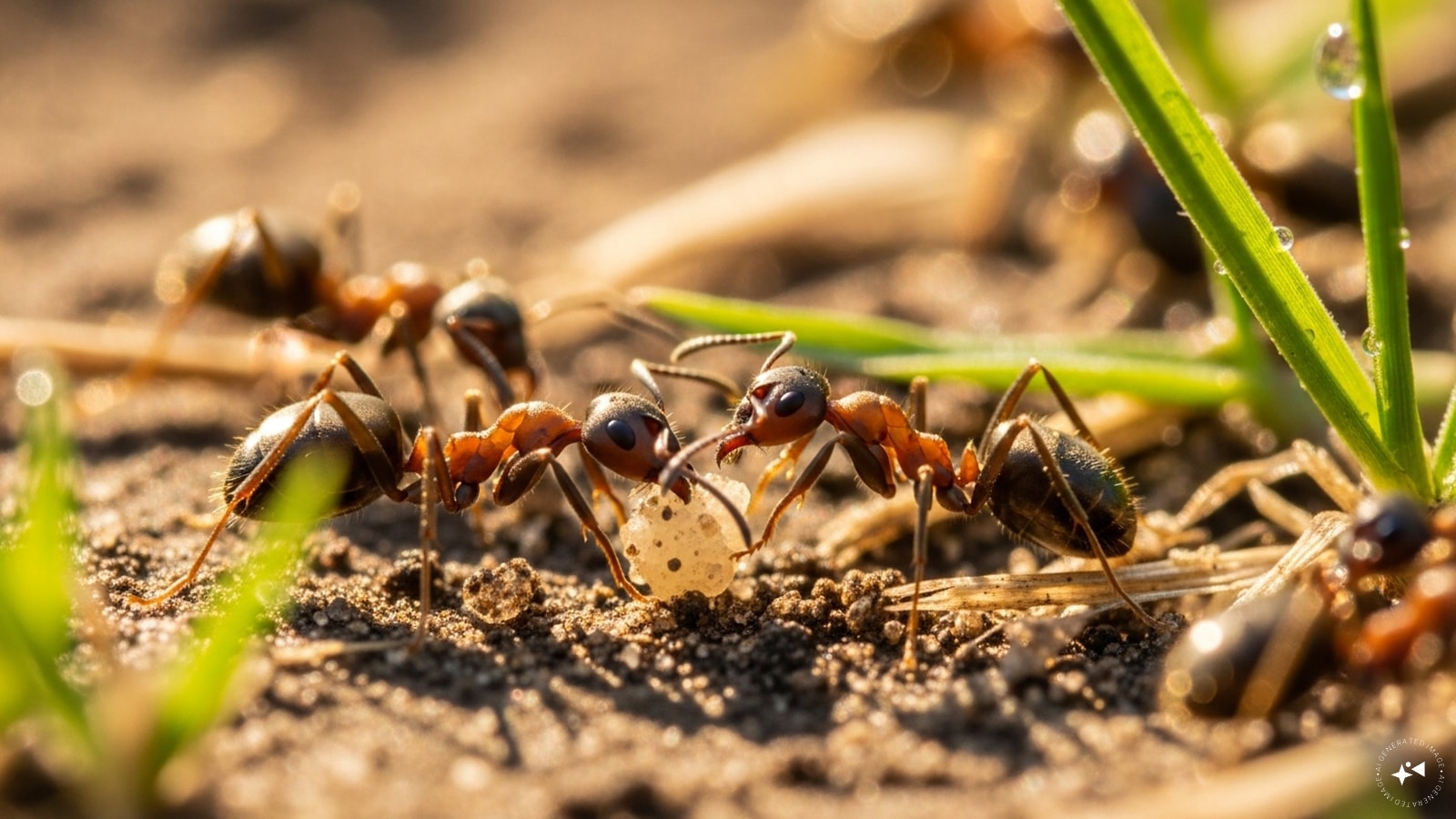
Their strength lies not in individual power, but in coordination and scale.
The Cuticle: Armour That Came At A Cost
Ants are protected by a tough outer layer known as the cuticle, which shields them from injury, disease, dehydration and predators. However, producing this armour is nutritionally expensive, requiring significant amounts of nitrogen and minerals, resources that are scarce in nature.
The researchers made a striking discovery: ant species with thinner, weaker cuticles were able to produce far more workers. By saving nutrients that would have been used to build armour, these ants redirected resources towards reproduction.
This trade-off allowed colonies to grow dramatically, giving them a decisive evolutionary advantage.
Weak Individually, Unbeatable Together
Even with weaker bodies, ants became unstoppable as groups. The research shows that in both warfare and biology, numbers often beat armour.
Senior author Ivan Economo from the University of Maryland explains that as societies grow more complex, individuals tend to become simpler. Tasks once performed by one strong individual are now shared across the group, making individuals cheaper to produce but less robust on their own.
Until now, this theory had never been tested extensively on social insects. Ants proved to be the perfect model, as their colonies range from just ten individuals to several million.
Scanning 500 Ant Species In 3D
Lead author Arthur Mat, a PhD student at Cambridge University, said the team suspected a trade-off between body protection and colony size. To test this, researchers scanned over 500 ant species using 3D X-ray imaging, measuring body volume and cuticle thickness.
The results showed that the cuticle made up anywhere between 6% and 35% of an ant’s body.
When the data was analysed using evolutionary models, a clear pattern appeared: ants with thinner cuticles consistently formed much larger colonies. Despite sacrificing individual protection, these species flourished collectively.
The High Cost Of Armour
The cuticle is vital as it supports muscles, prevents dehydration, and protects against disease. But it is extremely costly to build, particularly due to its nitrogen demands. Thicker armour requires more food, limiting colony size.
Ants made a strategic choice: thinner armour, fewer nutritional demands, and vastly larger populations.
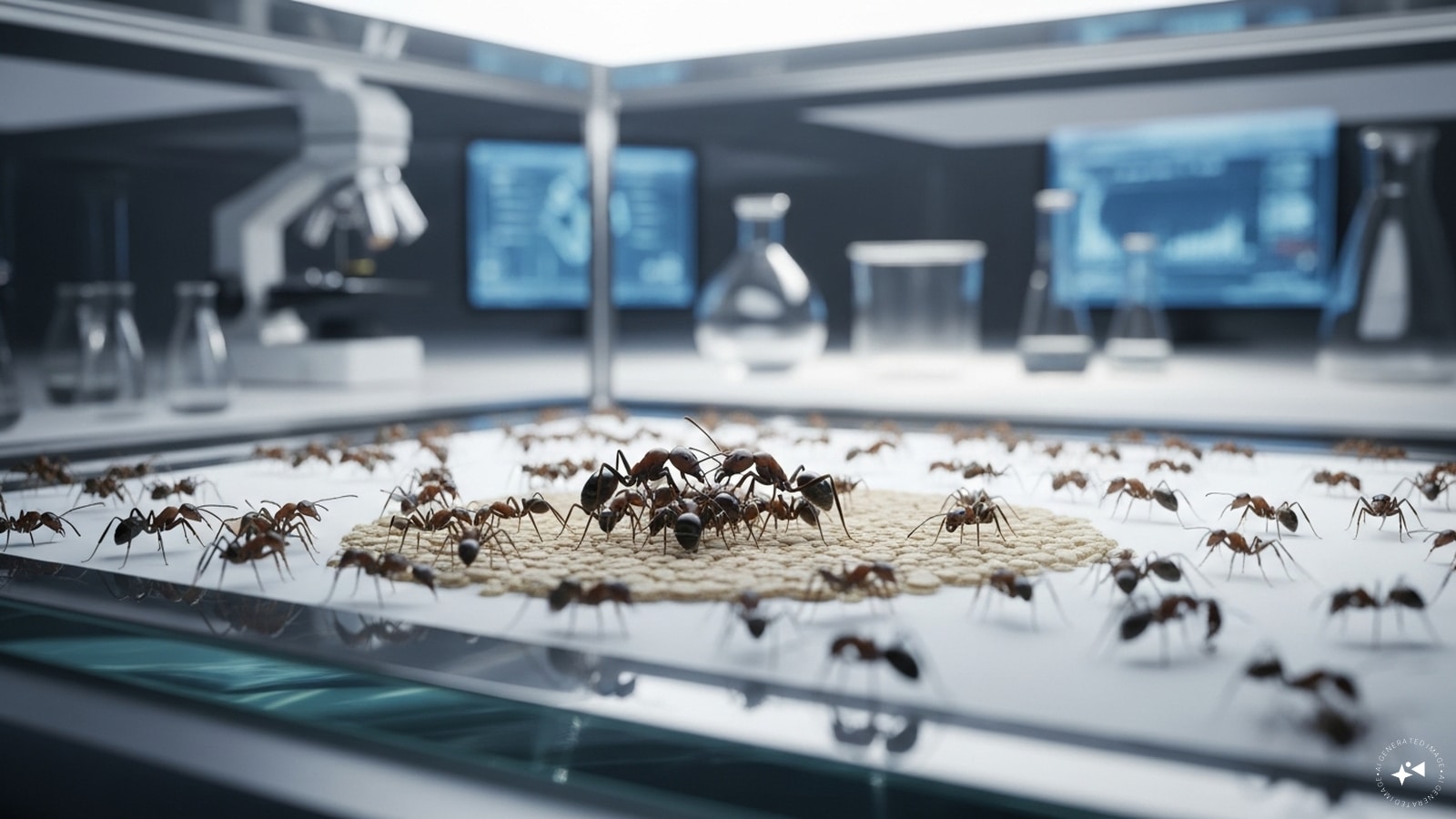
Arthur Mat described this strategy as choosing a ‘distributed workforce’ over ‘self-investment’. Ivan Economo jokingly referred to it as the ‘evolution of squishability’, becoming easier to squash for the greater good of the colony.
While it may seem counterintuitive, being weaker individually benefits the group. When millions work together, the loss of a single ant matters far less. Thin armour supports large, cooperative societies built around food sharing, nest defence and collective survival.
Faster Evolution And More Species
The study also found that ants investing less in armour had higher diversification rates, meaning they evolved into new species more quickly, a key marker of evolutionary success.
Economo noted that very few traits in ants are linked to diversification, making this finding particularly significant.
One reason for this rapid diversification may be nutritional flexibility. Ants that require less nitrogen can survive in poorer environments, allowing them to colonise new and challenging habitats.
Mat began this research during an internship at the Okinawa Institute of Science and Technology.
Lessons From Human Warfare
The findings mirror patterns in human history. Medieval knights in heavy armour were powerful alone, but were eventually overtaken by archers and crossbowmen; weaker individually, but stronger in numbers.
Economo referenced Lanchester’s Laws, mathematical principles developed during the First World War, which show how numerical superiority can overwhelm stronger opponents.
Ants As A Super-Organism
Like cells in the human body, ants achieve complexity through cooperation. Alone, they are simple. Together, they form a super-organism capable of extraordinary feats.
Mat notes that the balance between quality and quantity appears everywhere, from biology to society, economics, and even personal choices. Ants perfected this balance over millions of years, shaped by environmental pressures and evolution.
Other social insects, such as termites, may follow similar paths, though this remains untested. For now, ants have delivered a powerful lesson: you don’t need brute strength to conquer the world; instead, you need a big, well-organised team.