









After nearly three years of negotiations, the India-UK Free Trade Agreement (officially called the Comprehensive Economic and Trade Agreement or CETA) comes into force on Wednesday, marking one of India’s
biggest trade deals with a developed economy since the UAE and Australia pacts.
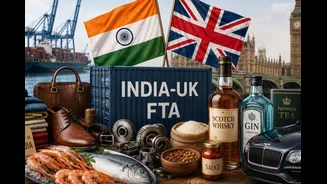
The agreement is expected to make British Scotch whisky, gin and eventually luxury cars cheaper in India, while opening up one of the world’s largest consumer markets for Indian exporters: from garments and footwear to seafood, engineering goods and auto components.
For consumers, some benefits will be visible almost immediately. For businesses, the real gains could play out over the next decade as tariffs are phased down and companies expand exports.
What Exactly Is The India-UK FTA?
The agreement eliminates or reduces customs duties on thousands of products traded between the two countries, while also simplifying market access, investment and services.
A historic milestone for India-UK relations.
Delighted to note that the India-UK Comprehensive Economic and Trade Agreement will enter into force on 15th July 2026.
This agreement will significantly boost our bilateral trade and investment.
It will also unlock numerous… pic.twitter.com/I0bMCjdtg4
— Narendra Modi (@narendramodi) June 17, 2026
According to the government, 99 per cent of India’s exports to the UK by value will now enjoy zero-duty access, covering sectors such as textiles, apparel, leather, footwear, gems and jewellery, marine products, engineering goods, chemicals and agricultural products. In return, India has agreed to gradually lower tariffs on several British products, including Scotch whisky, gin and automobiles.
ALSO READ | What Is The India-UK FTA, How Did It Come About & Why It’s Being Called A Big Win For Both Sides?
The deal is expected to increase bilateral trade by billions of dollars over the coming years and deepen investment flows between the two countries.
What Gets Cheaper In India?
1. Scotch Whisky And Gin
This is perhaps the most visible consumer benefit. India currently imposes a 150 per cent import duty on Scotch whisky and gin imported from the UK. Under the FTA, duty falls to 75 per cent immediately and it will be reduced further to 40 per cent over the next 10 years.
Industry estimates suggest consumers could eventually see 5-10 per cent lower retail prices on several premium Scotch labels, although the exact reduction will depend on state excise duties, distributor margins and brand pricing strategies.
Industry leaders have argued that the agreement is likely to expand the premium spirits market rather than hurt Indian manufacturers because imported Scotch accounts for only a small share of India’s overall whisky consumption.
2. Luxury British Cars
The agreement also lowers import duties on UK-built vehicles, but the benefits will arrive gradually.
Today, imported British cars attract duties of up to 110 per cent. Under the FTA, duties will eventually decline to 10 per cent over 15 years. Imports will initially be allowed only under a Tariff Rate Quota (TRQ).
ALSO READ | India-UK FTA: Why India’s Farmers Will Be The Biggest Winners In Historic Trade Deal
The biggest beneficiaries are likely to be brands such as Aston Martin, Bentley, Jaguar Land Rover (UK-built models), McLaren, and Rolls-Royce.
However, buyers should not expect dramatic price cuts immediately. Only 20,000 completely built-up petrol and diesel passenger cars will qualify for concessional duties in the first year under the quota system. Duties will reduce in phases before reaching 10 per cent in the fifteenth year.
India has also protected its domestic automobile industry by excluding lower-priced electric, hybrid and hydrogen vehicles from duty cuts during the first five years. Separate quotas for premium EVs will begin only from the sixth year.
What Won’t Become Cheaper Overnight?
Many consumers expect the FTA to immediately slash prices across imported British products. That is unlikely.
Products such as chocolates, cosmetics, premium food items, and fashion goods may become more competitive over time where tariffs have been reduced, but the final retail price will also depend on freight, exchange rates, GST, distributor margins and retailer pricing.
Similarly, luxury cars will continue to remain expensive despite gradual tariff reductions.
Big Boost For India’s Exporters
While cheaper imports have grabbed headlines, economists believe the real winner is India’s export sector.
Nearly all Indian exports to Britain will now enjoy duty-free access, improving competitiveness against suppliers from countries that still face tariffs.
According to a Global Trade Research Initiative (GTRI) analysis, the biggest opportunities lie where three conditions come together: India has strong production capacity, the UK has large import demand, and tariffs have been significantly reduced.
Those sectors include:
Garments: India already exports over $1.3 billion worth of garments to Britain and supplies about 6 per cent of the UK’s garment imports. With tariffs removed, Indian apparel exporters are expected to become even more competitive against rivals.
Textiles, leather and footwear: The UK already accounts for over 10 per cent of India’s footwear exports, while India has an established presence in textiles and leather goods. These sectors are among the biggest expected beneficiaries.
Processed foods: Ready-to-eat meals, sauces, bakery products and ethnic foods could see significant export growth as tariffs fall, although compliance with UK food safety standards will remain critical.
Seafood: India currently supplies less than 1 per cent of Britain’s seafood imports, suggesting substantial room for expansion if exporters meet sanitary and traceability requirements.
Automobiles and auto components: Britain imports over $92 billion worth of automobiles annually, but India currently has only a 0.4 per cent market share. Lower tariffs could create long-term opportunities for Indian vehicle manufacturers and component makers.
Engineering goods, electronics and machinery: Exports in these sectors are expected to grow, although success will depend less on tariffs and more on product quality, certification and integration into UK supply chains.
Sectors With Limited Gains
The GTRI says tariff cuts alone cannot overcome structural barriers in several industries.
These include pharmaceuticals (where regulatory approvals matter more), chemicals, plastics and rubber, precious metals, iron and steel, petroleum products, tobacco, and alcohol exports from India. In many of these sectors, technical standards, environmental regulations, certification requirements or weak market presence remain bigger challenges than tariffs.
As GTRI Founder Ajay Srivastava noted, the agreement creates market access, not guaranteed exports. Without improvements in standards, logistics, certifications and buyer networks, much of the opportunity could remain unrealised.
One of the most significant provisions isn’t about goods at all.
The agreement introduces a Double Contribution Convention, under which Indian professionals temporarily working in the UK, and their employers, will not have to make social security contributions in both countries simultaneously. Employees on short-term assignments will continue contributing only in India for up to five years, reducing costs for Indian IT companies and other service exporters.
The Strategic Advantage
The UK imported goods worth nearly $929 billion in 2025, but only $15.2 billion came from India, giving India a market share of just 1.6 per cent. At the same time, the UK accounted for only about 3.4 per cent of India’s global goods exports.
That means there is considerable room for growth if Indian companies can take advantage of tariff-free access.
The agreement also comes at a time when India is pursuing a broader strategy of signing trade agreements with major economies to diversify export markets beyond traditional destinations.