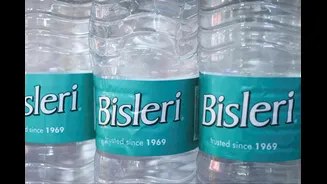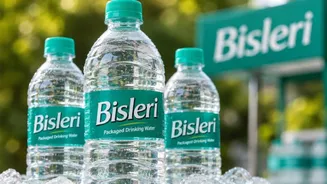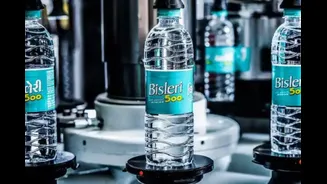



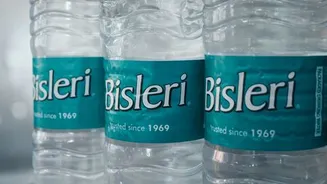

For many Indians, bottled water is one of those things bought without a second thought. The familiar green bottle at an airport, railway station, restaurant or roadside shop is often the easiest way to
ensure access to drinking water. But a recent food safety finding involving Bisleri has put that everyday habit under scrutiny.
The Food Safety and Standards Authority of India (FSSAI) has sanctioned prosecution against Bisleri International Pvt Ltd after a sample of its packaged drinking water was declared unsafe in laboratory testing. The sample reportedly failed to meet prescribed bromate limits. Following an appeal by the company, a referral laboratory also declared it unsafe after detecting polynuclear aromatic hydrocarbons (PAHs).
What Is Bromate, And Why Is It A Concern?
Bromate is a chemical that can form during water treatment, particularly when ozone is used for disinfection. Ozone helps eliminate microorganisms, but it can react with bromide naturally present in water and produce bromate. This is why the treatment process needs to be carefully controlled.
The concern is that bromate exposure over time may increase cancer risk. The World Health Organization (WHO) has set a provisional guideline value of 10 micrograms per litre for bromate in drinking water. The guideline is based on toxicological evidence, including animal studies that found tumours in the kidneys, thyroid and other tissues. Bromate is also difficult to remove once it forms, making prevention and monitoring during the water-treatment process particularly important. Its presence is not something consumers can identify by looking at a bottle or tasting the water.
A regulatory sample of "Packaged Drinking Water (other than Mineral Water)" was collected from the premises of M/s Bisleri International Pvt. Ltd. for analysis.
The sample was found non-compliant with the prescribed bromate limits and declared unsafe under the FSS Act, 2006.
Upon appeal by the FBO, the sample was referred to the Referral Food Laboratory, which also declared it unsafe due to the detection of polynuclear aromatic hydrocarbons (PAHs).
The laboratory findings established violations relating to unsafe food under the FSS Act, 2006.
Sanction has been granted to launch prosecution under the FSS Act, 2006, against M/s Bisleri International Pvt. Ltd
@fssaiindia
— DD News (@DDNewslive) November 22, 2026
What Are PAHs, And How Can They Enter Drinking Water?
The second finding in the Bisleri sample involved polynuclear aromatic hydrocarbons, commonly referred to as PAHs. These are a group of chemicals that can form when organic material burns incompletely. They can also be found in coal, petroleum, vehicle emissions, industrial pollution and smoke.
Not all PAHs carry the same health risks, but some are known carcinogens. Benzo[a]pyrene, for instance, is associated with cancer risk and has a WHO drinking-water guideline value of 0.7 micrograms per litre. Certain PAHs can be processed by the body into compounds that interact with DNA, potentially causing cellular damage. PAHs can enter drinking water through environmental contamination or contact with certain materials used in water storage and distribution. As per WHO, coal-tar-based coatings in deteriorating water pipes can be a source of PAH contamination.
How Did The Contaminants Enter The Water?
The findings raise questions about where contamination could have occurred. Potential sources include the water used during production, treatment-related chemical reactions, environmental contamination or contact with materials used in storage and packaging. Bromate, in particular, can form during ozonation, which makes monitoring treatment conditions an important part of water safety.
The Bisleri case also comes at a time when packaged drinking water quality has been under regulatory scrutiny. Government data presented in Parliament showed that 333 of 1,300 enforcement samples tested in 2023–24 did not conform to prescribed standards. In 2022–23, 650 of 1,776 samples were found non-conforming. These figures point to a wider compliance concern within the packaged-water sector, rather than an issue that can be viewed only through one brand.
Reuters reported that Bisleri said a sample from its Goa facility tested last year contained 12 micrograms per litre of bromate, against the 10-microgram limit. The company also said independent testing it arranged later found bromate levels within limits, and that it would cooperate with the regulator.
Can Consumers Identify Unsafe Bottled Water?
Not always. Chemical contaminants such as bromate and PAHs cannot reliably be detected through the colour, smell or taste of water. A bottle may appear perfectly clear and still require laboratory testing to establish its chemical safety.
Consumers can, however, take some basic precautions:
– Check the FSSAI licence details, batch number and packaging or best-before information.
– Make sure the cap and seal are intact before opening.
– Avoid bottles that are leaking, damaged or visibly contaminated.
– Buy from retailers who store bottled water away from direct sunlight and excessive heat.
– Avoid drinking from bottles that have been tampered with or improperly stored.