







For me, December is a month dedicated solely to rest. As the year draws to a close, this is when I usually retreat. The year feels heavier by then, the city louder, the air sharper in ways that hurt. So
when I found myself in Sirmaur, Himachal Pradesh, in early December, just as the state was reopening after months of careful restoration following the floods, it felt less like a trip and more like a pause I desperately needed.
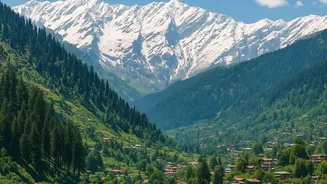
The roads thinned as we climbed. Phone signals got weaker. Tall pine trees replaced hoardings. Honks were replaced by bird song. Somewhere along the way, I realised my shoulders had dropped an inch lower than usual, and my breath was relaxed.
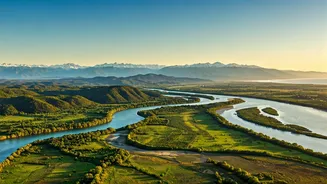
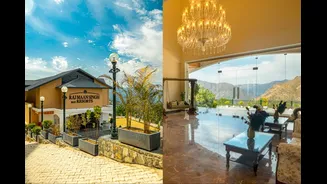
By the time I arrived at Rajmaan Singh Eco Resorts, the afternoon sun was slipping gently across the valley, lighting up layers of hills in quiet gradients of green and grey. The first thing that struck me wasn’t the scale of the property – though it is expansive, spread across forested slopes – but the stillness that enveloped it. It didn’t feel empty; it felt warm and comforting like a hug from a friend. Wind moving through trees. Birds gossiping overhead. That rare sound of nothing mechanical asking for attention.
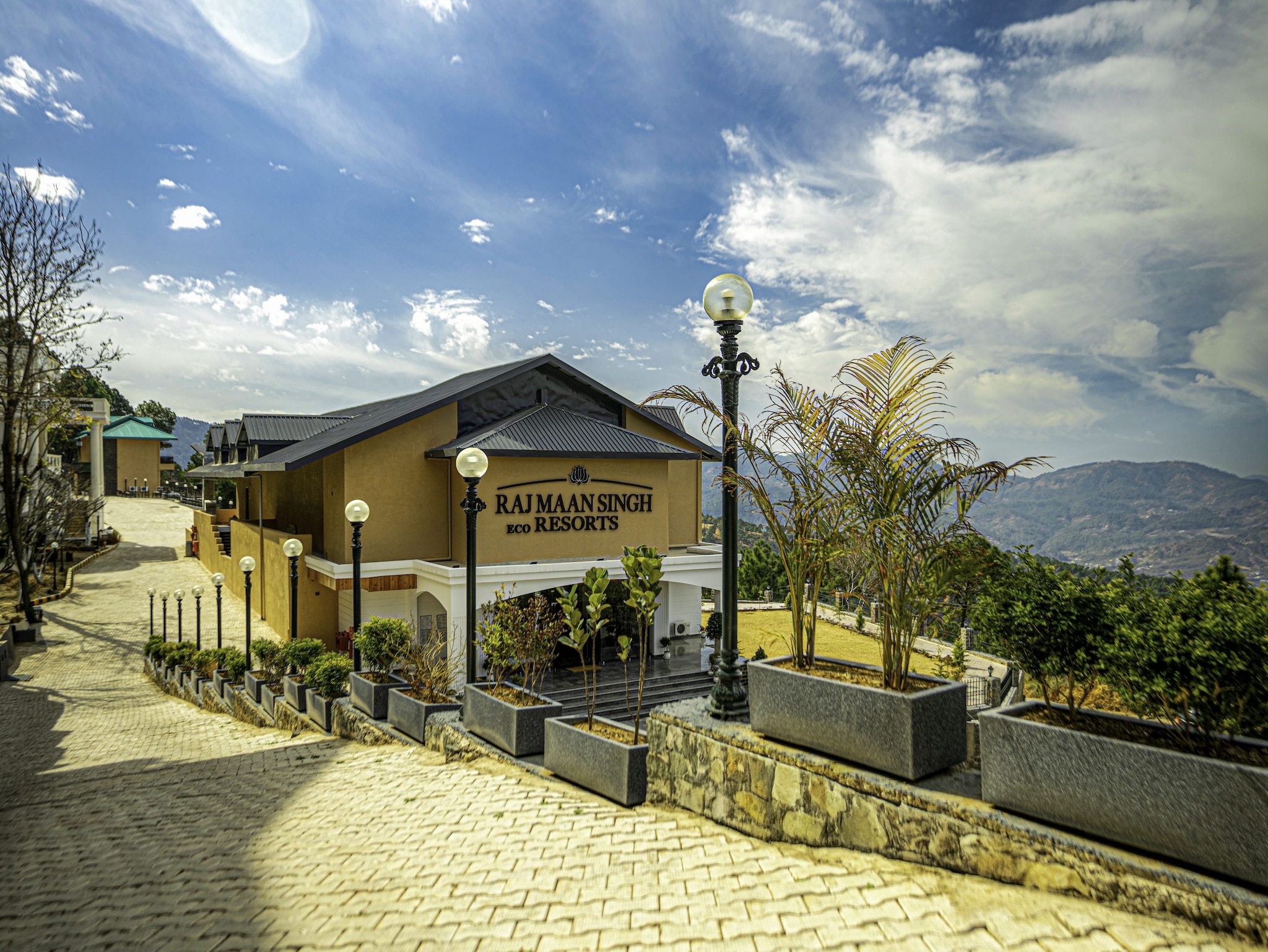
Check-in was seamless, unhurried. I was handed a lemon-based welcome drink, which was sharp, fresh, reinvigorating – just the thing I needed to nurse me back to health after my motion sickness.
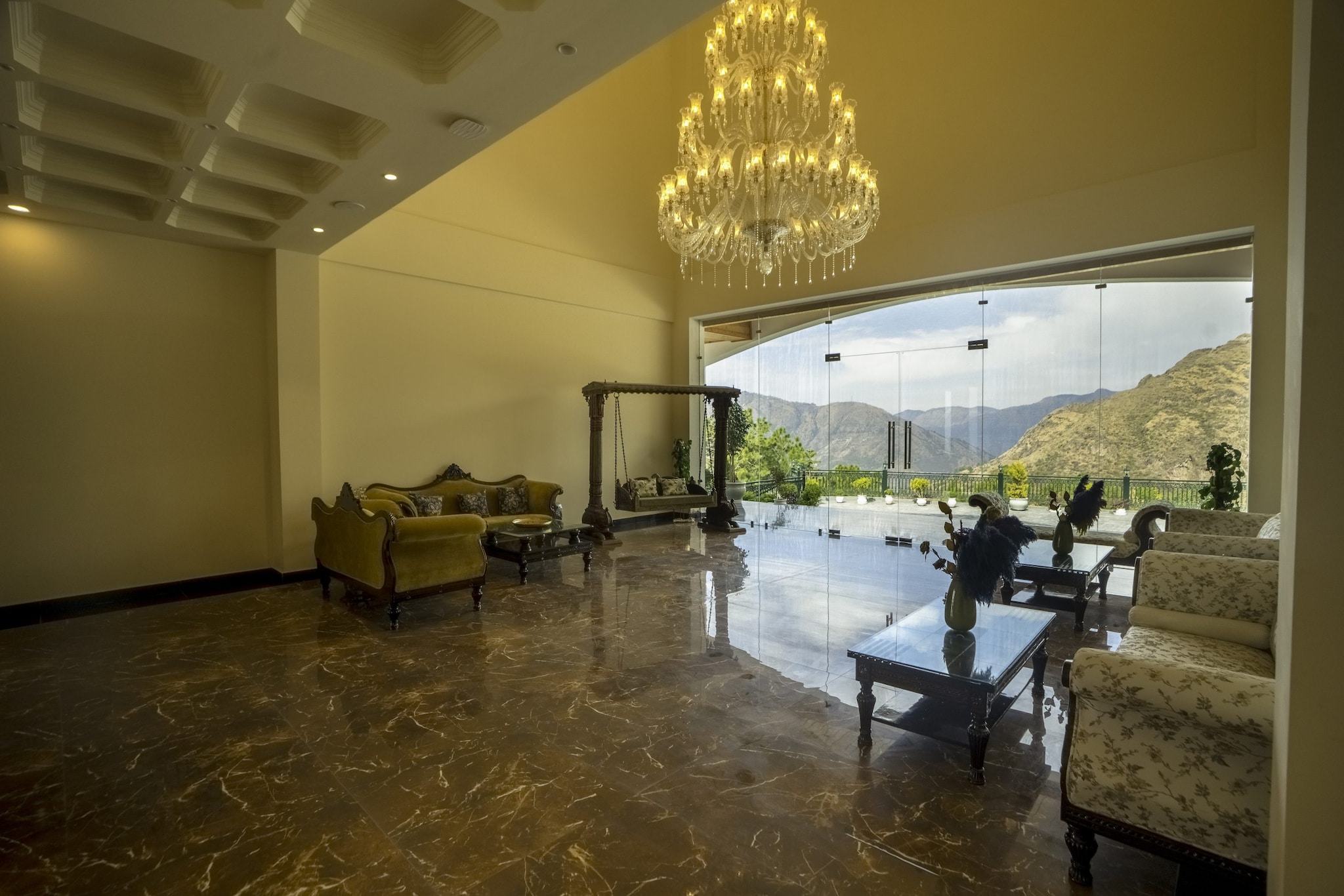
Rajmaan Singh Eco Resorts unfolds slowly. Nearly every space faces outward towards the valley, the forest, the sky. So even when you’re indoors, the landscape never quite leaves you. My room was warm in both temperature and spirit. Wooden floors echoed classic Himachali architecture, and large windows framed the outdoors like a living painting. Every room here has a view, but the themed rooms take detail seriously – from custom bed frames and bedside lamps to patterned bathroom tiles. It didn’t feel styled for effect; it felt considered.
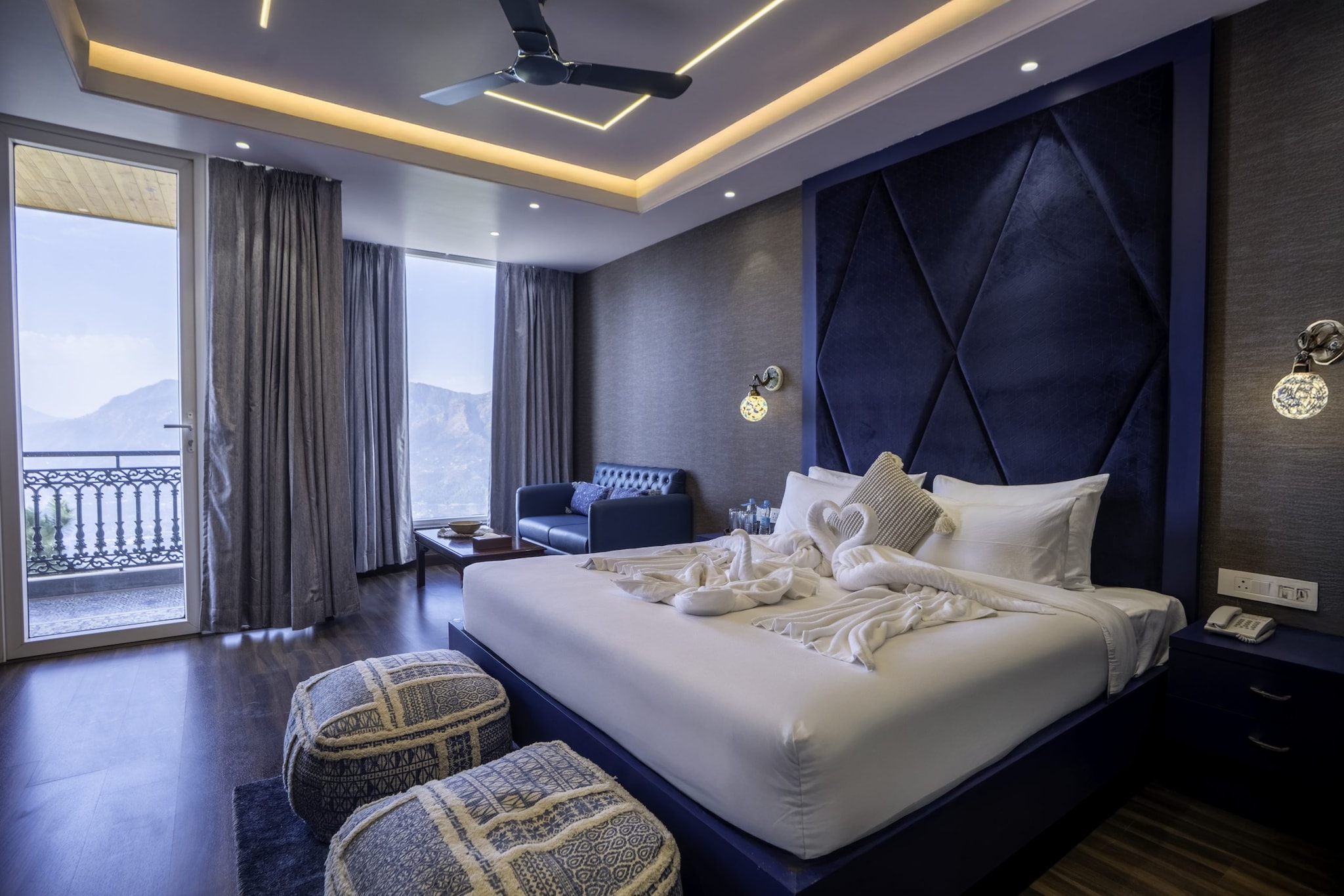
Mornings arrived gently. Winter sunlight spilt onto the balcony as I sat with my cup of coffee. Birds began their daily conversations, and the air – clean, startlingly crisp – made breathing feel deliberate again. For someone accustomed to city AQI readings that border on absurd, this felt almost indulgent.
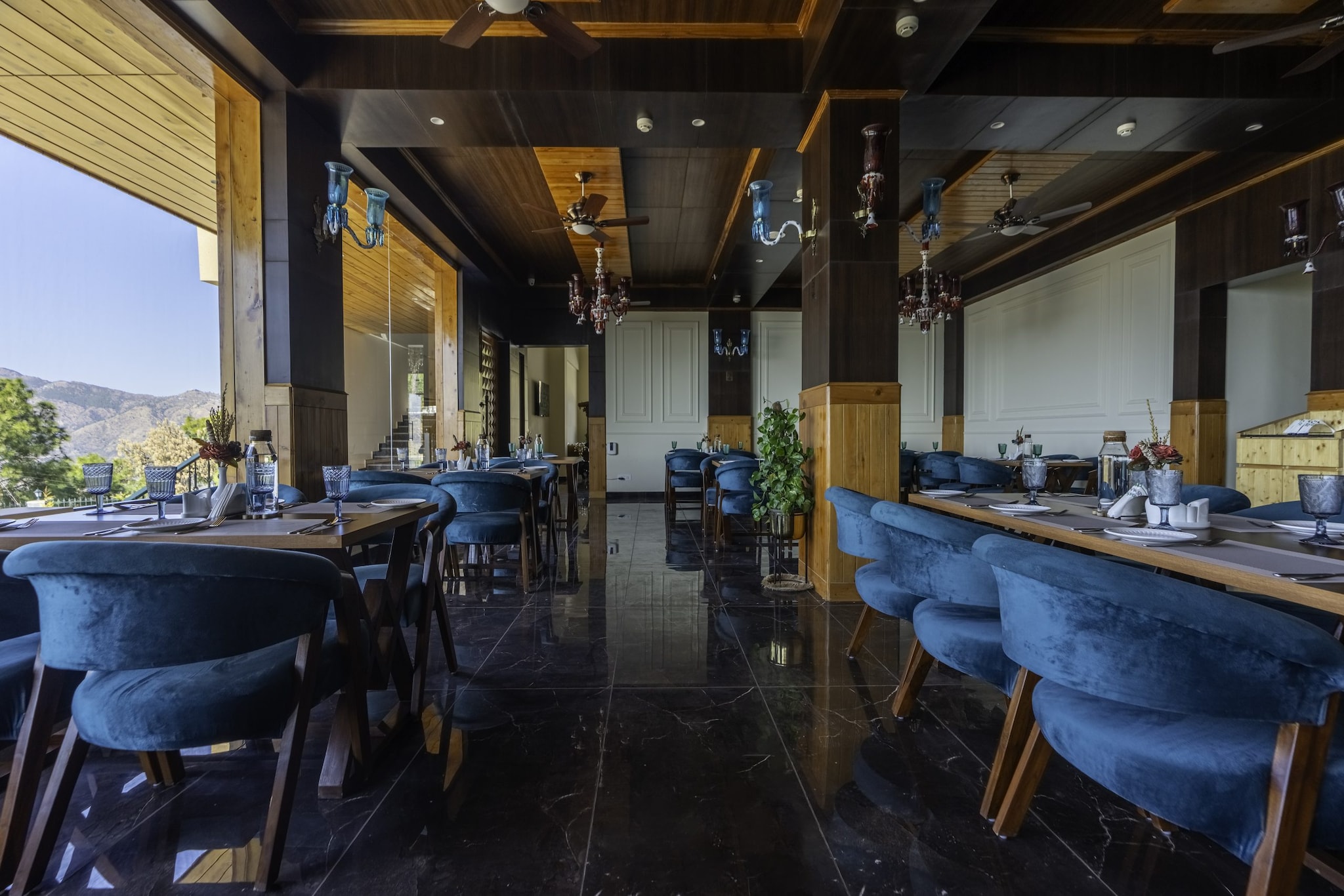
Meals were served at the hill-facing restaurant, where everything tasted fresh, local, and deeply comforting. This wasn’t food trying to impress; it was food trying to nourish. To experience true Himachali hospitality, the staff arranged a Himachali dham on a hillside, which was served picnic-style on leaf platters. Lentils, rice, and gently spiced preparations tasted familiar yet grounding, the kind of meal that warms without weighing you down. Sitting there, with the warm sun hitting my face, eating quietly while the hills held their pose, I realised how rarely meals are allowed to simply be experiences anymore.
No trip to Himachal feels complete without Siddu. This traditional steamed bread made from wheat flour and filled with a warm mixture of nuts and spices is an indulgence at its finest. And I wasn’t about to leave without trying it. I tried the classic version first. It was soft, gently steamed, comforting in a way that feels instantly familiar. Then I moved to a more unexpected rendition filled with chocolate. It shouldn’t have worked, but it did, blurring the line between tradition and playfulness while still keeping the essence of the dish intact.
Much of what you eat here comes from the resort’s own gardens or nearby villages. Sukhvinder Singh Sudan, Founder, Rajmaan Singh Eco Resort, told News18, “We grow produce in-house for our kitchen and source poultry, dairy and vegetables directly from nearby villagers. At the resort, we consciously use products made from healthy, organic materials and make a continuous effort to avoid unnecessary plastic. From daily operations to sourcing and waste management, our aim is to function in a way that respects nature rather than exploiting it.” Sustainability, for them, was never meant to be a buzzword. It was a lifestyle. Luxury here isn’t imposed; it’s learned patiently.
Hospitality here is warm but never intrusive. There’s an ease to their presence, the kind that comes from familiarity rather than cold training manuals. Most are from nearby villages, and it shows in the way care feels instinctive, not rehearsed. Nothing is announced loudly, yet everything arrives when it should, and it leaves you with the sense of being looked after without ever feeling watched.
Time behaved differently here. Afternoons stretched without urgency, and by evening, the cold settled in just enough to invite a bonfire. The staff was kind enough to light a bonfire as the sky dimmed, and strangers gravitated towards the warmth instinctively. Conversations unfolded easily, without introductions feeling necessary. Stories were shared, laughter lingered longer than planned, and for a while, the hills held us all in the same quiet circle.
The wind moved so cleanly through the trees that it felt like music. No traffic hum. No distant horns. Just air, moving honestly.
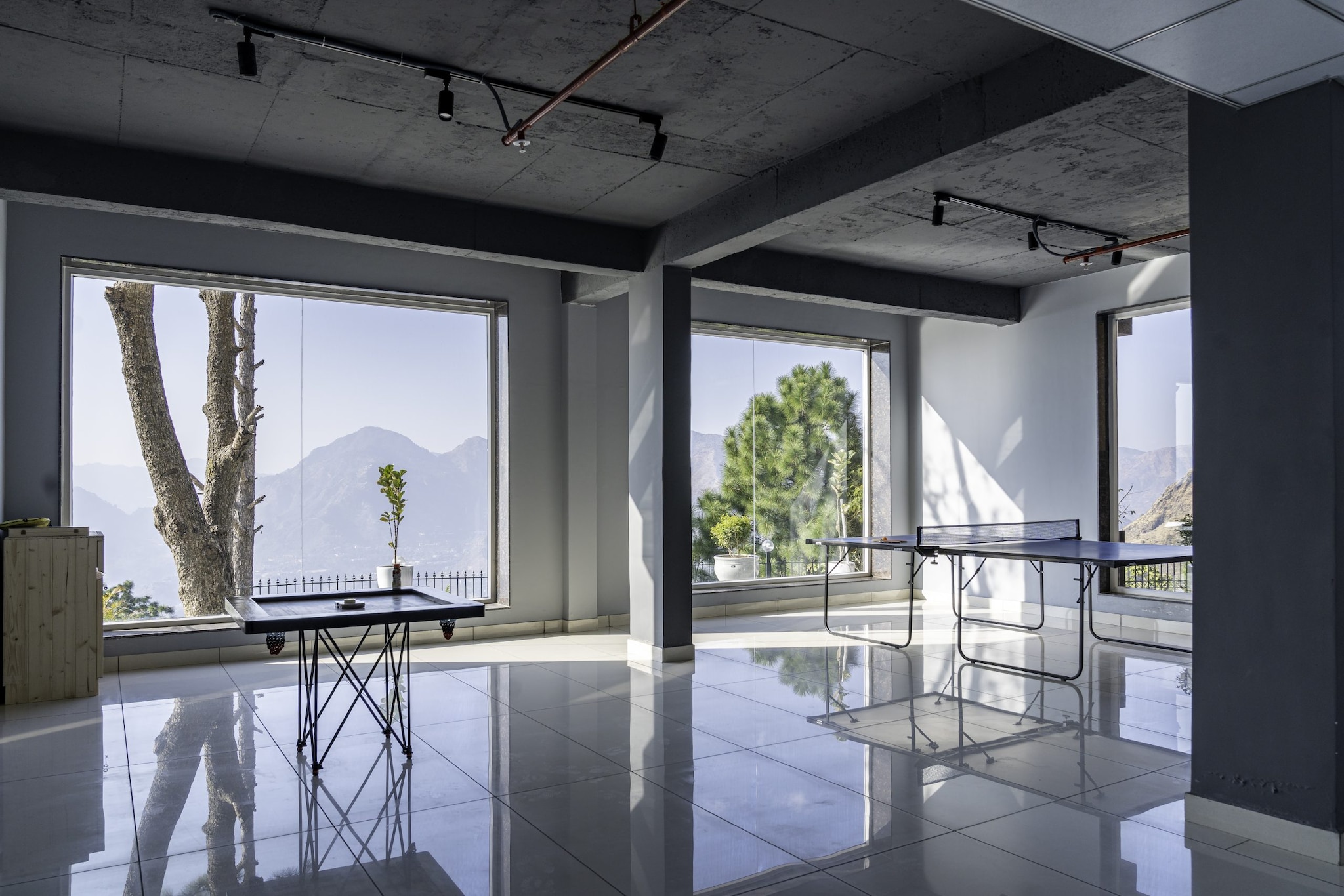
There is plenty to do if you seek it. Spa therapies – sauna, steam, Jacuzzi – offer quiet recovery after long walks. There’s a gym, game rooms, and spaces for children to play. But nothing feels rushed or forced. Every activity unfolds at the same slow rhythm as the hills themselves.

Stepping beyond the resort reveals Sirmaur’s deeper layers. A short trek away lies the Jawala Mata Temple, tucked into the landscape with a quiet dignity. Believed to have been visited by the Pandavas, the temple carries inscriptions in ancient Devanagari script. Further drives lead to the towering Jatoli Shiv Temple, the calm presence of Menri Monastery with its fluttering prayer flags, and heritage sites like Dagshai Jail Museum, perched with colonial gravity over the hills.
What struck me most was how uncrowded everything felt. This was Himachal without the performative chaos. Without queues, without pressure. Sirmaur remains relatively lesser known, and perhaps that’s what allows it to breathe so freely.
There is something quietly reassuring about discovering a place that doesn’t demand your attention, yet earns it effortlessly. Sirmaur doesn’t rush to impress, and neither does Rajmaan Singh Eco Resorts. “We never wanted to create a space that felt disconnected from where it stands. The idea was to let people arrive, slow down, and experience the region as it is – without noise or pressure,” Sudan said. It’s a philosophy you feel rather than notice: in the unhurried mornings, in the way the landscape is allowed to lead, and in the ease with which time seems to loosen its grip.
On my last morning, I lingered longer than planned, reluctant to re-enter the rhythm of elsewhere. December, after all, is meant to slow down. For gathering energy before the year begins again. In Sirmaur, I found that rest didn’t have to be earned. It simply waited – patient, expansive, and quietly generous – between the hills.