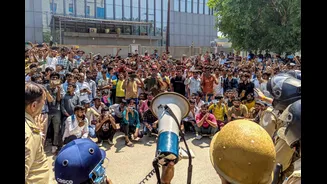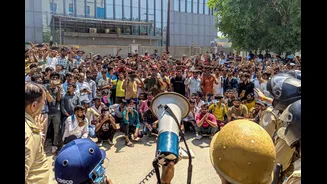






After protests by factory workers in Noida turned violent over demands for higher wages, better working conditions and overtime pay, the Uttar Pradesh government announced an interim increase in minimum
wages across categories, with retrospective effect from April 1, 2026.
The agitation, which comes amid rising living costs and similar protests in nearby industrial regions, has renewed attention on how minimum wages in India vary across states, with rates fixed based on skill level and region.
Which States Pay The Highest Minimum Wages?
Delhi remains among the highest-paying states. As per its latest revision in April 2025, unskilled workers receive Rs 18,456 per month, semi-skilled workers Rs 20,371, and skilled workers Rs 22,411.
Kerala also reports high wages in certain sectors. In a February notification, monthly wages in sectors such as dairy farming were fixed at Rs 20,610 for categories including watchmen, peons and supply workers for an eight-hour workday. Similar revisions were announced in other sectors as well.
Maharashtra, which revised wages in October 2024, offers some of the highest pay levels in urban areas. Skilled-A employees’ wages were increased to Rs 19,625 per month in Zone I and to Rs 18,975 in Zone II. Skilled-B workers’ wages were revised to Rs 18,975 in Zone I and Rs 18,320 in Zone II. Additionally, the revised wages for Skilled-C employees were increased to Rs 18,320 in Zone I and to Rs 17,570 in Zone II. Semi-skilled and unskilled workers like helpers and cleaners also got a wage hike.
Haryana has also seen a significant increase. Effective April 1, 2026, unskilled workers now receive Rs 15,220.71 per month, while semi-skilled workers earn Rs 16,780.74 and skilled workers Rs 18,500.81. The state government said the hike was approved following recommendations from an expert committee.
Some regions and states offer even higher wages depending on category and location. For instance, Andaman and Nicobar Islands report minimum wages of Rs 16,952 per month for unskilled workers and over Rs 24,000 for highly skilled workers.
Karnataka, particularly in its top urban zones, also reports higher wages, with unskilled workers earning over Rs 16,000 per month and skilled workers earning above Rs 18,500.
Where Does Uttar Pradesh Stand?
Despite the latest hike, Uttar Pradesh remains below the higher-paying states.
In Gautam Buddh Nagar and Ghaziabad, unskilled workers now earn Rs 13,690 per month, up from Rs 11,313. Semi-skilled workers receive Rs 15,059, while skilled workers earn Rs 16,868.
In other municipal corporation areas, unskilled workers receive Rs 13,006 per month, semi-skilled workers Rs 14,306 and skilled workers Rs 16,025. In the remaining districts, wages are lower, with unskilled workers earning Rs 12,356, semi-skilled workers Rs 13,591 and skilled workers Rs 15,224.
Officials said the increase goes up to 21 per cent in some areas and is aimed at providing immediate relief, with a final wage revision to be undertaken through a wage board.
Which States Are At The Lower End?
Several states continue to report lower minimum wages. In Nagaland, unskilled workers earn around Rs 5,280 per month, among the lowest in the country.
Arunachal Pradesh also remains at the lower end, with wages starting at around Rs 6,600 for unskilled workers.
Tripura and Jammu and Kashmir also fall in the lower range, with unskilled wages below Rs 8,500 in some categories.
Gujarat revised wages in 2023. The minimum daily wage for Area A (Ahmedabad Municipal Corporation limits) and Area B (other municipal corporations) was set at Rs 452. For other parts of the state, the minimum daily wage was fixed at Rs 441, placing it below states like Delhi, Maharashtra and Haryana in overall wage levels.
What Triggered The Protests In Noida?
The protests were triggered by demands for higher wages, better working conditions and proper overtime pay. Workers said their agitation was centred around wage revision, weekly offs, overtime compensation and workplace safety.
Key Demands Of The Workers
Fair wage revision: Workers sought an immediate increase in base salaries to align with the rising cost of living, moving away from the existing wage brackets.
Mandatory double overtime pay: Protesters alleged that factories were not complying with legal provisions requiring double pay for overtime. Many claimed they were either paid at a single rate or not compensated at all for extra hours.
Strict 8-hour shifts: Workers demanded an end to extended 10–12 hour shifts, insisting that any work beyond 8 hours should be voluntary and fairly compensated.
Other demands: These included bonuses, weekly offs, formation of grievance redressal mechanisms, timely payment of salaries, and issuance of salary slips.