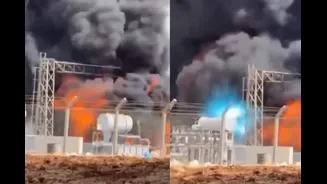










An Iranian strike on a power and water desalination plant in Kuwait has exposed a dangerous new front in the US-Iran conflict: the threat to drinking water across one of the world’s driest regions.
Kuwaiti
authorities said the attack damaged several power-generation units and sparked a fire at the facility. The blaze was contained, and emergency contingency plans were activated, according to The Associated Press .
The incident has drawn attention to an infrastructure network that is as vital to Gulf countries as their oil and gas facilities. With little rainfall, limited groundwater and few permanent rivers, several states rely heavily on desalination plants to turn seawater into freshwater.
While international attention has largely focused on fighting around the Strait of Hormuz and rising energy prices, damage to desalination and power infrastructure could create a more immediate crisis for people living in the region.
Why The Gulf Cannot Survive Without Desalination
Desalination is not a supplementary source of water in much of the Gulf. It is the system that keeps homes, hospitals, businesses and industries running.
Around 90 per cent of Kuwait’s drinking water comes from desalination, according to AP. The share is about 86 per cent in Oman and 70 per cent in Saudi Arabia. The scale of that dependence leaves governments with few alternatives if a major plant is damaged or forced offline.
A February 2026 assessment by the United Nations Economic and Social Commission for Western Asia said nearly 40 million people in GCC countries depend, to varying degrees, on desalinated water drawn from the Gulf. Damage to either water or energy infrastructure could therefore threaten supplies across some of the region’s largest cities.
How Seawater Becomes Drinking Water
Desalination removes salt and other impurities from seawater to make it suitable for human consumption.
One of the most common methods is reverse osmosis, in which seawater is forced through specialised membranes at high pressure. The membranes allow water to pass through while filtering out salt and impurities.
The other major method is thermal desalination. Seawater is heated to produce vapour, which is then cooled and condensed into freshwater.
Both processes require significant amounts of energy. In 2023, plants across the Middle East consumed energy equivalent to nearly half of the region’s total household energy use, according to the International Energy Agency.
Why An Attack On A Power Plant Can Stop Water Production
Many desalination plants in the Gulf are built alongside power stations, allowing the two facilities to share electricity, heat and cooling systems.
While this improves efficiency, it also creates a wartime vulnerability. A strike on the power unit can disrupt water production even if the desalination facility itself is not directly hit.
Production can also stop if an attack damages seawater intake points, pumps, membranes, treatment units, storage facilities or pipelines. Desalination depends on an interconnected chain of systems, and damage to any one of them can interrupt the water supply.
Why The Plants Are So Exposed
Many of the region’s desalination facilities are located along the Gulf coast because they require direct access to seawater.
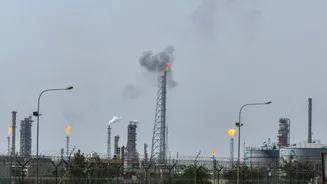
But that also places them close to ports, oil facilities, power stations and other strategic sites that may be targeted during a conflict. Hundreds of facilities supplying water to millions of people consequently sit within the range of missiles and drones.
The Gulf’s water supply depends heavily on a limited number of major desalination plants. A 2010 CIA analysis cited by AP said more than 90 per cent of the region’s desalinated water came from just 56 facilities.
“Each of these critical plants is extremely vulnerable to sabotage or military action,” the assessment said.
It warned that attacks on these plants could trigger national crises, leaving some cities without most of their drinking water within days. If specialised equipment were destroyed, restoring supplies could take months.
Water Facilities Have Already Been Caught In The Conflict
The latest strike in Kuwait is not the first time water infrastructure has been affected during the fighting.
Kuwait previously reported damage at the Doha West desalination plant. According to AP, the damage resulted from debris from intercepted drones or attacks targeting the nearby port.
Iran has also accused the United States of striking desalination plants on Qeshm Island on March 8. Tehran said the attack cut water supplies to 30 villages, though Washington did not acknowledge carrying out the strike.
Could Seawater Contamination Shut Down Plants?
Missiles and drones are not the only threat. Oil or chemical pollution in coastal waters can also force desalination plants to reduce production or shut down.
The 1990-91 Gulf War showed how serious that risk can be. Iraqi forces released oil into the Gulf, contaminating the seawater used by desalination plants in Kuwait and Saudi Arabia. Several facilities were forced to stop operating, while Kuwait became dependent on water rationing and emergency tanker supplies. Recovery took years.
Why Water Could Become The Conflict’s Humanitarian Flashpoint
Disruption in the Strait of Hormuz can drive up oil prices and shake global markets. A prolonged shutdown of desalination facilities, however, could directly affect whether Gulf cities have enough water to function.
Governments can draw on stored water, impose rationing or use tanker deliveries during short emergencies. But those measures cannot replace plants supplying millions of people for an extended period.
The risk is particularly severe because water and power networks are closely connected. A strike on an electricity facility can halt desalination, while an attack on a plant or pipeline can affect areas far from the original target.
Oil may shape the war’s consequences for the world economy. But for millions of people living around the Gulf, water could determine its humanitarian cost.