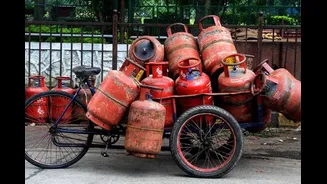






Eating out in India could soon become significantly more expensive as restaurants grapple with rising input costs driven by volatile oil prices and an acute shortage of commercial liquefied petroleum gas
(LPG) cylinders that power their kitchens.
Industry executives say several restaurants are preparing to increase menu prices by 20–30% as early as April, earlier than the usual price revision cycle that typically occurs around June–July.
“Restaurants anyway revise prices around July, but with the current crisis, we may undertake these hikes as early as April,” Sagar Daryani, co-founder and chief executive officer of Wow! Momo, told Business Standard.
The potential price increase reflects the dual pressure of surging fuel costs and supply disruptions that are making it increasingly difficult for restaurants to maintain operations.
LPG shortage disrupts restaurant kitchens
Restaurant operators across major cities say the shortage of commercial LPG cylinders has emerged suddenly, severely disrupting kitchen operations.
“Supply constraints began on March 9. Most hotels received barely 20 percent of their usual deliveries and supplies have since stopped entirely. Commercial cylinders are not reaching distributors, which has cut off supply to restaurants,” said Arun Adiga, managing partner at the nearly eight-decade-old Bengaluru restaurant Adiga’s.
For restaurants, cooking gas is not just a cost input but the backbone of daily operations.
“Most South Indian dishes like dosa need constant flame burners. We go through six to eight LPG cylinders a day. A larger restaurant would need around 10 to 12,” Adiga said.
Restaurant owners across Bengaluru, Mumbai and Delhi say deliveries of commercial LPG cylinders have dropped sharply in recent days, forcing kitchens to scramble for supplies.
“Restaurants can’t stockpile LPG due to safety regulations, so we rely on frequent deliveries. The supply cut was sudden and operators had no time to prepare. Large restaurants typically need six to ten cylinders a day, which is impossible to secure right now,” a restaurant operator said.
Industry executives warn that if the shortage continues, it could even lead to the emergence of a black market for LPG cylinders.
Rising LPG prices add to cost pressure
Even as supply tightens, the cost of commercial LPG cylinders has also increased sharply.
Messages circulating among restaurant operators suggest prices for 19-kg commercial LPG cylinders have climbed to around ₹2,100–₹2,300, compared with roughly ₹1,850 earlier and about ₹1,650 a month ago.
“The discounts on commercial cylinders are now cut, and we are staring at higher costs. The supply system currently has no buffers, so even a minor disruption can create operational challenges,” another operator said.
The price increase comes at a time when restaurants are already facing pressure from rising food prices, rent and labour costs, leaving many businesses with limited room to absorb additional expenses.
Gagandeep Singh Sapra, founder of Glisco Kitchens, which operates brands such as Tadka Rani and Meal Combo Box Company, warned that the disruption could have wider economic consequences.
“The problem is the impact will have a domino effect,” Sapra wrote in a post on X, cautioning that disruptions to cloud kitchens and restaurants could affect the income of thousands of workers linked to the food service sector.
He also warned that tightening supplies could push some operators toward informal markets in search of cylinders.
“The panic is not being created, it’s real,” Sapra said.
Government prioritises household LPG supply
The tightening supply situation has prompted the government to prioritise LPG availability for households.
In a post on X, the Ministry of Petroleum and Natural Gas said geopolitical disruptions affecting global energy supply chains have constrained LPG availability. Refiners have been directed to increase LPG production, with additional output diverted toward domestic household consumption.
Imported LPG is currently being prioritised for essential sectors such as hospitals and educational institutions, the ministry said.
The government has also formed a committee of oil marketing company executives to review LPG supply requests from restaurants, hotels and other industries on a case-by-case basis.
Separately, Indian Oil Corporation informed industrial and commercial customers that it was “constrained to stop supply to industrial and commercial customers for the time being” due to the supply disruptions linked to the crisis.
Middle East conflict fuels supply disruptions
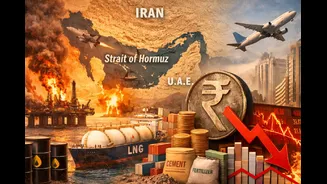
The LPG shortage comes against the backdrop of heightened geopolitical tensions in West Asia, where a conflict involving Israel, Iran and the United States has disrupted global energy markets.
The crisis has raised fears of disruptions to shipping through the Strait of Hormuz, one of the world’s most critical oil and gas transit routes through which nearly 20% of global oil supply passes.
The uncertainty has triggered volatility in global crude oil prices and strained energy supply chains, prompting governments and companies to implement contingency measures to secure domestic fuel availability.
India, which imports a large share of its energy requirements, remains particularly vulnerable to such disruptions.
Industry warns of wider economic impact
Restaurant industry bodies have warned that prolonged LPG shortages could significantly affect a sector that employs millions of people.
The National Restaurant Association of India (NRAI) has written to Petroleum and Natural Gas Minister Hardeep Singh Puri, urging the government to ensure an adequate supply of commercial LPG cylinders to restaurants.
Similarly, the Federation of Hotel & Restaurant Associations of India (FHRAI) has asked the government to exempt the hospitality sector from LPG supply restrictions.
According to the federation, India’s hospitality and food service sector includes 7–8 million establishments employing more than 70 million workers. Prolonged supply disruptions could lead to operational shutdowns, job losses and higher prices for consumers.
Local industry groups are also raising alarms. The Bengaluru Hotels Association has warned that restaurants in the city may struggle to operate if LPG supplies remain constrained for an extended period.
For now, restaurant owners say the coming weeks will be critical. If supply disruptions continue, diners across India could soon feel the impact through higher menu prices and reduced restaurant operations.