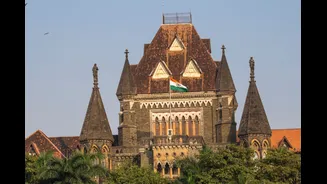






The Bombay High Court said public money cannot be spent on celebrity endorsements for civic awareness campaigns, expressing displeasure after being informed that film personalities were demanding fees
to participate in anti-pollution drives. A division bench of Justices GS Kulkarni and Neela Gokhale made the observations while hearing a suo motu public interest litigation on noise and environmental pollution in Mumbai.
Additional government pleader Jyoti Chavan informed the court that authorities had approached celebrities to support awareness campaigns, but they were asking to be paid for their appearances.
Taking exception to the disclosure, Justice Kulkarni said the government should not approach celebrities who were unwilling to contribute to a public cause without charging a fee.
“Don’t go to any celebrity who is going to charge you! If celebrities are not conscious about their own city, and they want to come only at fees, we are very sorry!” the bench said. The court added that it had expected public figures to demonstrate a sense of belonging to Mumbai and contribute to the city’s welfare.
‘If They Can Come For Police Functions, Why Not This?’
The bench also pointed out that celebrities frequently attend functions organised by the police department and questioned why they could not similarly support civic awareness initiatives.
“If they can come for that celebration, why can’t they come here?” the judges asked.
The court made it clear that the state exchequer should not bear the cost of securing celebrity participation in public service messaging.
Bombay HC Orders Publicity For Noise Complaint Helplines
The proceedings are part of the court’s ongoing efforts to curb noise and environmental pollution during festive processions across Maharashtra. In an order passed on September 22, the bench had prohibited the bursting of firecrackers on public streets and roads during festivities, besides banning laser lights and high-intensity beam lights.
During Monday’s hearing, senior advocate Aspi Chinoy flagged the absence of dedicated, recorded grievance helplines in the affidavits submitted by the authorities. Advocate Joel Carlos, appearing for the Brihanmumbai Municipal Corporation (BMC), told the court that noise-related complaints would be routed through the civic body’s existing 24-hour disaster helpline, 1916.
The bench directed the authorities to publicise both the BMC’s 1916 helpline and the police emergency number 100 prominently through print, cinema and digital media.
Court Flags Need For Awareness Drives In Slum Areas
The bench also expressed concern over the difficulty of ensuring awareness and compliance in Mumbai’s extensive slum settlements, which account for a substantial share of the city’s area.
“We are worried, how do you take it to the slums? Because if 40-50% of the area is slum area, how do you take it to the slum areas?” Justice Kulkarni asked.
The judge said special awareness drives were needed in these neighbourhoods, where violations involving firecrackers late at night continued to be a concern.
“There you require special kind of drive, sensitizing of all these persons who are in the slums. We are nothing against them, but they should follow the law,” he said.
Amicus curiae Anand Pai highlighted the practical difficulties of conducting conventional awareness campaigns in densely populated settlements.
He suggested that involving local leaders could help authorities reach residents more effectively, observing that people were more likely to respond to those with whom they identified.
The bench agreed with the suggestion and directed civic authorities to actively involve ward corporators in spreading awareness and improving compliance.
The court adjourned the matter to November 25, asking the BMC, police and pollution control authorities to coordinate their efforts and ensure sustained enforcement of noise pollution restrictions.