









For some people, the idea of wearing socks under the covers feels restrictive; for others, it is a non-negotiable prerequisite for sleep. Beyond personal preference, however, lies a fascinating physiological
argument for keeping your feet covered. Research suggests that wearing socks to bed isn’t just about comfort; it is a functional hack for better sleep hygiene.
Can I Wear Socks To Bed?
The primary reason socks aid sleep is a process called distal vasodilation. When your feet are warmed, the blood vessels in the extremities dilate. This signals to the brain that it is time to redistribute heat from the body’s core to the periphery.
“Heating the feet, either by a footbath or by wearing socks, induces vasodilation,” notes sleep experts at the National Sleep Foundation. This process helps lower the body’s core temperature, which is a vital biological cue that the body is ready for rest. In fact, a study published in the Journal of Physiological Anthropology found that young men wearing socks fell asleep 7.5 minutes faster and slept 32 minutes longer on average than those without.
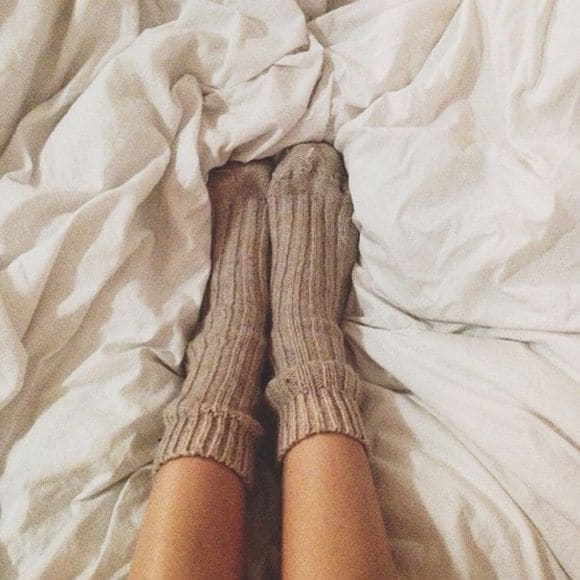
Benefits Of Wearing Socks To Bed
The benefits extend into the quality of the sleep cycle itself. By maintaining a stable temperature, the body experiences fewer “micro-awakenings” caused by thermal discomfort.
Dr. Jess Andrade, a physician who went viral for discussing sleep hygiene, explains that “warming your feet dilates the blood vessels, which tells the brain it’s bedtime.” This shift doesn’t just speed up sleep onset; it can also help manage specific conditions. For those suffering from Raynaud’s disease—where extremities lose circulation and turn numb in response to cold—socks are a medical necessity to prevent painful flare-ups during the night.
Furthermore, for women undergoing menopause, sleeping with socks might seem counterintuitive due to hot flashes. However, because socks help the body regulate its core temperature more efficiently, they can actually mitigate the severity of these hormonal temperature spikes.
The “Golden Rules” Of Sleep Socks
If you are ready to try the “sock method,” dermatologists and sleep specialists suggest a few ground rules:
Prioritise Breathability: Avoid thick, synthetic materials that trap moisture. “Choose socks made of natural fibers like cotton, cashmere, or merino wool,” suggests advice from Healthline. These materials provide warmth without causing the feet to overheat or sweat.
Ensure A Loose Fit: Compression socks or tight elastics can restrict circulation—the exact opposite of what you want. Ensure the socks are loose-fitting to allow blood to flow freely.
Hygiene Is Key: Never wear the same socks you wore during the day. Fresh socks prevent the buildup of bacteria and fungal infections like athlete’s foot.