



The 1996 India-Bangladesh Ganga Water Sharing Treaty, signed in New Delhi by then Prime Minister HD Deve Gowda and Bangladesh Prime Minister Sheikh Hasina, expires on December 12, 2026. It governs the sharing
of Ganga waters at Farakka during the dry season, from January 1 to May 31, and was designed to settle one of the most contentious water disputes between the two neighbours.
But in Bihar, the treaty is increasingly being viewed not as a settled diplomatic success, but as a source of water stress, siltation and floods.
JD(U) working president and Rajya Sabha MP Sanjay Jha has emerged as the most vocal advocate of this position. As quoted by The Hindu, he has demanded that the Centre reconsider renewing the treaty in its present form, arguing that Bihar’s interests were sacrificed when the agreement was signed.
“I am not doing any politics on this, but if you look at the old records of that time, some people were raising this issue that this Ganga water treaty with Bangladesh would be very harmful for Bihar,” Jha recently said. “Look at the data of the last 30 years, what was lost and what was gained, and you will see how great an injustice has been done to Bihar.”
What Is The Ganga Water Treaty About?
The dispute begins with how the treaty divides water at Farakka in West Bengal. Under the agreement, if the Ganga’s flow at Farakka is 70,000 cusecs or less, India and Bangladesh are to receive 50 per cent each. When the flow is between 70,000 and 75,000 cusecs, Bangladesh gets 35,000 cusecs and India receives the balance. If the flow is 75,000 cusecs or more, India gets 40,000 cusecs and Bangladesh receives the remainder.
There is also a special guarantee during the critical lean period. Between March 11 and May 10, India and Bangladesh are each guaranteed 35,000 cusecs during alternate three 10-day periods.
The treaty was meant to address Bangladesh’s concerns about dry-season flows downstream while helping India maintain adequate water in the Hooghly system for Kolkata’s port and navigation.
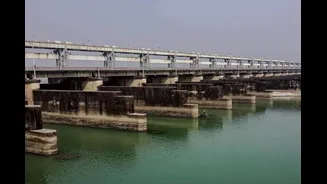
The problem for Bihar, however, is geographical and political. The water is being measured and divided at Farakka, downstream of Bihar, but the consequences of that management are felt upstream in the state.
Why Bihar Believes It Is Losing Out
Bihar’s argument is that the state’s own requirements have not been adequately factored into the equation. Jha has alleged that as much as 73 per cent of the water that should have been available to Bihar is going to Bangladesh, a claim that has become a central political talking point in the state. He has also argued that the treaty has contributed to water shortages during the lean season, when Bihar needs the Ganga for drinking water, irrigation and agriculture.
In a separate intervention in Parliament, Jha said the Farakka arrangement had adversely affected Bihar’s water security and called for a new framework based on a scientific assessment of the requirements of all Ganga basin states.
His broader argument is that the water equation of 1996 cannot simply be carried into 2026.
“Bihar has suffered for 30 years; who will account for that lost share,” Jha asked, arguing that the state’s requirements for agriculture, drinking water and industry must be assessed against its present population as well as its projected population in 2050.
Bihar is effectively asking why an international water-sharing agreement should be renewed without first calculating how much water the Indian states within the Ganga basin themselves need.
Farakka, Silt And Floods: Bihar’s Other Big Grievance
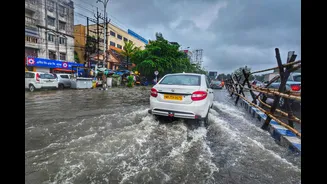
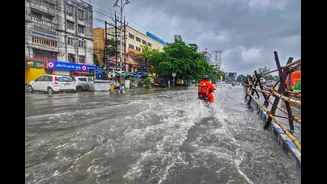
For Bihar, the Farakka question is also about floods. The state’s argument is that the barrage and the management of flows have contributed to sediment accumulation in the Ganga, reducing the river’s carrying capacity in parts of Bihar. The result, according to the state’s political leadership, is a damaging paradox where Bihar can face acute water scarcity in the dry months and devastating floods during the monsoon.
Jha has argued that the river’s ability to store water within its channel has been compromised by sedimentation. “Previously, the water flowing into the Ganga used to be stored within the river’s channel. Now, with that storage capacity lost, the water causes floods in the surrounding areas instead of remaining within the riverbed,” he said.
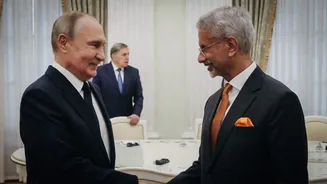
Bihar’s Deputy Chief Minister and Water Resources Minister Vijay Kumar Choudhary has also said the state’s longstanding concerns over Farakka will be raised during the treaty renewal process. After a meeting with External Affairs Minister S Jaishankar, Choudhary said the Centre had responded positively to Bihar’s concerns.
RJD’s Buxar MP Sudhakar Singh has also cited Bihar Water Resources Department figures showing shortages against planning benchmarks of 330 cusecs in February, 487 cusecs in March and 191 cusecs in April. He has demanded that Bihar’s water, irrigation, flood-control and navigation interests be built into the next arrangement.
However, there is a larger complication. The Ganga is a transboundary river, and Bangladesh is the lower riparian. For Dhaka, assured dry-season flows are critical for agriculture, fisheries, navigation and the ecology of its southwestern region. The 1996 treaty was itself the product of decades of negotiations and was intended to provide predictability to both sides.
That means India cannot simply approach the issue as an internal Bihar water-allocation dispute. Any change to the treaty has diplomatic consequences.
There is another reality: the hydrology of the Ganga has changed since the treaty was negotiated. The agreement’s indicative schedule was based on historical flow data from 1949 to 1988. Three decades later, India and Bangladesh are dealing with changing water demand, climate variability, sedimentation and more extreme weather events.
That is why the debate is increasingly shifting from whether to renew the treaty to what a 2026 version should look like.
What Bihar Wants
Bihar’s demand is essentially for a seat at the table. It wants its water requirements to be assessed scientifically before India commits itself to another long-term arrangement with Bangladesh. It also wants the impact of Farakka on sedimentation, flooding, irrigation, drinking water and navigation to be examined rather than treating the 1996 formula as sacrosanct.
The state is also looking beyond water allocation. RJD MP Sudhakar Singh has sought year-round navigability of National Waterway-1, flood-management measures, anti-erosion work and infrastructure along the Ganga.
The challenge for the Centre will be to balance three competing imperatives – maintaining a stable relationship with Bangladesh, protecting India’s broader water and economic interests, and addressing Bihar’s long-standing claim that it has borne disproportionate costs of the Farakka arrangement.