






Iran’s Parliament Speaker Mohammad Bagher Ghalibaf has warned that Tehran is prepared to retaliate strongly if its adversaries escalate tensions, asserting that Iran has strengthened its military preparedness
and strategic capabilities during the ongoing conflict with the United States and Israel.
“We are fully prepared. If they make even the slightest mistake, we will respond with force,” Ghalibaf said, signalling a firm stance amid fragile ceasefire negotiations.
Iran’s Ghalibaf:
We are fully prepared—if they make even the slightest mistake, we will respond with force. pic.twitter.com/KNFGYWnCwB
— Clash Report (@clashreport) April 18, 2026
He said Iran’s capabilities have improved significantly compared to previous conflicts.
“We are definitely a head and shoulders above the past in offensive capabilities and design in the third imposed war, and we saw this on the battlefield,” he said.
Ghalibaf also acknowledged Washington’s military superiority in terms of resources but maintained that Iran’s strategic planning enabled it to counter its adversaries effectively.
“We are not militarily stronger than America. It is clear that they have more money, equipment, and resources, and because they have carried out so many aggressions around the world, they also have more experience than us,” he said.
Referring to Israel as “America’s servant and agent in the region,” he argued that the United States and its allies made errors in their strategic calculations.
“We fought in an asymmetric war in such a way that, with our own design and preparedness, we pushed the enemy back. The enemy had money and resources, but did not act correctly in design. They make mistakes in strategic decisions. They are wrong about our people, just as they are wrong in their military design,” he said.
Speaking further, Ghalibaf criticised Washington’s approach to the conflict, saying US decision-making was influenced by Israel despite the stated “America First” doctrine.
“The US government claims that ‘America First’ is important to it, but in practice, it has shown that Israel is first for it, because it makes decisions based on false information from Israel,” he said.
Iran’s Ghalibaf:
We are not militarily stronger than America. It is clear that they have more money, equipment, and resources, and because they have carried out so many aggressions around the world, they also have more experience than us. The Zionist regime, which is America’s… pic.twitter.com/kbYbxNxEU2
— Clash Report (@clashreport) April 18, 2026
He also accused Iran’s adversaries of attempting to destabilise the country’s economy.
“The enemy sought regime change and to ‘Venezuelanize’ Iran in order to auction off our oil, but it failed,” he said.
Iran’s Ghalibaf:
The enemy sought regime change and to “Venezuelanize” Iran in order to auction off our oil, but it failed. pic.twitter.com/zjiBf0AYt6
— Clash Report (@clashreport) April 18, 2026
DRONE DEFENCE, F-35 STRIKE SHOW TECHNOLOGICAL PROGRESS
Highlighting improvements in Iran’s military capabilities, Ghalibaf said Tehran had enhanced its defensive capacity against aerial threats.
“In the technical field, we hit about 180 drones, a capability we did not have in the defensive domain during the previous war. All of these events happened in just a few months,” he said.
He also pointed to a strike involving an F-35 aircraft as evidence of technological advancement.
“Hitting the F-35 is not a coincidence; it is an operation in various technical and design dimensions. With the missile that exploded near that aircraft (F-35), the enemy understood what capabilities we have and in which direction we are moving,” he said.
Iran’s Ghalibaf:
We are definitely a head and shoulders above the past in offensive capabilities and design in the third imposed war, and we saw this on the battlefield.
In the technical field, we hit about 180 drones, a capability we did not have in the defensive domain during… pic.twitter.com/Pz8qB8B3NN
— Clash Report (@clashreport) April 18, 2026
IRAN ‘VICTORIOUS IN THE FIELD’, CEASEFIRE ACCEPTED AFTER DEMANDS MET
According to an AFP report, Ghalibaf said Iran agreed to the current ceasefire only after its conditions were accepted, asserting that Tehran had achieved its objectives during the conflict.
“We were victorious in the field,” Ghalibaf said in a nationally televised address, adding that Washington had failed to meet its goals.
“If we accepted the ceasefire, it was because they accepted our demands,” he said, describing negotiations as part of the broader struggle.
“The enemy’s every effort was to impose its demands on us, and it is important that we register our rights, so this is where negotiation is a method of struggle.”
The report said the two-week ceasefire is set to expire on Wednesday unless extended, with mediators including Pakistan attempting to secure a longer-term agreement.
Ghalibaf also held closed-door talks in Islamabad with US Vice President JD Vance on April 11, marking the highest-level contact between the two countries since before the 1979 Islamic Revolution.
GAPS REMAIN OVER NUCLEAR PROGRAMME, STRAIT OF HORMUZ
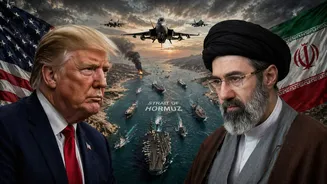
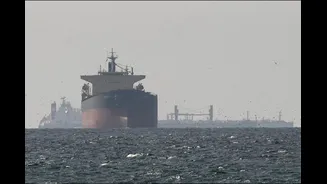
Reuters reported that negotiations between Tehran and Washington have shown some progress, but key differences persist, particularly regarding Iran’s nuclear programme and the strategic Strait of Hormuz.
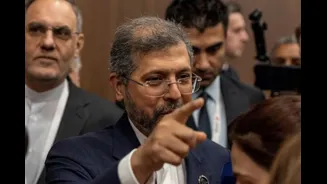
“We have had progress, but there is still a big distance between us,” Iran’s chief negotiator said, noting that both sides continue to maintain firm positions on several issues.
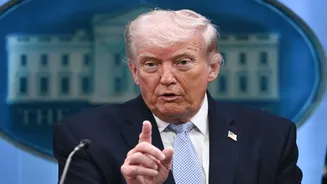
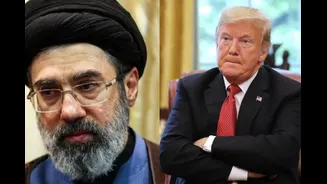
US President Donald Trump said there had been “very good conversations” with Tehran but warned against what he described as “blackmail” linked to the crucial shipping route.
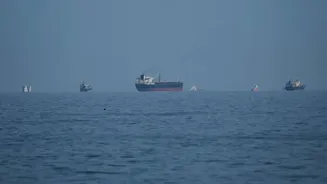
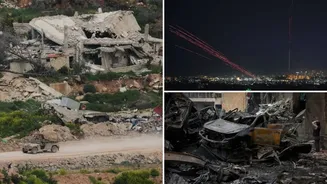
The war, now in its eighth week, has killed thousands and disrupted global energy markets due to tensions around the Strait of Hormuz, which previously carried about one-fifth of global oil shipments.
ALSO READ | ‘Hormuz Won’t Remain Open If…’: Iran Warns After Trump Says US Naval Blockade Will Continue