










What is the story about?
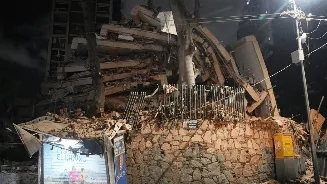
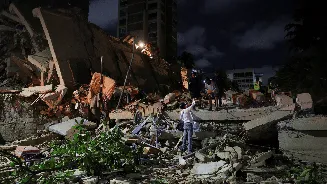
The devastating twin earthquakes in the Venezuelan capital of Caracas have left at least 32 people dead, while over 700 others have been injured after jolts of
7.2 and 7.5 magnitudes struck the same area on Wednesday.
While the destruction is widespread, some on X have said that they received Google alerts minutes before the earthquake struck, potentially saving a lot of lives.
An X user said, "The earthquake alert from Google saved many lives in Venezuela today! On my smartphone, an insistent alarm went off seconds before the earthquake. Thanks to them, I made it out to the garden."
Another page on the platform said, "Google was very clever; they use the accelerometers of thousands of Android phones as a global seismic network, all that data is sent and Google managed to find a way to detect those waves in time and send the alerts."
Google's Android Earthquake Alerts system turns millions of Android smartphones into a global earthquake detection network. By using the accelerometers already built into phones, the system can detect the initial seismic waves of an earthquake and send data to Google's servers.
By analysing signals from multiple devices, the system estimates an earthquake's location and magnitude, allowing alerts to be sent before stronger shaking arrives. The technology was designed to expand earthquake early warning coverage to regions that lack expensive traditional seismic monitoring networks.
Since its rollout began in 2021, the Android Earthquake Alerts system has expanded to nearly 100 countries, detecting more than 18,000 earthquakes and issuing alerts for over 2,000 significant events. Google says the system has delivered around 790 million alerts worldwide, increasing global access to earthquake early warning systems from roughly 250 million people in 2019 to 2.5 billion today.
While the destruction is widespread, some on X have said that they received Google alerts minutes before the earthquake struck, potentially saving a lot of lives.
An X user said, "The earthquake alert from Google saved many lives in Venezuela today! On my smartphone, an insistent alarm went off seconds before the earthquake. Thanks to them, I made it out to the garden."
La alerta antisísmica de @Google, hoy salvó muchas vidas en Venezuela! En mi Smartphon se activo una alarma insistente segundos antes del terremoto. Gracias a ellos salí al jardín.
— Tiocanis Opanxethos (@TiocanisO30477) June 25, 2026
Another page on the platform said, "Google was very clever; they use the accelerometers of thousands of Android phones as a global seismic network, all that data is sent and Google managed to find a way to detect those waves in time and send the alerts."
Google fue muy listo; usan los acelerómetros de miles de teléfonos Android cómo una red global de sismos, toda esa data se envía y Google logró una forma de detectar esas ondas a tiempo y enviar las alertas. pic.twitter.com/M9uEIF6T3Q
— @TecniPhone (@TecniPhone) June 25, 2026
How does it work?
Google's Android Earthquake Alerts system turns millions of Android smartphones into a global earthquake detection network. By using the accelerometers already built into phones, the system can detect the initial seismic waves of an earthquake and send data to Google's servers.
By analysing signals from multiple devices, the system estimates an earthquake's location and magnitude, allowing alerts to be sent before stronger shaking arrives. The technology was designed to expand earthquake early warning coverage to regions that lack expensive traditional seismic monitoring networks.
Since its rollout began in 2021, the Android Earthquake Alerts system has expanded to nearly 100 countries, detecting more than 18,000 earthquakes and issuing alerts for over 2,000 significant events. Google says the system has delivered around 790 million alerts worldwide, increasing global access to earthquake early warning systems from roughly 250 million people in 2019 to 2.5 billion today.