







What is the story about?
Finland is preparing to become the first country in the world to begin permanent underground storage of spent nuclear fuel, marking a major step in the long-standing challenge of managing radioactive waste.
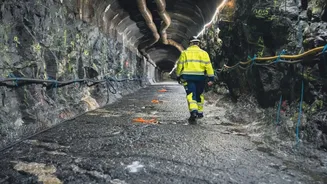
The facility, known as Onkalo, has been built deep inside stable bedrock in Eurajoki in southwestern Finland. Located around 433 metres below the surface, the repository is designed to safely store highly radioactive spent nuclear fuel from the country's nuclear power plants for thousands of years.
According to an AFP report, Finland's nuclear regulator, the Finnish Radiation and Nuclear Safety Authority (STUK), is expected to complete its final assessment of the project in June. If approved, the facility could receive an operating licence and begin accepting nuclear waste by the end of this year or early next year.
Countries around the world have struggled for decades to find permanent solutions for storing spent nuclear fuel, most of which is currently kept in temporary facilities.
While similar projects are under development in countries such as Sweden and France, Finland is expected to be the first to put a deep geological repository into operation.
According to the report, the Onkalo project has been developed by nuclear waste management company Posiva, which began construction in 2004. The project is estimated to have cost around $1.16 billion.
The facility has enough capacity to store 6,500 tonnes of uranium-based spent fuel generated by Finland's five nuclear reactors.
Initially, spent fuel stored at the nearby Olkiluoto nuclear power plant will be transferred to the underground repository. The waste will be sealed inside corrosion-resistant copper canisters before being placed in holes drilled into the bedrock.
The repository's tunnel network is expected to receive nuclear waste for around 100 years, although operations could be extended if Finland builds additional reactors. Once full, the facility will be permanently sealed and designed to remain safe for at least 100,000 years.
According to the report, engineers plan to surround the canisters with bentonite clay, which will act as a protective barrier. Disposal tunnels will then be sealed with reinforced concrete plugs to prevent any future leakage.
Experts at STUK have examined possible risk scenarios extending up to one million years into the future. The main concerns include corrosion of the copper canisters and geological events, such as earthquakes during future ice ages, that could damage the storage system.
However, officials, quoted in the report, say that long-term safety assessments have produced positive results. Public support for nuclear power in Finland remains relatively strong, and the project has faced less opposition than similar plans elsewhere in Europe.
Environmental groups remain cautious, arguing that no system can guarantee complete safety over such vast timescales.
Nevertheless, Finnish authorities view Onkalo as a critical part of the country's nuclear energy strategy as it continues to explore future nuclear technologies, including small modular reactors.
The facility, known as Onkalo, has been built deep inside stable bedrock in Eurajoki in southwestern Finland. Located around 433 metres below the surface, the repository is designed to safely store highly radioactive spent nuclear fuel from the country's nuclear power plants for thousands of years.
According to an AFP report, Finland's nuclear regulator, the Finnish Radiation and Nuclear Safety Authority (STUK), is expected to complete its final assessment of the project in June. If approved, the facility could receive an operating licence and begin accepting nuclear waste by the end of this year or early next year.
A long-term storage solution
Countries around the world have struggled for decades to find permanent solutions for storing spent nuclear fuel, most of which is currently kept in temporary facilities.
While similar projects are under development in countries such as Sweden and France, Finland is expected to be the first to put a deep geological repository into operation.
According to the report, the Onkalo project has been developed by nuclear waste management company Posiva, which began construction in 2004. The project is estimated to have cost around $1.16 billion.
The facility has enough capacity to store 6,500 tonnes of uranium-based spent fuel generated by Finland's five nuclear reactors.
Initially, spent fuel stored at the nearby Olkiluoto nuclear power plant will be transferred to the underground repository. The waste will be sealed inside corrosion-resistant copper canisters before being placed in holes drilled into the bedrock.
Designed to last for long time
The repository's tunnel network is expected to receive nuclear waste for around 100 years, although operations could be extended if Finland builds additional reactors. Once full, the facility will be permanently sealed and designed to remain safe for at least 100,000 years.
According to the report, engineers plan to surround the canisters with bentonite clay, which will act as a protective barrier. Disposal tunnels will then be sealed with reinforced concrete plugs to prevent any future leakage.
Risks and public debate
Experts at STUK have examined possible risk scenarios extending up to one million years into the future. The main concerns include corrosion of the copper canisters and geological events, such as earthquakes during future ice ages, that could damage the storage system.
However, officials, quoted in the report, say that long-term safety assessments have produced positive results. Public support for nuclear power in Finland remains relatively strong, and the project has faced less opposition than similar plans elsewhere in Europe.
Environmental groups remain cautious, arguing that no system can guarantee complete safety over such vast timescales.
Nevertheless, Finnish authorities view Onkalo as a critical part of the country's nuclear energy strategy as it continues to explore future nuclear technologies, including small modular reactors.