





What is the story about?
Japan has unveiled a $10 billion package for its Asian neighbours as the Strait of Hormuz crisis disrupts global oil markets due to the Iran war.
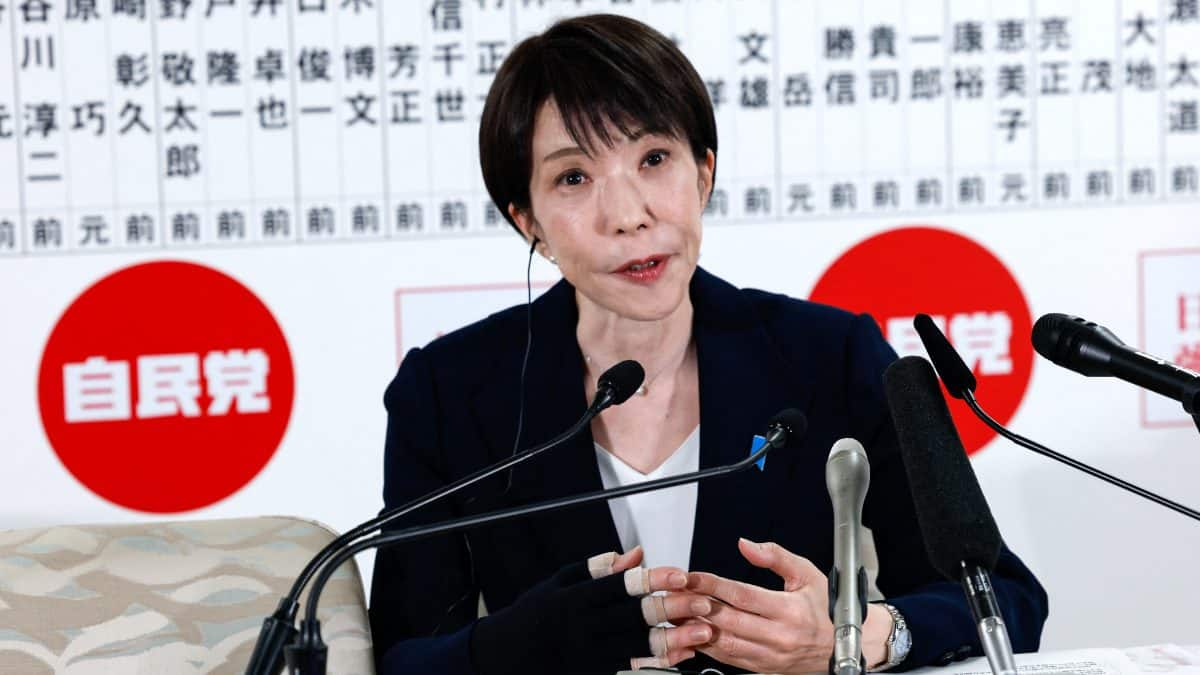
Announcing the new cooperation move on Wednesday via video conference with other Asian leaders, Japanese Prime Minister Sanae Takaichi said, "Japan is closely interconnected with each Asian country through supply chains and mutually dependent with them."
The initiative, dubbed "Power Asia", will see Japan contribute 1.6 trillion yen to Southeast Asian nations to strengthen their energy supply chain and help them better procure crude and petroleum products.
"We rely on supplies from Asian countries for medical items such as equipment used for dialysis patients, as well as waste fluid containers and gloves required for surgical procedures," the prime minister added.
Asia is especially vulnerable to the Hormuz crisis as nearly 90 per cent of oil passing through the waterway finds a market in the region. Japan's foreign ministry said that the aid package is almost equal to the amount of oil imports that come into countries in the Association of Southeast Asian Nations (Asean).
Japan's move was welcomed by leaders in the Philippines, Malaysia, Singapore, Thailand, Vietnam, Bangladesh and South Korea.
The funding for this project will come via various sources, the ministry added. These sources include the Japan Bank for International Cooperation, the Nippon Export and Investment Insurance, Japan International Cooperation Agency and the Asian Development Bank.
Takaichi has assured that the move will not impact Japan's own oil reserves. By 2025, the country’s oil reserves covered 254 days of consumption. However, authorities have already begun tapping into these reserves amid the global energy crunch.
Announcing the new cooperation move on Wednesday via video conference with other Asian leaders, Japanese Prime Minister Sanae Takaichi said, "Japan is closely interconnected with each Asian country through supply chains and mutually dependent with them."
The initiative, dubbed "Power Asia", will see Japan contribute 1.6 trillion yen to Southeast Asian nations to strengthen their energy supply chain and help them better procure crude and petroleum products.
"We rely on supplies from Asian countries for medical items such as equipment used for dialysis patients, as well as waste fluid containers and gloves required for surgical procedures," the prime minister added.
How will the assistance help?
Asia is especially vulnerable to the Hormuz crisis as nearly 90 per cent of oil passing through the waterway finds a market in the region. Japan's foreign ministry said that the aid package is almost equal to the amount of oil imports that come into countries in the Association of Southeast Asian Nations (Asean).
Japan's move was welcomed by leaders in the Philippines, Malaysia, Singapore, Thailand, Vietnam, Bangladesh and South Korea.
How will it be funded?
The funding for this project will come via various sources, the ministry added. These sources include the Japan Bank for International Cooperation, the Nippon Export and Investment Insurance, Japan International Cooperation Agency and the Asian Development Bank.
Takaichi has assured that the move will not impact Japan's own oil reserves. By 2025, the country’s oil reserves covered 254 days of consumption. However, authorities have already begun tapping into these reserves amid the global energy crunch.
Last month, Japan released a record 50 days’ worth of oil and plans to release an additional 20 days’ worth in early May.
"Together with the nations of Asia, we will work to build a resilient energy, critical mineral and supply chain framework, so that all of Asia can become stronger and more prosperous," she said.