



What is the story about?
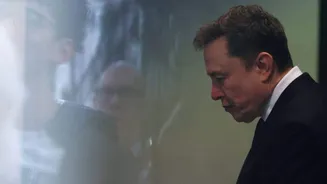
Elon Musk has never been one to shy away from controversy, but in his latest conversation with The Economist, the world's richest man attempted to set the record straight on one allegation that has increasingly followed him online — that he is racist.
Speaking to The Economist's editor-in-chief Zanny Minton Beddoes, Musk defended his public positions on immigration, his social media activity and the culture within his companies, while also sharing his typically sweeping views on artificial intelligence. Although he acknowledged that AI carries real risks, he argued that the technology's momentum has become impossible to stop and that humanity should focus on its potential benefits rather than its worst-case scenarios.
In the wide-ranged interview, a part was centred on Musk's political interventions and posts on X, where critics have frequently accused him of amplifying divisive narratives. When questioned about allegations that his rhetoric aligns with far-right viewpoints, Musk firmly rejected the characterisation.
"My partner is... she's half Indian, and I have four children with her," Musk said, referring to Shivon Zilis, an executive at Neuralink. "One of them was named after a famous Indian physicist, so I would say I'm not racist."
Earlier this year, Elon Musk revealed the story behind the names of his children while responding to a post from the X account Tesla Owners Silicon Valley featuring a photo of him with his twins. Musk said his son, Strider Sekhar, was named after two inspirations. "Strider" is taken from Aragorn's alias in JRR Tolkien's The Lord of the Rings, while "Sekhar" honours Indian-American astrophysicist Subrahmanyan Chandrasekhar, who received the 1983 Nobel Prize in Physics.
Along with his family, he also highlighted that diversity exists across his businesses. He said there are "senior executives of all races" working within his companies and adding, "I don't think there's any racism there."
However, the exchange became more nuanced when Beddoes questioned whether his comments on immigration reflected anti-Muslim sentiment. Musk did not directly accept or reject the label but instead argued that his concerns were centred on cultural values rather than ethnicity or religion.
"If people are coming to a country with antithetical views, I am against that," he said.
He went on to add, "I'm against rape and murder, I'm against the imposition of rules and laws that are contrary to what we've come to accept in the West," while accusing sections of the media of misrepresenting his position.
The interview also touched on Musk's frequent criticism of Britain. Beddoes challenged his portrayal of the UK on X, saying both official data and her own experience living there painted a very different picture.
Moreover, he was also questioned over his decision to share a controversial film on X that was reportedly banned in Germany because of its violent and anti-migrant messaging, although he did not significantly elaborate on that issue during the discussion.
Away from politics, Musk returned to one of his favourite topics, artificial intelligence. Despite repeatedly warning in the past that AI could pose an existential threat to humanity, he suggested that trying to halt its progress is no longer a realistic option.
"The risk is not zero," Musk acknowledged, referring to advanced AI and robotics. Even so, he said his own outlook had evolved.
"My sort of philosophical conclusion is to look on the bright side," he said, adding that the "most likely outcome is incredible abundance for all."
According to Musk, AI development has gathered so much pace that no individual, company or government can realistically apply the brakes. "I can't see any way to really stop this incredible momentum of AI and robots," he said, adding that "even if I wanted to stop it, I couldn't."
For Musk, the future may carry undeniable risks, but resisting it is no longer part of the equation. Instead, he believes the world has little choice but to embrace the ride and hope that AI ultimately delivers far more benefits than harm.
Speaking to The Economist's editor-in-chief Zanny Minton Beddoes, Musk defended his public positions on immigration, his social media activity and the culture within his companies, while also sharing his typically sweeping views on artificial intelligence. Although he acknowledged that AI carries real risks, he argued that the technology's momentum has become impossible to stop and that humanity should focus on its potential benefits rather than its worst-case scenarios.
Elon Musk says 'I am not racist', but...
In the wide-ranged interview, a part was centred on Musk's political interventions and posts on X, where critics have frequently accused him of amplifying divisive narratives. When questioned about allegations that his rhetoric aligns with far-right viewpoints, Musk firmly rejected the characterisation.
"My partner is... she's half Indian, and I have four children with her," Musk said, referring to Shivon Zilis, an executive at Neuralink. "One of them was named after a famous Indian physicist, so I would say I'm not racist."
Earlier this year, Elon Musk revealed the story behind the names of his children while responding to a post from the X account Tesla Owners Silicon Valley featuring a photo of him with his twins. Musk said his son, Strider Sekhar, was named after two inspirations. "Strider" is taken from Aragorn's alias in JRR Tolkien's The Lord of the Rings, while "Sekhar" honours Indian-American astrophysicist Subrahmanyan Chandrasekhar, who received the 1983 Nobel Prize in Physics.
Along with his family, he also highlighted that diversity exists across his businesses. He said there are "senior executives of all races" working within his companies and adding, "I don't think there's any racism there."
However, the exchange became more nuanced when Beddoes questioned whether his comments on immigration reflected anti-Muslim sentiment. Musk did not directly accept or reject the label but instead argued that his concerns were centred on cultural values rather than ethnicity or religion.
"If people are coming to a country with antithetical views, I am against that," he said.
He went on to add, "I'm against rape and murder, I'm against the imposition of rules and laws that are contrary to what we've come to accept in the West," while accusing sections of the media of misrepresenting his position.
The interview also touched on Musk's frequent criticism of Britain. Beddoes challenged his portrayal of the UK on X, saying both official data and her own experience living there painted a very different picture.
Moreover, he was also questioned over his decision to share a controversial film on X that was reportedly banned in Germany because of its violent and anti-migrant messaging, although he did not significantly elaborate on that issue during the discussion.
'Look at the bright side', says Musk on AI dangers
Away from politics, Musk returned to one of his favourite topics, artificial intelligence. Despite repeatedly warning in the past that AI could pose an existential threat to humanity, he suggested that trying to halt its progress is no longer a realistic option.
"The risk is not zero," Musk acknowledged, referring to advanced AI and robotics. Even so, he said his own outlook had evolved.
"My sort of philosophical conclusion is to look on the bright side," he said, adding that the "most likely outcome is incredible abundance for all."
According to Musk, AI development has gathered so much pace that no individual, company or government can realistically apply the brakes. "I can't see any way to really stop this incredible momentum of AI and robots," he said, adding that "even if I wanted to stop it, I couldn't."
For Musk, the future may carry undeniable risks, but resisting it is no longer part of the equation. Instead, he believes the world has little choice but to embrace the ride and hope that AI ultimately delivers far more benefits than harm.