






What is the story about?
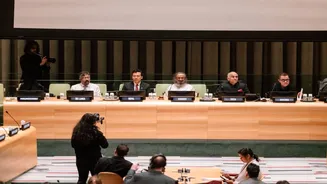
For the second year in a row, the United Nations on Friday commemorated World Meditation Day at its New York headquarters with the Indian permanent mission taking centre stage. The session was also hosted by the permanent missions of Andorra, Mexico, Nepal, and Sri Lanka in the Trusteeship Council Chamber.
It was attended by nearly 700 people, comprising diplomats, experts, and other participants, and a renowned Indian spiritual guru. Sri Sri Ravi Shankar. Delivered the keynote address at the session. “When attention deficiency is so much, meditation is absolutely essential,” an Indian spiritual leader said at the Friday event.
“Nearly 500 universities around the world have today started to adopt meditation. Hospitals are adopting meditation,” he added. Last year, the United Nations General Assembly proclaimed 21 December as World Meditation Day, reaffirming the right of every person to enjoy the highest attainable standard of physical and mental health.
The Friday session was organised by the Permanent Mission of India and the other countries that promoted the establishment of the International Day, the event “Meditation for Global Peace and Harmony”. The event was aimed at embracing inner harmony and promoting international unity.
According to the World Health Organisation (WHO), "meditation can be a powerful self-care tool to reinforce treatments and improve overall well-being, especially when it comes to anxiety." Shankar noted at the Friday event that there are 700 research papers showing over 100 benefits of the practice.
Before commencing the meditation session, Shankar spoke about anger and desire, which grip the mind. “These two things don’t let your mind settle; they don’t even allow you to sleep,” he said. “Our breath has a secret. The breath links our body and mind. Attending to the breath, you can calm your emotions,” he explained.
“You only create a situation in which meditation can happen, and for that you need to keep your desire to one side and your anxieties and fears to another side — we can attend to that later,” he concluded before commencing the meditation session.
It was attended by nearly 700 people, comprising diplomats, experts, and other participants, and a renowned Indian spiritual guru. Sri Sri Ravi Shankar. Delivered the keynote address at the session. “When attention deficiency is so much, meditation is absolutely essential,” an Indian spiritual leader said at the Friday event.
“Nearly 500 universities around the world have today started to adopt meditation. Hospitals are adopting meditation,” he added. Last year, the United Nations General Assembly proclaimed 21 December as World Meditation Day, reaffirming the right of every person to enjoy the highest attainable standard of physical and mental health.
Delivered the keynote and guided a meditation for diplomats and delegates on the occasion of the second World Meditation Day at the @UN in New York, jointly organized by @IndiaUNNewYork, @ANDORRA_UN, @MexOnu, @NepalUNNY, @SLUNNewYork and several other nations. @AmbHarishP pic.twitter.com/DZJoXY4dAY
— Gurudev Sri Sri Ravi Shankar (@Gurudev) December 20, 2025
UN hails the importance of meditation
The Friday session was organised by the Permanent Mission of India and the other countries that promoted the establishment of the International Day, the event “Meditation for Global Peace and Harmony”. The event was aimed at embracing inner harmony and promoting international unity.
According to the World Health Organisation (WHO), "meditation can be a powerful self-care tool to reinforce treatments and improve overall well-being, especially when it comes to anxiety." Shankar noted at the Friday event that there are 700 research papers showing over 100 benefits of the practice.
Before commencing the meditation session, Shankar spoke about anger and desire, which grip the mind. “These two things don’t let your mind settle; they don’t even allow you to sleep,” he said. “Our breath has a secret. The breath links our body and mind. Attending to the breath, you can calm your emotions,” he explained.
“You only create a situation in which meditation can happen, and for that you need to keep your desire to one side and your anxieties and fears to another side — we can attend to that later,” he concluded before commencing the meditation session.