





What is the story about?
The four-month-long Strait of Hormuz crisis has reminded India of a vulnerability known for long, yet accepted as a matter of geographical destiny: dependence on imported oil. But while policymakers recalibrate crude import strategy, another oil dependency receives far less attention. It sits not in fuel tanks but on kitchen shelves. It heats the kadai, fills the namkeen packets and anchors affordable food in India. It is edible oil, palm oil in particular. And India could be heading towards an edible oil shock — but the country seems far less prepared for it.
India is the world’s largest buyer of vegetable oils and depends on imports to meet nearly two-thirds of its edible oil needs. In other words, more than 60 per cent of every litre of oil that enters an Indian kitchen, a food processing unit or a street food stall is produced outside India. Yet, India has treated crude oil as a strategic exposure and edible oil as a periodic price-management problem.
How India Got Here
The roots of this dependence lie partly in India’s economic progress. As the income of an average Indian rose, their diet changed. Edible oil moved from being a modest cooking input to a major ingredient in processed foods, sweets, snacks, bakery products and mass food. India’s domestic oilseed production, growing at roughly 2 per cent annually, has simply not kept pace with the consumption appetite, growing at 4 per cent annually. The gap between what India produces and what it consumes has widened, and at a significant cost, in the last two decades.
In India’s edible oil import basket, palm oil makes for the biggest share. Every year, India imports around 9-10 million tonnes of palm oil from countries like Indonesia, Malaysia and Thailand—in the process, becoming the world’s largest importer of palm oil. In contrast, domestic production accounts for less than 5 per cent of the consumption, as per a Solidaridad-Asian Palm Oil Alliance-Solvent Extractors’ Association of India report. In other words, India’s food economy relies heavily on one imported commodity.
A New Shock Is Already Forming
Add to that, the current Strait of Hormuz crisis, which has not only pushed fuel prices up but also galvanised the biodiesel industry. Indonesia, which produces nearly 60 per cent of the world’s palm oil and is India’s single largest supplier, has accelerated its mandatory biodiesel blending programme. The B50 mandate requires a 50 per cent palm oil blend in diesel sold in Indonesia, starting 1 July. The consequence for India is significant.
Implementing B50 will require Indonesia to allocate an estimated 16-18 million tonnes of crude palm oil annually to domestic biodiesel production. Such a diversion would mean that Indonesian palm oil export volumes could shrink 8-10 per cent. When supply tightens in Indonesia and Malaysia, India does not feel it in an abstract commodities index. It feels it in kitchen budgets and food-processing margins. The kitchen and the diesel engine are now competing for the same crop, and in Jakarta, the engine is winning.
Why Self-Sufficiency Is the Wrong Answer
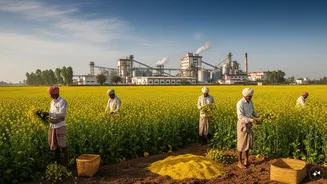
The answer, however, is not absolute self-sufficiency. India cannot completely replace imported palm oil by simply pushing farmers toward lower-yield oilseeds like soy and mustard. As per the United States Department of Agriculture data, soybean oil yield per hectare is around 0.53 metric tonnes, while that of mustard is roughly 0.85 metric tonnes globally. India’s average yield for mustard and soybean is lower than the global standard.
Replacing India’s current palm oil imports with soybean alone would require land equivalent to roughly a third of India’s entire net sown area, which is already committed to wheat, rice, pulses, and other food crops that a population of 1.4 billion cannot do without. Even oil palm, the most productive oilseed, cannot bridge the full gap.
The Indian Institute of Oil Palm Research (IIOPR), in its 2020 reassessment, identified 2.8 million hectares of non-forest land across 22 states and UTs as suitable for oil palm cultivation. If, in an unlikely scenario, this entire area were brought under oil palm with productivity levels comparable to Malaysia's (3.6 metric tonnes per hectare), this would still account for about 50 per cent of India’s projected palm oil demand by 2047 and a fraction of total edible oil demand. This is why edible oil security is a better objective than absolute self-sufficiency.
The Farmer Must Not Carry the Nation’s Risk
Arguably, the domestic strategy will rest on the farmer, especially smallholders. A farmer waits three to four years before meaningful harvests begin in oil palm, and yields improve over a period of time. In those early years, the risk to their household is high. If the seed quality is poor, if irrigation fails, or if the promised mill does not arrive, the loss is borne first by the household, not by the state that designed the mission.
This is where policy remains thin. Public debate has focused far more on acreage targets than the compact with the farmer. India has expanded planting incentives, and the area under palm plantation has increased, but it does not settle questions of price discovery, quality planting material, insurance or assured processing access. If India wants farmers to reduce edible oil import vulnerability, it cannot socialise the strategic gain while privatising the production risk. Maintenance support has to be reflected in living costs, and farmer protection has to be built into the national mission rather than appended to it.
What Edible Security Actually Requires
First, India’s average oilseed yield per hectare has to improve. India’s soybean yields and mustard yields are low. It is an area where the National Mission on Edible Oils (NMEO) must work with the industry, NGOs, and farmer organisations on developing improved seed varieties, providing extension and irrigation support to the last-mile, and building adequate procurement and storage infrastructure. These can deliver gains faster than just declarations on acreage.
The second task is targeted, and not indiscriminate, oil-palm expansion. The NMEO-Oil Palm aims to bring 6.5 lakh hectares by 2025-26, and industry executives say the planted area is already rising quickly. But oil palm only works where several conditions exist together: suitable agro-climate, water, roads, local collection systems and nearby mills. Without that ecosystem, a plantation promise becomes a stranded asset for the farmer.
The third effort requires India to use its market power as the world’s largest palm oil buyer more strategically than it ever has. This means diversifying sourcing beyond Indonesia and Malaysia. One option that has barely entered India’s strategic imagination, but may prove its most consequential long-term move, is investment in southern and eastern Africa. The oil palm tree is indigenous to Africa. Mozambique, Zambia, Zimbabwe and Malawi together add millions of hectares of climate-suitable, largely uncultivated land across the southern African interior. India has the diaspora relationships, the Indian Ocean trade routes, the diplomatic standing through the India-Africa Forum Summit, and the development finance tools to build something that no tariff adjustment or domestic mission can replicate: a third supply geography for palm oil which it partly owns, partly shapes and fully trusts.
The fourth step is to stop treating all demand as benign. Not every additional litre of edible oil demand represents a gain in nutrition. The ICMR-National Institute of Nutrition recommends capping visible oil intake at around 30 grams a day, a reminder that public health and edible-oil policy cannot function in silos. A large share of future demand will come from ultra-processed foods, deep-fried snacks and cheap packaged calories. Therefore, food labelling, awareness campaigns on recommended dietary intake of oil, clear food safety and standards for schools should be prioritised.
The Choice That Remains
By the end of this decade, India’s choices will be visible well beyond agriculture. They will show up in the current account, in food inflation, in the viability of domestic refining, and in the incomes of farmers who were asked to plant for a national mission. The comparison with crude oil is useful because it forces the right scale of thinking. Edible oil is not a minor farm-management issue. It is a strategic exposure.
India does not need theatrical claims of self-sufficiency. It needs discipline: higher oilseed yields, carefully governed oil-palm expansion, diversified import channels, stronger farmer protection and a more honest view of the demand. The bottle of oil on the kitchen shelf may look mundane. In macroeconomic terms, it is not. India has already learned the risks of being over-dependent on one kind of oil and one region for supply. It should not wait for a sharper shock to take edible oil security seriously.
(The author is the managing director of Solidaridad Asia and works with farming communities for sustainable development in agriculture. The views expressed in the above piece are personal and solely those of the author. They do not necessarily reflect Firstpost’s views.)
India is the world’s largest buyer of vegetable oils and depends on imports to meet nearly two-thirds of its edible oil needs. In other words, more than 60 per cent of every litre of oil that enters an Indian kitchen, a food processing unit or a street food stall is produced outside India. Yet, India has treated crude oil as a strategic exposure and edible oil as a periodic price-management problem.
How India Got Here
The roots of this dependence lie partly in India’s economic progress. As the income of an average Indian rose, their diet changed. Edible oil moved from being a modest cooking input to a major ingredient in processed foods, sweets, snacks, bakery products and mass food. India’s domestic oilseed production, growing at roughly 2 per cent annually, has simply not kept pace with the consumption appetite, growing at 4 per cent annually. The gap between what India produces and what it consumes has widened, and at a significant cost, in the last two decades.
In India’s edible oil import basket, palm oil makes for the biggest share. Every year, India imports around 9-10 million tonnes of palm oil from countries like Indonesia, Malaysia and Thailand—in the process, becoming the world’s largest importer of palm oil. In contrast, domestic production accounts for less than 5 per cent of the consumption, as per a Solidaridad-Asian Palm Oil Alliance-Solvent Extractors’ Association of India report. In other words, India’s food economy relies heavily on one imported commodity.
A New Shock Is Already Forming
Add to that, the current Strait of Hormuz crisis, which has not only pushed fuel prices up but also galvanised the biodiesel industry. Indonesia, which produces nearly 60 per cent of the world’s palm oil and is India’s single largest supplier, has accelerated its mandatory biodiesel blending programme. The B50 mandate requires a 50 per cent palm oil blend in diesel sold in Indonesia, starting 1 July. The consequence for India is significant.
Implementing B50 will require Indonesia to allocate an estimated 16-18 million tonnes of crude palm oil annually to domestic biodiesel production. Such a diversion would mean that Indonesian palm oil export volumes could shrink 8-10 per cent. When supply tightens in Indonesia and Malaysia, India does not feel it in an abstract commodities index. It feels it in kitchen budgets and food-processing margins. The kitchen and the diesel engine are now competing for the same crop, and in Jakarta, the engine is winning.
Why Self-Sufficiency Is the Wrong Answer
The answer, however, is not absolute self-sufficiency. India cannot completely replace imported palm oil by simply pushing farmers toward lower-yield oilseeds like soy and mustard. As per the United States Department of Agriculture data, soybean oil yield per hectare is around 0.53 metric tonnes, while that of mustard is roughly 0.85 metric tonnes globally. India’s average yield for mustard and soybean is lower than the global standard.
Replacing India’s current palm oil imports with soybean alone would require land equivalent to roughly a third of India’s entire net sown area, which is already committed to wheat, rice, pulses, and other food crops that a population of 1.4 billion cannot do without. Even oil palm, the most productive oilseed, cannot bridge the full gap.
The Indian Institute of Oil Palm Research (IIOPR), in its 2020 reassessment, identified 2.8 million hectares of non-forest land across 22 states and UTs as suitable for oil palm cultivation. If, in an unlikely scenario, this entire area were brought under oil palm with productivity levels comparable to Malaysia's (3.6 metric tonnes per hectare), this would still account for about 50 per cent of India’s projected palm oil demand by 2047 and a fraction of total edible oil demand. This is why edible oil security is a better objective than absolute self-sufficiency.
The Farmer Must Not Carry the Nation’s Risk
Arguably, the domestic strategy will rest on the farmer, especially smallholders. A farmer waits three to four years before meaningful harvests begin in oil palm, and yields improve over a period of time. In those early years, the risk to their household is high. If the seed quality is poor, if irrigation fails, or if the promised mill does not arrive, the loss is borne first by the household, not by the state that designed the mission.
This is where policy remains thin. Public debate has focused far more on acreage targets than the compact with the farmer. India has expanded planting incentives, and the area under palm plantation has increased, but it does not settle questions of price discovery, quality planting material, insurance or assured processing access. If India wants farmers to reduce edible oil import vulnerability, it cannot socialise the strategic gain while privatising the production risk. Maintenance support has to be reflected in living costs, and farmer protection has to be built into the national mission rather than appended to it.
What Edible Security Actually Requires
First, India’s average oilseed yield per hectare has to improve. India’s soybean yields and mustard yields are low. It is an area where the National Mission on Edible Oils (NMEO) must work with the industry, NGOs, and farmer organisations on developing improved seed varieties, providing extension and irrigation support to the last-mile, and building adequate procurement and storage infrastructure. These can deliver gains faster than just declarations on acreage.
The second task is targeted, and not indiscriminate, oil-palm expansion. The NMEO-Oil Palm aims to bring 6.5 lakh hectares by 2025-26, and industry executives say the planted area is already rising quickly. But oil palm only works where several conditions exist together: suitable agro-climate, water, roads, local collection systems and nearby mills. Without that ecosystem, a plantation promise becomes a stranded asset for the farmer.
The third effort requires India to use its market power as the world’s largest palm oil buyer more strategically than it ever has. This means diversifying sourcing beyond Indonesia and Malaysia. One option that has barely entered India’s strategic imagination, but may prove its most consequential long-term move, is investment in southern and eastern Africa. The oil palm tree is indigenous to Africa. Mozambique, Zambia, Zimbabwe and Malawi together add millions of hectares of climate-suitable, largely uncultivated land across the southern African interior. India has the diaspora relationships, the Indian Ocean trade routes, the diplomatic standing through the India-Africa Forum Summit, and the development finance tools to build something that no tariff adjustment or domestic mission can replicate: a third supply geography for palm oil which it partly owns, partly shapes and fully trusts.
The fourth step is to stop treating all demand as benign. Not every additional litre of edible oil demand represents a gain in nutrition. The ICMR-National Institute of Nutrition recommends capping visible oil intake at around 30 grams a day, a reminder that public health and edible-oil policy cannot function in silos. A large share of future demand will come from ultra-processed foods, deep-fried snacks and cheap packaged calories. Therefore, food labelling, awareness campaigns on recommended dietary intake of oil, clear food safety and standards for schools should be prioritised.
The Choice That Remains
By the end of this decade, India’s choices will be visible well beyond agriculture. They will show up in the current account, in food inflation, in the viability of domestic refining, and in the incomes of farmers who were asked to plant for a national mission. The comparison with crude oil is useful because it forces the right scale of thinking. Edible oil is not a minor farm-management issue. It is a strategic exposure.
India does not need theatrical claims of self-sufficiency. It needs discipline: higher oilseed yields, carefully governed oil-palm expansion, diversified import channels, stronger farmer protection and a more honest view of the demand. The bottle of oil on the kitchen shelf may look mundane. In macroeconomic terms, it is not. India has already learned the risks of being over-dependent on one kind of oil and one region for supply. It should not wait for a sharper shock to take edible oil security seriously.
(The author is the managing director of Solidaridad Asia and works with farming communities for sustainable development in agriculture. The views expressed in the above piece are personal and solely those of the author. They do not necessarily reflect Firstpost’s views.)