








Bangladesh and the United States have agreed a bilateral trade deal that trims US tariffs on Bangladeshi goods to a flat 19 %, offering a welcome boost to Dhaka’s crucial garment industry. The pact, signed after more than nine months of negotiations, also includes special exemptions that could let certain apparel and textile products enter the US market duty-free, provided they’re made with US cotton or synthetic fibres.
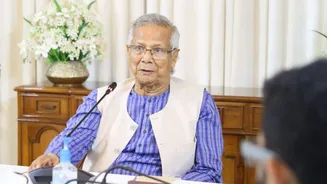
Bangladesh’s interim chief adviser, Muhammad Yunus, announced the deal on X, saying Washington had “committed to establishing a mechanism for certain textile and apparel goods from Bangladesh using US-produced cotton and man-made fiber to receive zero reciprocal tariff in (the) US market.”
The agreement marks a significant development after the US had in 2025 proposed much higher duties—initially up to 37%—that were later eased to 20%. That reduction had already provided some relief for exporters who depend on the United States for a large share of their sales.
Chief Adviser of the interim government of Bangladesh, Muhammad Yunus, tweets, "The Agreement on Reciprocal Tariff between Bangladesh and the United States was signed on Monday... The US will further reduce reciprocal tariff to 19%, which was originally set at 37% and later… pic.twitter.com/zkBh21nLa7
— ANI (@ANI) February 9, 2026
A deal with broader trade implications
Under the new deal, Bangladesh has also agreed to open its markets wider for American industrial and agricultural products, and to address non-tariff barriers such as vehicle standards and regulatory recognitions. These concessions are part of efforts to deepen bilateral economic ties beyond textiles.
Trade analysts say the pact comes at an opportune moment as Bangladesh heads into national elections, with garment exports forming the backbone of its economy, employing millions and generating a large share of foreign earnings.
While key segments of Bangladesh’s apparel sector could benefit from lower tariffs, the deal also reflects Washington’s growing influence in shaping trade rules in South Asia, following similar agreements with other countries in the region.
Importantly, the trade deal comes just days ahead of the national election on February 12, widely seen as a crucial moment for Bangladesh’s political future, especially after the ouster of long-time leader Sheikh Hasina and the dramatic reshaping of the country’s political landscape.