





What is the story about?
The United States is positioning the 31st Marine Expeditionary Unit (MEU) to West Asia, at the centre of evolving operations against Iran.
The move, authorised under US President Donald Trump, is aimed at expanding strategic options without immediately committing to a full-scale ground war.
The redeployment of the 31st MEU from its long-standing base in Japan to West Asia is being viewed as a direct response to rising hostilities involving Iran and the growing instability around critical maritime routes.
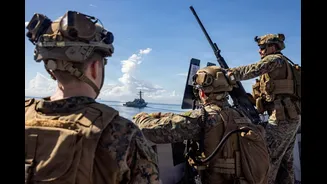
The unit officially entered the CENTCOM area of operations on March 27, arriving aboard the amphibious assault ship USS Tripoli.
This transition represents more than a routine movement of forces. It signals a reorientation of American military priorities, shifting assets from the Indo-Pacific to address an increasingly volatile situation in West Asia.
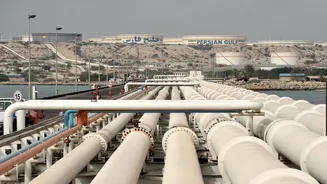
The Strait of Hormuz, a vital artery for global energy supplies, has emerged as a central focus, with US planners emphasising the need to ensure uninterrupted maritime traffic.
At the same time, diplomatic efforts have struggled to gain traction. Washington recently proposed a 15-point ceasefire framework that included provisions to reopen the Strait of Hormuz and impose restrictions on Iran’s nuclear activities.
Tehran declined the offer and instead introduced alternative proposals, leaving negotiations at an impasse. Against this backdrop, the Pentagon has reportedly examined a range of military responses, including scenarios that could involve ground operations.
While no final authorisation has been issued, the presence of the 31st MEU ensures that the United States retains the capability to act swiftly if required.
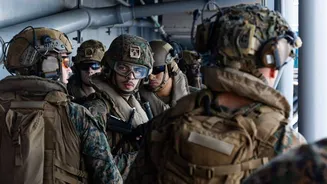
The 31st MEU is a Marine Air-Ground Task Force structured to operate as a fully integrated and self-reliant combat formation. It is the only MEU permanently forward-deployed outside the continental United States, traditionally based at Camp Hansen in Okinawa, Japan.
Comprising between 2,200 and 2,500 Marines and sailors, the unit’s strength increases to more than 4,000 personnel when combined with the naval forces of its associated Amphibious Ready Group.
This makes it a compact yet potent force capable of executing a wide array of missions independently.
The MEU is organised into four principal components:
Command Element (CE): This headquarters unit manages operational coordination, intelligence gathering, and command functions. It also ensures seamless integration with naval forces, particularly those operating from the USS Tripoli.
Ground Combat Element (GCE): Centred around the 3rd Battalion, 1st Marines (BLT 3/1), this component serves as the primary combat force. It is reinforced with light armoured vehicles, artillery systems such as M777 howitzers, combat engineers, and reconnaissance teams.
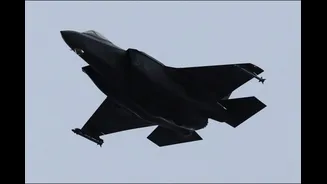
Aviation Combat Element (ACE): Built around a reinforced Marine Medium Tiltrotor Squadron (VMM-265), the aviation wing provides both mobility and firepower. Its inventory includes F-35B Lightning II stealth fighters, MV-22B Osprey tiltrotor aircraft, CH-53E Super Stallion helicopters, and AH-1Z Viper and UH-1Y Venom helicopters.
Logistics Combat Element (LCE): Combat Logistics Battalion 31 (CLB-31) ensures operational sustainability, providing medical support, engineering capabilities, water purification, and equipment maintenance. This enables the MEU to remain self-sufficient for extended periods, even in austere environments.
This integrated structure allows the 31st MEU to function as a “self-contained” force, capable of responding rapidly to evolving scenarios without immediate external support.
The USS Tripoli, an America-class amphibious assault ship, plays a central role in amplifying the operational reach of the 31st MEU. As one of the US Navy’s most advanced “big deck” vessels, it serves as both a launch platform and a command hub.
Unlike traditional amphibious ships, the Tripoli is designed without a well deck, enabling it to prioritise aviation operations. This configuration allows it to carry a larger number of aircraft, particularly F-35B stealth fighters, effectively transforming it into a “Lightning Carrier.”
This capability enhances the MEU’s ability to conduct deep-strike missions, electronic warfare operations, and intelligence, surveillance, and reconnaissance tasks.
The F-35B’s advanced sensor suite enables it to detect and track threats such as mobile missile launchers and fast-moving maritime targets before they can pose a risk.
In addition to fixed-wing aircraft, the Tripoli supports a range of rotary and tiltrotor platforms, including Ospreys and heavy-lift helicopters. These assets provide the flexibility to transport troops and equipment over long distances, bypassing traditional coastal defences.
The ship currently carries more than 3,500 US troops, forming the core of the deployed force in the region.
The 31st MEU possesses several distinctive features that set it apart from other Marine units. One of its most notable capabilities is its dedicated small-boat company, a permanent component not found in other MEUs.
This specialised unit is trained for covert maritime operations, including clandestine insertions and raids along contested coastlines.
Using Enhanced Combat Rubber Reconnaissance Craft, these teams can approach targets undetected, making them particularly effective in scenarios involving offshore infrastructure or narrow waterways.
The MEU is also optimised for rapid amphibious assaults. Its ground forces can seize beachheads or strategic locations, including energy facilities or islands that hold logistical or economic importance.
Air mobility further enhances its operational flexibility. Aircraft such as the MV-22B Osprey and CH-53 helicopters enable “vertical insertion” missions, allowing Marines to be deployed deep inland or onto remote targets without relying on conventional landing zones.
In addition to combat roles, the unit is equipped to carry out non-combatant evacuation operations, humanitarian assistance missions, and rescue operations. Its Tactical Recovery of Aircraft and Personnel (TRAP) capability allows it to retrieve downed pilots or isolated personnel in hostile environments.
The MEU also plays a role in maritime security through visit, board, search, and seizure operations, enabling it to intercept and inspect vessels in the Strait of Hormuz.
A key strength of the 31st MEU lies in its logistical independence. Combat Logistics Battalion 31 ensures that the unit can operate continuously for 15 to 30 days without external resupply.
This includes the provision of medical care through advanced trauma teams capable of performing life-saving procedures in both field and shipboard settings. Engineering units support infrastructure development, while maintenance teams keep vehicles and equipment operational.
The logistics element also facilitates the establishment of temporary forward operating bases. These “expeditionary advanced bases” allow the MEU to extend its reach by creating refuelling and rearming points in remote locations.
Such capabilities are particularly relevant in the current conflict, where dispersed operations and rapid mobility are essential.
The 31st MEU has a long and varied operational history, especially as a rapid-response force in the Eastern Hemisphere. Originally designated as Special Landing Force Alpha, it has participated in numerous military campaigns and humanitarian missions.
During the Vietnam War, the unit conducted multiple amphibious operations along the coastline. It later played a role in Operation Desert Fox in 1998, operating near Kuwait during a period of heightened tensions with Iraq.
In the early 2000s, the MEU was involved in Operation Iraqi Freedom, carrying out combat missions in regions such as Al Anbar and Najaf.
Beyond combat, it has also contributed to disaster relief efforts, including operations following the 2011 earthquake and tsunami in Japan and the 2013 typhoon in the Philippines.
The 31st MEU is not operating in isolation. Its deployment is part of a broader reinforcement effort that includes both Marine Corps and Army units.
The USS Boxer, along with the USS New Orleans and another Marine Expeditionary Unit, is expected to arrive in the region by late April.
Simultaneously, the 82nd Airborne Division has been placed on alert, with its command element and an infantry brigade preparing for potential deployment. This indicates readiness to escalate operations if circumstances require.
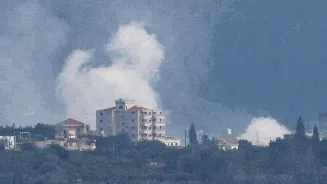
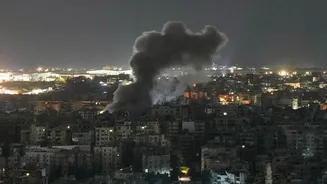
The deployment coincides with a broader escalation in hostilities in the region.
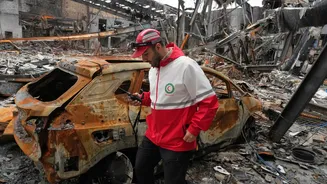
A key flashpoint occurred at Saudi Arabia’s Prince Sultan Air Base, where Iranian-fired ballistic missiles and drones struck US positions, injuring at least ten American personnel. Two of those injured were reported to be in serious condition.
Since the launch of Operation Epic Fury on February 28, US forces have carried out more than 11,000 strikes across the region. These operations have targeted a range of threats.
Even before the latest reinforcements, the United States maintained a substantial footprint in West Asia, with approximately 50,000 troops deployed.
Also Watch:
With inputs from agencies
The move, authorised under US President Donald Trump, is aimed at expanding strategic options without immediately committing to a full-scale ground war.
Why has the US deployed the 31st MEU to West Asia?
The redeployment of the 31st MEU from its long-standing base in Japan to West Asia is being viewed as a direct response to rising hostilities involving Iran and the growing instability around critical maritime routes.
The unit officially entered the CENTCOM area of operations on March 27, arriving aboard the amphibious assault ship USS Tripoli.
U.S. Sailors and Marines aboard USS Tripoli (LHA 7) arrived in the U.S. Central Command area of responsibility, March 27. The America-class amphibious assault ship serves as the flagship for the Tripoli Amphibious Ready Group / 31st Marine Expeditionary Unit composed of about… pic.twitter.com/JFWiPBbkd2
— U.S. Central Command (@CENTCOM) March 28, 2026
This transition represents more than a routine movement of forces. It signals a reorientation of American military priorities, shifting assets from the Indo-Pacific to address an increasingly volatile situation in West Asia.
The Strait of Hormuz, a vital artery for global energy supplies, has emerged as a central focus, with US planners emphasising the need to ensure uninterrupted maritime traffic.
At the same time, diplomatic efforts have struggled to gain traction. Washington recently proposed a 15-point ceasefire framework that included provisions to reopen the Strait of Hormuz and impose restrictions on Iran’s nuclear activities.
Tehran declined the offer and instead introduced alternative proposals, leaving negotiations at an impasse. Against this backdrop, the Pentagon has reportedly examined a range of military responses, including scenarios that could involve ground operations.
While no final authorisation has been issued, the presence of the 31st MEU ensures that the United States retains the capability to act swiftly if required.
What exactly is the 31st Marine Expeditionary Unit?
The 31st MEU is a Marine Air-Ground Task Force structured to operate as a fully integrated and self-reliant combat formation. It is the only MEU permanently forward-deployed outside the continental United States, traditionally based at Camp Hansen in Okinawa, Japan.
Comprising between 2,200 and 2,500 Marines and sailors, the unit’s strength increases to more than 4,000 personnel when combined with the naval forces of its associated Amphibious Ready Group.
This makes it a compact yet potent force capable of executing a wide array of missions independently.
The MEU is organised into four principal components:
Command Element (CE): This headquarters unit manages operational coordination, intelligence gathering, and command functions. It also ensures seamless integration with naval forces, particularly those operating from the USS Tripoli.
Ground Combat Element (GCE): Centred around the 3rd Battalion, 1st Marines (BLT 3/1), this component serves as the primary combat force. It is reinforced with light armoured vehicles, artillery systems such as M777 howitzers, combat engineers, and reconnaissance teams.
Aviation Combat Element (ACE): Built around a reinforced Marine Medium Tiltrotor Squadron (VMM-265), the aviation wing provides both mobility and firepower. Its inventory includes F-35B Lightning II stealth fighters, MV-22B Osprey tiltrotor aircraft, CH-53E Super Stallion helicopters, and AH-1Z Viper and UH-1Y Venom helicopters.
Logistics Combat Element (LCE): Combat Logistics Battalion 31 (CLB-31) ensures operational sustainability, providing medical support, engineering capabilities, water purification, and equipment maintenance. This enables the MEU to remain self-sufficient for extended periods, even in austere environments.
This integrated structure allows the 31st MEU to function as a “self-contained” force, capable of responding rapidly to evolving scenarios without immediate external support.
How does the USS Tripoli enhance the MEU’s combat capabilities?
The USS Tripoli, an America-class amphibious assault ship, plays a central role in amplifying the operational reach of the 31st MEU. As one of the US Navy’s most advanced “big deck” vessels, it serves as both a launch platform and a command hub.
Unlike traditional amphibious ships, the Tripoli is designed without a well deck, enabling it to prioritise aviation operations. This configuration allows it to carry a larger number of aircraft, particularly F-35B stealth fighters, effectively transforming it into a “Lightning Carrier.”
This capability enhances the MEU’s ability to conduct deep-strike missions, electronic warfare operations, and intelligence, surveillance, and reconnaissance tasks.
The F-35B’s advanced sensor suite enables it to detect and track threats such as mobile missile launchers and fast-moving maritime targets before they can pose a risk.
In addition to fixed-wing aircraft, the Tripoli supports a range of rotary and tiltrotor platforms, including Ospreys and heavy-lift helicopters. These assets provide the flexibility to transport troops and equipment over long distances, bypassing traditional coastal defences.
The ship currently carries more than 3,500 US troops, forming the core of the deployed force in the region.
What makes the 31st MEU uniquely suited for this conflict?
The 31st MEU possesses several distinctive features that set it apart from other Marine units. One of its most notable capabilities is its dedicated small-boat company, a permanent component not found in other MEUs.
This specialised unit is trained for covert maritime operations, including clandestine insertions and raids along contested coastlines.
Using Enhanced Combat Rubber Reconnaissance Craft, these teams can approach targets undetected, making them particularly effective in scenarios involving offshore infrastructure or narrow waterways.
The MEU is also optimised for rapid amphibious assaults. Its ground forces can seize beachheads or strategic locations, including energy facilities or islands that hold logistical or economic importance.
Air mobility further enhances its operational flexibility. Aircraft such as the MV-22B Osprey and CH-53 helicopters enable “vertical insertion” missions, allowing Marines to be deployed deep inland or onto remote targets without relying on conventional landing zones.
In addition to combat roles, the unit is equipped to carry out non-combatant evacuation operations, humanitarian assistance missions, and rescue operations. Its Tactical Recovery of Aircraft and Personnel (TRAP) capability allows it to retrieve downed pilots or isolated personnel in hostile environments.
The MEU also plays a role in maritime security through visit, board, search, and seizure operations, enabling it to intercept and inspect vessels in the Strait of Hormuz.
A key strength of the 31st MEU lies in its logistical independence. Combat Logistics Battalion 31 ensures that the unit can operate continuously for 15 to 30 days without external resupply.
This includes the provision of medical care through advanced trauma teams capable of performing life-saving procedures in both field and shipboard settings. Engineering units support infrastructure development, while maintenance teams keep vehicles and equipment operational.
The logistics element also facilitates the establishment of temporary forward operating bases. These “expeditionary advanced bases” allow the MEU to extend its reach by creating refuelling and rearming points in remote locations.
Such capabilities are particularly relevant in the current conflict, where dispersed operations and rapid mobility are essential.
Where else has the 31st MEU been deployed before?
The 31st MEU has a long and varied operational history, especially as a rapid-response force in the Eastern Hemisphere. Originally designated as Special Landing Force Alpha, it has participated in numerous military campaigns and humanitarian missions.
During the Vietnam War, the unit conducted multiple amphibious operations along the coastline. It later played a role in Operation Desert Fox in 1998, operating near Kuwait during a period of heightened tensions with Iraq.
In the early 2000s, the MEU was involved in Operation Iraqi Freedom, carrying out combat missions in regions such as Al Anbar and Najaf.
Beyond combat, it has also contributed to disaster relief efforts, including operations following the 2011 earthquake and tsunami in Japan and the 2013 typhoon in the Philippines.
What other US forces are being deployed alongside the MEU?
The 31st MEU is not operating in isolation. Its deployment is part of a broader reinforcement effort that includes both Marine Corps and Army units.
The USS Boxer, along with the USS New Orleans and another Marine Expeditionary Unit, is expected to arrive in the region by late April.
Simultaneously, the 82nd Airborne Division has been placed on alert, with its command element and an infantry brigade preparing for potential deployment. This indicates readiness to escalate operations if circumstances require.
What triggered this latest military buildup in the region?
The deployment coincides with a broader escalation in hostilities in the region.
A key flashpoint occurred at Saudi Arabia’s Prince Sultan Air Base, where Iranian-fired ballistic missiles and drones struck US positions, injuring at least ten American personnel. Two of those injured were reported to be in serious condition.
Since the launch of Operation Epic Fury on February 28, US forces have carried out more than 11,000 strikes across the region. These operations have targeted a range of threats.
Even before the latest reinforcements, the United States maintained a substantial footprint in West Asia, with approximately 50,000 troops deployed.
Also Watch:
With inputs from agencies