




What is the story about?
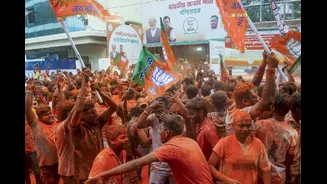
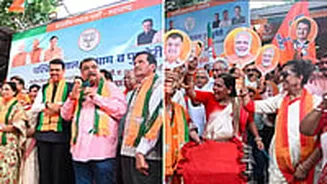
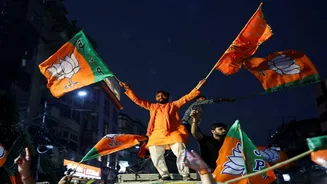
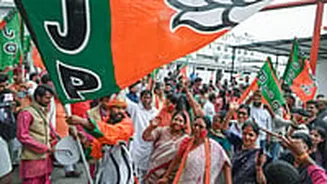
The Bharatiya Janata Party (BJP) has registered a historic victory in West Bengal. The saffron party has won 207 of the 293 Assembly seats, ending 15 years of rule of the Trinamool Congress (TMC).
This is not only a huge electoral success but also an ideological win for the party in the land of Syama Prasad Mookerjee, the founder of the Jana Sangha — the BJP’s predecessor. Acknowledging one of the ideological forefathers of the party, Prime Minister Narendra Modi, in his victory speech at the BJP headquarters on Monday evening (May 4), said that “the soul of Syama Prasad Mookerjee must be at peace today”.
Let’s take a closer look.
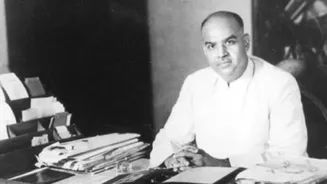
Syama Prasad Mookerjee was a prominent Bengali leader who went on to launch the Bharatiya Jana Sangh in 1951.
Born on July 6, 1901, he came from an eminent family in Kolkata. His father, Ashutosh Mookerjee, was a Calcutta High Court judge and Vice-Chancellor of Calcutta University.
Mookerjee was a nationalist leader and educationist who quickly rose in public life.
At just 33, he became the youngest Vice-Chancellor of Calcutta University. Mookerjee then entered provincial politics, getting elected to the Bengal Legislative Council in 1929 on a Congress ticket and a year later as an independent.
He played a big role in shaping the Hindutva politics in pre-Independent India.
In the early 1940s, Mookerjee served as the Finance Minister of Bengal under the Progressive Coalition government of Fazlul Haque.
His politics was defined by two factors — protecting Hindu interests in a communally polarised Bengal and a belief in national unity, as per Economic Times (ET).
Ahead of the Partition, Mookerjee, who was the Hindu Mahasabha president from 1943 to 1946, opposed the United Bengal plan that called for a Bengal independent of both India and Pakistan. As per him, such a united Bengal would lead to a Muslim majority dominating Hindus. Instead, he demanded Bengal’s partition, with Hindu-majority
West Bengal remaining with India.
Following the assassination of Mahatma Gandhi on January 30, 1948 by Nathuram Godse, Mookerjee told the Hindu Mahasabha’s Working Committee to adopt resolutions that “expressed shame that Gandhi’s assassin had been connected with the organisation, and declared support for the government in its efforts to suppress terrorism or subversive activities in any shape or form”, Indian Express cited BD Graham’s book Hindu Nationalism and Indian Politics (2007) as saying.
This came even though Mookerjee had denounced the Quit India movement.
The Bengal leader quit the Hindu Mahasabha in November 1948 over certain differences.
After Independence, Mookerjee joined Jawaharlal Nehru’s Cabinet as the Minister of Industry and Supply. He was vocal against the ‘persecution’ of Hindus in East Pakistan (now Bangladesh).
As riots erupted in 1949-50 in East Pakistan, a swarm of Hindu refugees reached India. Amid pressure, Nehru invited Pakistan Prime Minister Liaquat Ali Khan to Delhi in April 1950. Their meeting resulted in the Nehru-Liaquat pact, which called for both countries to ensure equality, freedom and justice to their minorities.
According to Graham, Mookerjee demanded the inclusion of a penal clause against the side that failed to uphold the agreement. He resigned from the Nehru government as this was not included in the pact.
Later, Mookerjee floated the Bharatiya Jana Sangh with the support of Rashtriya Swayamsevak Sangh (RSS) volunteers.
In June 1952, Mookerjee pressed the Centre to convince Jammu and Kashmir to accept full integration with India.
After the Hindu Dogra king Raja Hari Singh, who ruled the princely state of Kashmir, signed the Instrument of Accession on October 26, 1947, Jammu and Kashmir united with India.
Article 370 was introduced by the Nehru government as it believed the Muslim-majority Kashmir required special constitutional provisions.
Mookerjee opposed this special status to J&K. In May 1953, he and Atal Bihari Vajpayee decided to travel to Jammu without a permit, a symbolic dismissal of the special status of Kashmir.
Mookerjee reached Jammu and Kashmir, but the state police had erected barricades to arrest him. As he did not turn back, the Bengali leader was arrested.
Mookerjee, who had a heart problem, was held in a cottage about eight miles from Srinagar. However, he could not survive the conditions and suddenly fell sick on June 23. He suffered a massive heart attack and died.
The Jana Sangh had a modest beginning in West Bengal. A year after its formation, the party won only three Lok Sabha seats in the 1952 elections. However, two of these were from Bengal.
In the 1950s and 1960s, the Jana Sangh failed to taste significant electoral success despite support among Hindu refugees.
In 1977, the party merged with the Janata Party to defeat Indira Gandhi after the Emergency. However, the Janata experiment did not last long due to ideological disputes.
The BJP, the Jana Sangh’s successor, was launched in 1980. Vajpayee, who served as Mookerjee's private secretary in early 1953, became its first president.
After Mookerjee's demise in 1953, the Jana Sangh's Bengal base had collapsed.
Amid a lack of wide mass appeal or charismatic leadership, the BJP could not find electoral success in Bengal initially. In the 1982 and 1987 Assembly elections, the saffron party clinched no seats, with vote shares hovering around 1-2 per cent.
The BJP's vote share jumped significantly in the state in the early 1990s as it rode the wave of national-level mobilisation, such as the Ram Janmabhoomi movement, noted ET.
In the 1991 elections, the saffron party bagged over 10 per cent vote share in both the Assembly and Lok Sabha elections, even though it did not win any seats.
The real turnaround for the BJP came post 2014. As Modi came to power at the Centre, the saffron party grew in states across the nation.
In 2016, the BJP secured three seats and 10 per cent vote share in the Bengal Assembly polls. Five years later, it won a whopping 77 seats and 38 per cent vote share in the eastern state.
And now, the BJP has overthrown Mamata Banerjee's TMC from power by winning over 200 seats and 45.84 per cent vote share.
For the saffron party, the victory in Bengal is sweet all the more because of Mookerjee.
"If today Bengal is a part of India, it is because of Syama Prasad Mookerjee. Not only that, the fact that a large portion of United Punjab is today with India is also because of the voice raised by him," former BJP chief JP Nadda previously said.
With inputs from agencies
This is not only a huge electoral success but also an ideological win for the party in the land of Syama Prasad Mookerjee, the founder of the Jana Sangha — the BJP’s predecessor. Acknowledging one of the ideological forefathers of the party, Prime Minister Narendra Modi, in his victory speech at the BJP headquarters on Monday evening (May 4), said that “the soul of Syama Prasad Mookerjee must be at peace today”.
In keeping with the vision of Dr. Syama Prasad Mookerjee, a new chapter begins in West Bengal’s destiny.
From today, West Bengal is free from fear and filled with confidence in development. pic.twitter.com/TgSG1usfTq
— Narendra Modi (@narendramodi) May 4, 2026
Let’s take a closer look.
Who was Syama Prasad Mookerjee?
Syama Prasad Mookerjee was a prominent Bengali leader who went on to launch the Bharatiya Jana Sangh in 1951.
Born on July 6, 1901, he came from an eminent family in Kolkata. His father, Ashutosh Mookerjee, was a Calcutta High Court judge and Vice-Chancellor of Calcutta University.
Mookerjee was a nationalist leader and educationist who quickly rose in public life.
At just 33, he became the youngest Vice-Chancellor of Calcutta University. Mookerjee then entered provincial politics, getting elected to the Bengal Legislative Council in 1929 on a Congress ticket and a year later as an independent.
He played a big role in shaping the Hindutva politics in pre-Independent India.
In the early 1940s, Mookerjee served as the Finance Minister of Bengal under the Progressive Coalition government of Fazlul Haque.
His politics was defined by two factors — protecting Hindu interests in a communally polarised Bengal and a belief in national unity, as per Economic Times (ET).
Ahead of the Partition, Mookerjee, who was the Hindu Mahasabha president from 1943 to 1946, opposed the United Bengal plan that called for a Bengal independent of both India and Pakistan. As per him, such a united Bengal would lead to a Muslim majority dominating Hindus. Instead, he demanded Bengal’s partition, with Hindu-majority
Following the assassination of Mahatma Gandhi on January 30, 1948 by Nathuram Godse, Mookerjee told the Hindu Mahasabha’s Working Committee to adopt resolutions that “expressed shame that Gandhi’s assassin had been connected with the organisation, and declared support for the government in its efforts to suppress terrorism or subversive activities in any shape or form”, Indian Express cited BD Graham’s book Hindu Nationalism and Indian Politics (2007) as saying.
This came even though Mookerjee had denounced the Quit India movement.
The Bengal leader quit the Hindu Mahasabha in November 1948 over certain differences.
After Independence, Mookerjee joined Jawaharlal Nehru’s Cabinet as the Minister of Industry and Supply. He was vocal against the ‘persecution’ of Hindus in East Pakistan (now Bangladesh).
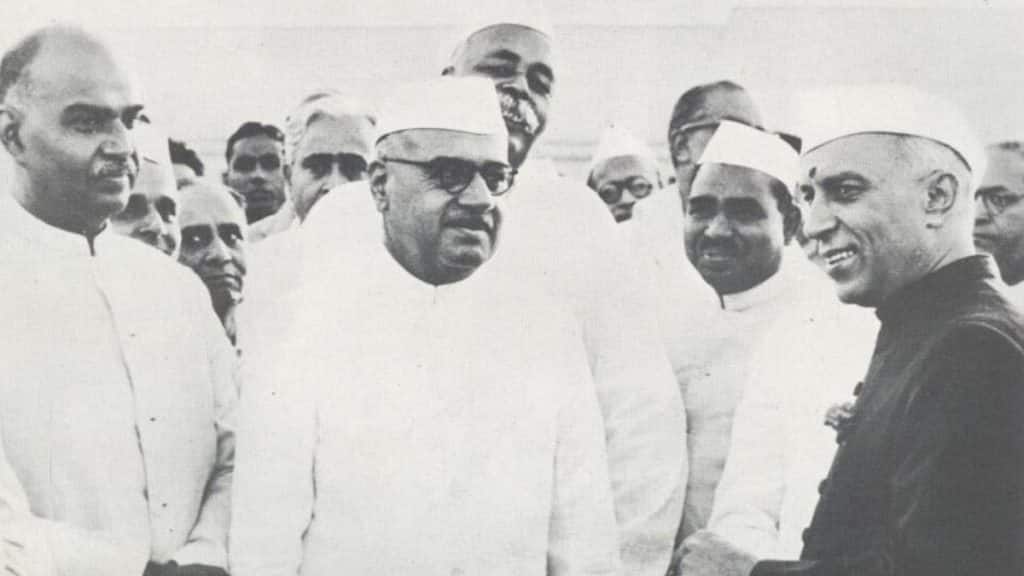
Jawaharlal Nehru with Syama Prasad Mookerjee and Jairamdas Doulatram. Wikimedia Commons
As riots erupted in 1949-50 in East Pakistan, a swarm of Hindu refugees reached India. Amid pressure, Nehru invited Pakistan Prime Minister Liaquat Ali Khan to Delhi in April 1950. Their meeting resulted in the Nehru-Liaquat pact, which called for both countries to ensure equality, freedom and justice to their minorities.
According to Graham, Mookerjee demanded the inclusion of a penal clause against the side that failed to uphold the agreement. He resigned from the Nehru government as this was not included in the pact.
Later, Mookerjee floated the Bharatiya Jana Sangh with the support of Rashtriya Swayamsevak Sangh (RSS) volunteers.
On Kashmir
In June 1952, Mookerjee pressed the Centre to convince Jammu and Kashmir to accept full integration with India.
After the Hindu Dogra king Raja Hari Singh, who ruled the princely state of Kashmir, signed the Instrument of Accession on October 26, 1947, Jammu and Kashmir united with India.
Article 370 was introduced by the Nehru government as it believed the Muslim-majority Kashmir required special constitutional provisions.
Mookerjee opposed this special status to J&K. In May 1953, he and Atal Bihari Vajpayee decided to travel to Jammu without a permit, a symbolic dismissal of the special status of Kashmir.
Mookerjee reached Jammu and Kashmir, but the state police had erected barricades to arrest him. As he did not turn back, the Bengali leader was arrested.
Mookerjee, who had a heart problem, was held in a cottage about eight miles from Srinagar. However, he could not survive the conditions and suddenly fell sick on June 23. He suffered a massive heart attack and died.
From Jana Sangh to BJP’s rise in West Bengal
The Jana Sangh had a modest beginning in West Bengal. A year after its formation, the party won only three Lok Sabha seats in the 1952 elections. However, two of these were from Bengal.
In the 1950s and 1960s, the Jana Sangh failed to taste significant electoral success despite support among Hindu refugees.
In 1977, the party merged with the Janata Party to defeat Indira Gandhi after the Emergency. However, the Janata experiment did not last long due to ideological disputes.
The BJP, the Jana Sangh’s successor, was launched in 1980. Vajpayee, who served as Mookerjee's private secretary in early 1953, became its first president.
After Mookerjee's demise in 1953, the Jana Sangh's Bengal base had collapsed.
Amid a lack of wide mass appeal or charismatic leadership, the BJP could not find electoral success in Bengal initially. In the 1982 and 1987 Assembly elections, the saffron party clinched no seats, with vote shares hovering around 1-2 per cent.
The BJP's vote share jumped significantly in the state in the early 1990s as it rode the wave of national-level mobilisation, such as the Ram Janmabhoomi movement, noted ET.
In the 1991 elections, the saffron party bagged over 10 per cent vote share in both the Assembly and Lok Sabha elections, even though it did not win any seats.
The real turnaround for the BJP came post 2014. As Modi came to power at the Centre, the saffron party grew in states across the nation.
In 2016, the BJP secured three seats and 10 per cent vote share in the Bengal Assembly polls. Five years later, it won a whopping 77 seats and 38 per cent vote share in the eastern state.
And now, the BJP has overthrown Mamata Banerjee's TMC from power by winning over 200 seats and 45.84 per cent vote share.
For the saffron party, the victory in Bengal is sweet all the more because of Mookerjee.
"If today Bengal is a part of India, it is because of Syama Prasad Mookerjee. Not only that, the fact that a large portion of United Punjab is today with India is also because of the voice raised by him," former BJP chief JP Nadda previously said.
With inputs from agencies