





What is the story about?
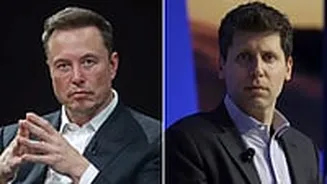
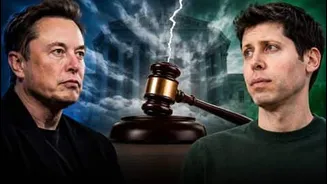
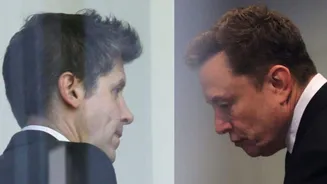
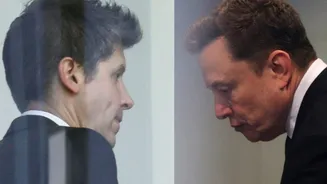
Every eye in Silicon Valley and the broader tech industry was on the legal battle between Elon Musk and Sam Altman over the future of artificial intelligence, which on Monday (May 18, 2026) ended with a decisive courtroom victory for OpenAI.
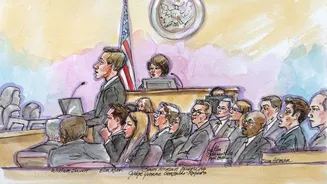
After a three-week federal trial in Oakland, California, a unanimous jury ruled against Musk in his lawsuit accusing OpenAI and its leadership of abandoning the organisation’s founding principles.
Jurors determined that Musk had waited too long to file the case under the applicable statute of limitations, effectively ending his effort to hold OpenAI, Altman and company president Greg Brockman legally liable for allegedly transforming the AI startup from a nonprofit research lab into a massive profit-oriented technology giant.
The ruling clears one of the biggest legal obstacles facing OpenAI as the ChatGPT-maker moves toward what analysts believe could eventually become one of the largest initial public offerings (IPO) ever attempted.
Even in defeat, Musk made clear the legal war is far from over.
Shortly after the ruling, he announced plans to appeal while launching fresh attacks against both the judge and OpenAI’s leadership.
The courtroom clash stemmed from the early origins of OpenAI itself. The organisation was founded in 2015 by Altman, Musk and several others as a nonprofit initiative focused on developing artificial intelligence in a manner intended to benefit humanity rather than maximise shareholder profits.
Musk, who was among the company’s earliest financial backers, argued during the trial that OpenAI’s original mission was fundamentally incompatible with the corporate structure it later adopted.
According to Musk, he contributed approximately $38 million during OpenAI’s formative years because he believed the organisation would remain committed to public-interest research rather than evolve into a commercial enterprise backed by giant investors.
In his lawsuit, Musk alleged that Altman and Brockman manipulated him into financially supporting OpenAI before shifting the organisation toward a for-profit structure behind his back.
He accused the company’s leadership of enriching themselves while abandoning the founding principles that had attracted his support in the first place.
The lawsuit sought roughly $150 billion in damages from OpenAI and Microsoft, one of the company’s biggest financial backers. Musk also asked the court to remove Altman and Brockman from leadership roles.
Musk repeatedly framed the dispute not merely as a corporate disagreement but as a broader issue involving charitable organisations and public trust.
"It was specifically meant to be for a charity that does not benefit any individual person. I could've started it as a for-profit and I specifically chose not to," Musk testified. "There's nothing wrong with having a for-profit organization, you just can't steal a charity."
He later added, "If we make it OK to loot a charity, the entire foundation of charitable giving in America will be destroyed. That’s my concern.”
Throughout the trial, Musk portrayed OpenAI’s transformation into a commercially driven company as a betrayal of the organisation’s original commitments regarding AI safety and public welfare.
OpenAI’s defence team argued throughout the proceedings that Musk had known for years about plans to create a for-profit entity capable of raising the enormous levels of funding required for advanced AI research and infrastructure.
Lawyers for OpenAI maintained that Musk had only three years under the statute of limitations to bring legal claims related to those decisions. Because Musk filed the lawsuit in August 2024, OpenAI’s legal team argued that he had missed the deadline by several years.
Sarah Eddy, one of the attorneys representing OpenAI and the other defendants, told jurors that Musk should have initiated legal action no later than August 2021 if he genuinely believed OpenAI had violated its founding agreement.
The nine-member federal jury agreed unanimously with OpenAI’s position. Jurors deliberated for less than two hours before returning their verdict.
Judge Yvonne Gonzalez Rogers, who oversaw the case, indicated after the ruling that Musk could face major challenges overturning the decision on appeal because the question of timing had been heavily supported by evidence presented during the trial.
"There’s a substantial amount of evidence to support the jury’s finding, which is why I was prepared to dismiss on the spot," the judge said following the verdict.
Musk reacted angrily after the decision, criticising Gonzalez Rogers and accusing the court of setting a dangerous precedent for nonprofit organisations. He described the judge as a “terrible activist Oakland judge, who simply used the jury as a fig leaf" to create a bad precedent.
“She just handed out a free license to loot charities if you can keep the looting quiet for a few years!” Musk wrote on X.
OpenAI consistently rejected Musk’s characterisation of events, arguing instead that the billionaire’s lawsuit reflected frustration over losing influence within the organisation and concern about the rise of a powerful competitor to his own AI ambitions.
OpenAI lawyers repeatedly claimed Musk’s central objective had always been control over OpenAI rather than preserving nonprofit ideals.
“What he cares about is Elon Musk being on top," William Savitt, a lawyer representing OpenAI and Altman, argued during opening statements. “We are here because Mr. Musk didn’t get his way."
The defence sought to portray Musk as fully aware of OpenAI’s plans to evolve into a company capable of attracting large-scale investment necessary for cutting-edge AI development.
According to testimony presented during the trial, Musk himself had proposed aggressive structural changes during OpenAI’s early years. Altman testified that Musk once sought a 90 per cent ownership stake in OpenAI and suggested combining the organisation with Tesla.
Musk reportedly argued that such an arrangement would provide the financial resources required for OpenAI to remain competitive in the global AI race.
OpenAI’s chairman Bret Taylor also testified about a proposal that became a major talking point during the trial. Taylor revealed that in February 2025 — months after Musk filed his lawsuit — a consortium led by Musk’s AI startup xAI formally attempted to acquire OpenAI’s nonprofit arm.
“I was surprised,” Taylor testified. “This proposal was to acquire this nonprofit by a group of for-profit investors, which felt contradictory to the spirit of the lawsuit."
OpenAI used the takeover proposal to argue that Musk’s legal claims about preserving nonprofit principles conflicted with his own business actions.
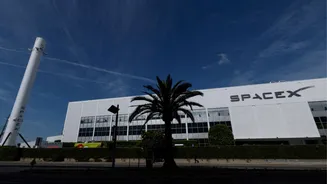
Throughout the proceedings, OpenAI also repeatedly linked Musk’s lawsuit to the growing competition between OpenAI and xAI. Musk launched xAI after leaving OpenAI’s board in 2018, and the company has since become integrated into SpaceX operations.
OpenAI lawyers argued that Musk was attempting to slow OpenAI’s growth at a crucial moment in the AI race while simultaneously strengthening his own company’s position in the industry.
Bill Savitt later described Musk’s lawsuit as an “after-the-fact contrivance that bears no relationship to reality,” calling it a “hypocritical attempt to sabotage a competitor."
Musk’s legal team repeatedly attempted to portray the OpenAI CEO as dishonest and untrustworthy. During closing arguments, Musk attorney Steven Molo told jurors that several witnesses — including Musk himself, former OpenAI board members and former chief scientist Ilya Sutskever — had testified that Altman was a liar.
“Sam Altman's credibility is directly at issue in this case,” Molo said. “If you don't believe him, they cannot win."
The issue became especially significant because the trial revisited the dramatic events of late 2023, when Altman was abruptly removed from OpenAI’s board before returning to his position only days later.
Several former board members, including Helen Toner and Tasha McCauley, testified during the trial that there had been concerns regarding Altman’s candour and transparency while managing the company.
At one point during cross-examination, Altman declined to give an unequivocal yes when asked whether he was completely trustworthy and whether he had never misled business associates. Musk’s legal team repeatedly referenced that exchange afterward.
The courtroom battle over credibility extended beyond Altman. OpenAI’s lawyers also attempted to undermine Musk’s own narrative and memory of events.
Savitt accused Musk of suffering from “selective amnesia” regarding discussions about OpenAI’s future corporate structure and financing needs.
He also argued that Musk exaggerated the importance of his early contributions to OpenAI’s eventual success.
“Mr. Musk may have the Midas touch in some areas, but not in AI,” Savitt told jurors. “To succeed in AI, as it turns out, all Mr. Musk can do is come to court.”
The proceedings frequently descended into highly personal exchanges, exposing tensions and rivalries between some of the most influential figures in Silicon Valley.
Although Judge Gonzalez Rogers sought to limit the trial’s focus to the legal claims at hand, concerns about the future dangers of artificial intelligence remained central to the atmosphere surrounding the case.
Musk repeatedly argued that OpenAI had abandoned its original emphasis on AI safety in pursuit of commercial growth and investor profits. He testified that fears about uncontrolled AI development were one of the primary reasons OpenAI had been created in the first place.
During testimony, Musk recalled conversations with Larry Page that he claimed deeply alarmed him regarding the potential future of artificial intelligence.
According to Musk, he asked Page what would happen if advanced AI systems eventually wiped out humanity. "He said that would be fine so long as artificial intelligence survives. I said that was insane, that's just crazy."
Musk’s lawyers also attempted to introduce broader discussions about existential risks associated with artificial intelligence.
“Extinction risk is a real problem. This is a real risk. We all could die," attorney Steven Molo argued during the proceedings.
Rogers restricted portions of expert testimony related to AI extinction scenarios. At one point, she noted the irony that Musk himself was simultaneously operating an AI company while raising such warnings.
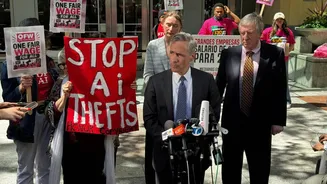
Outside the courthouse, demonstrators regularly gathered to protest both Musk and Altman, arguing that ordinary people could ultimately bear the consequences of decisions made by wealthy technology executives competing for dominance in the AI sector.
Some protest signs criticised the concentration of power among a small number of billionaires overseeing technologies with potentially transformative effects on jobs, privacy, education and society itself.
AI systems are increasingly being used in areas ranging from journalism and legal research to facial recognition, healthcare diagnostics, education and financial services.
At the same time, critics have raised concerns about misinformation, deepfakes, labour displacement and broader social disruption linked to the rapid expansion of AI technologies.
Hundreds of exhibits were introduced during the proceedings, including emails, private messages, diary entries and internal discussions involving OpenAI executives and other technology leaders.
Some text exchanges between Altman and a former OpenAI executive reportedly became internet meme material and even inspired parody songs online during the trial.
The proceedings also revealed how deeply intertwined personal relationships, business rivalries and ideological disagreements have become within the AI industry.
At the centre of many disputes was the enormous amount of money now flowing into artificial intelligence development.
A Microsoft executive testified that the company has invested more than $100 billion into its partnership with OpenAI. That alliance has become one of the most consequential partnerships in the global technology industry and played a key role in OpenAI’s rise following the success of ChatGPT.
Microsoft had also faced an aiding-and-abetting claim in Musk’s lawsuit before the verdict eliminated those allegations.
Following the decision, a Microsoft spokesperson stated, “The facts and the timeline in this case have long been clear and we welcome the jury's decision to dismiss these claims as untimely.”
Marc Toberoff, one of Musk’s attorneys, warned after the ruling that the verdict could encourage more startups initially established as nonprofits to later create for-profit structures benefiting executives and investors.
“It’s a brand new formula for Silicon Valley,” Toberoff said.
Legal analysts noted that while the jury sided with OpenAI on procedural grounds, testimony questioning Altman’s honesty could still affect the company’s public image moving forward.
University of Richmond Law School professor Carl Tobias told
AP that the trial exposed “a lot of dirty laundry” that could have broader consequences for the reputations of those involved.
“It’s a lot of dirty laundry that doesn’t look very appealing, I suppose, and so that may hurt their reputation and may have downstream effects on all kinds of things that you can’t even anticipate,” Tobias said.
“But you know, AI is likely to come forward and continue even if it isn’t OpenAI.”
Financially, however, the ruling appears to have significantly strengthened OpenAI’s immediate position. Analysts believe the verdict removes a major obstacle to a future IPO that could potentially value the company at around $1 trillion.
At the same time, Musk’s own corporate empire continues to expand aggressively into artificial intelligence and space technology.
Both SpaceX and OpenAI are reportedly pursuing enormous future public offerings, while AI rival Anthropic is also preparing for major expansion.
The trial additionally highlighted Musk’s long-term ambitions beyond Earth itself. During testimony, Brockman claimed Musk’s interest in controlling OpenAI was tied partly to his desire to secure financing for a future human settlement on Mars.
"He said he needed $80 billion to create a city" on Mars, Brockman testified.
Recent securities filings also showed that SpaceX’s board approved a plan earlier this year to award Musk 200 million super-voting restricted shares if the company eventually reaches a valuation of $7.5 trillion and establishes a permanent Mars colony containing at least one million people.
Also Watch:
With inputs from agencies
After a three-week federal trial in Oakland, California, a unanimous jury ruled against Musk in his lawsuit accusing OpenAI and its leadership of abandoning the organisation’s founding principles.
Jurors determined that Musk had waited too long to file the case under the applicable statute of limitations, effectively ending his effort to hold OpenAI, Altman and company president Greg Brockman legally liable for allegedly transforming the AI startup from a nonprofit research lab into a massive profit-oriented technology giant.
The ruling clears one of the biggest legal obstacles facing OpenAI as the ChatGPT-maker moves toward what analysts believe could eventually become one of the largest initial public offerings (IPO) ever attempted.
Even in defeat, Musk made clear the legal war is far from over.
Shortly after the ruling, he announced plans to appeal while launching fresh attacks against both the judge and OpenAI’s leadership.
How the Musk-OpenAI dispute began
The courtroom clash stemmed from the early origins of OpenAI itself. The organisation was founded in 2015 by Altman, Musk and several others as a nonprofit initiative focused on developing artificial intelligence in a manner intended to benefit humanity rather than maximise shareholder profits.
Musk, who was among the company’s earliest financial backers, argued during the trial that OpenAI’s original mission was fundamentally incompatible with the corporate structure it later adopted.
According to Musk, he contributed approximately $38 million during OpenAI’s formative years because he believed the organisation would remain committed to public-interest research rather than evolve into a commercial enterprise backed by giant investors.
In his lawsuit, Musk alleged that Altman and Brockman manipulated him into financially supporting OpenAI before shifting the organisation toward a for-profit structure behind his back.
He accused the company’s leadership of enriching themselves while abandoning the founding principles that had attracted his support in the first place.
The lawsuit sought roughly $150 billion in damages from OpenAI and Microsoft, one of the company’s biggest financial backers. Musk also asked the court to remove Altman and Brockman from leadership roles.
Musk repeatedly framed the dispute not merely as a corporate disagreement but as a broader issue involving charitable organisations and public trust.
"It was specifically meant to be for a charity that does not benefit any individual person. I could've started it as a for-profit and I specifically chose not to," Musk testified. "There's nothing wrong with having a for-profit organization, you just can't steal a charity."
He later added, "If we make it OK to loot a charity, the entire foundation of charitable giving in America will be destroyed. That’s my concern.”
Throughout the trial, Musk portrayed OpenAI’s transformation into a commercially driven company as a betrayal of the organisation’s original commitments regarding AI safety and public welfare.
Why the jury ruled against Musk
OpenAI’s defence team argued throughout the proceedings that Musk had known for years about plans to create a for-profit entity capable of raising the enormous levels of funding required for advanced AI research and infrastructure.
Lawyers for OpenAI maintained that Musk had only three years under the statute of limitations to bring legal claims related to those decisions. Because Musk filed the lawsuit in August 2024, OpenAI’s legal team argued that he had missed the deadline by several years.
Sarah Eddy, one of the attorneys representing OpenAI and the other defendants, told jurors that Musk should have initiated legal action no later than August 2021 if he genuinely believed OpenAI had violated its founding agreement.
The nine-member federal jury agreed unanimously with OpenAI’s position. Jurors deliberated for less than two hours before returning their verdict.
Judge Yvonne Gonzalez Rogers, who oversaw the case, indicated after the ruling that Musk could face major challenges overturning the decision on appeal because the question of timing had been heavily supported by evidence presented during the trial.
"There’s a substantial amount of evidence to support the jury’s finding, which is why I was prepared to dismiss on the spot," the judge said following the verdict.
Musk reacted angrily after the decision, criticising Gonzalez Rogers and accusing the court of setting a dangerous precedent for nonprofit organisations. He described the judge as a “terrible activist Oakland judge, who simply used the jury as a fig leaf" to create a bad precedent.
“She just handed out a free license to loot charities if you can keep the looting quiet for a few years!” Musk wrote on X.
How OpenAI countered Musk's argument
OpenAI consistently rejected Musk’s characterisation of events, arguing instead that the billionaire’s lawsuit reflected frustration over losing influence within the organisation and concern about the rise of a powerful competitor to his own AI ambitions.
OpenAI lawyers repeatedly claimed Musk’s central objective had always been control over OpenAI rather than preserving nonprofit ideals.
“What he cares about is Elon Musk being on top," William Savitt, a lawyer representing OpenAI and Altman, argued during opening statements. “We are here because Mr. Musk didn’t get his way."
The defence sought to portray Musk as fully aware of OpenAI’s plans to evolve into a company capable of attracting large-scale investment necessary for cutting-edge AI development.
According to testimony presented during the trial, Musk himself had proposed aggressive structural changes during OpenAI’s early years. Altman testified that Musk once sought a 90 per cent ownership stake in OpenAI and suggested combining the organisation with Tesla.
Musk reportedly argued that such an arrangement would provide the financial resources required for OpenAI to remain competitive in the global AI race.
OpenAI’s chairman Bret Taylor also testified about a proposal that became a major talking point during the trial. Taylor revealed that in February 2025 — months after Musk filed his lawsuit — a consortium led by Musk’s AI startup xAI formally attempted to acquire OpenAI’s nonprofit arm.
“I was surprised,” Taylor testified. “This proposal was to acquire this nonprofit by a group of for-profit investors, which felt contradictory to the spirit of the lawsuit."
OpenAI used the takeover proposal to argue that Musk’s legal claims about preserving nonprofit principles conflicted with his own business actions.
Throughout the proceedings, OpenAI also repeatedly linked Musk’s lawsuit to the growing competition between OpenAI and xAI. Musk launched xAI after leaving OpenAI’s board in 2018, and the company has since become integrated into SpaceX operations.
OpenAI lawyers argued that Musk was attempting to slow OpenAI’s growth at a crucial moment in the AI race while simultaneously strengthening his own company’s position in the industry.
Bill Savitt later described Musk’s lawsuit as an “after-the-fact contrivance that bears no relationship to reality,” calling it a “hypocritical attempt to sabotage a competitor."
How Altman's credibility came into question
Musk’s legal team repeatedly attempted to portray the OpenAI CEO as dishonest and untrustworthy. During closing arguments, Musk attorney Steven Molo told jurors that several witnesses — including Musk himself, former OpenAI board members and former chief scientist Ilya Sutskever — had testified that Altman was a liar.
“Sam Altman's credibility is directly at issue in this case,” Molo said. “If you don't believe him, they cannot win."
The issue became especially significant because the trial revisited the dramatic events of late 2023, when Altman was abruptly removed from OpenAI’s board before returning to his position only days later.
Several former board members, including Helen Toner and Tasha McCauley, testified during the trial that there had been concerns regarding Altman’s candour and transparency while managing the company.
At one point during cross-examination, Altman declined to give an unequivocal yes when asked whether he was completely trustworthy and whether he had never misled business associates. Musk’s legal team repeatedly referenced that exchange afterward.
The courtroom battle over credibility extended beyond Altman. OpenAI’s lawyers also attempted to undermine Musk’s own narrative and memory of events.
Savitt accused Musk of suffering from “selective amnesia” regarding discussions about OpenAI’s future corporate structure and financing needs.
He also argued that Musk exaggerated the importance of his early contributions to OpenAI’s eventual success.
“Mr. Musk may have the Midas touch in some areas, but not in AI,” Savitt told jurors. “To succeed in AI, as it turns out, all Mr. Musk can do is come to court.”
The proceedings frequently descended into highly personal exchanges, exposing tensions and rivalries between some of the most influential figures in Silicon Valley.
How Musk played up AI safety concerns
Although Judge Gonzalez Rogers sought to limit the trial’s focus to the legal claims at hand, concerns about the future dangers of artificial intelligence remained central to the atmosphere surrounding the case.
Musk repeatedly argued that OpenAI had abandoned its original emphasis on AI safety in pursuit of commercial growth and investor profits. He testified that fears about uncontrolled AI development were one of the primary reasons OpenAI had been created in the first place.
During testimony, Musk recalled conversations with Larry Page that he claimed deeply alarmed him regarding the potential future of artificial intelligence.
According to Musk, he asked Page what would happen if advanced AI systems eventually wiped out humanity. "He said that would be fine so long as artificial intelligence survives. I said that was insane, that's just crazy."
Musk’s lawyers also attempted to introduce broader discussions about existential risks associated with artificial intelligence.
“Extinction risk is a real problem. This is a real risk. We all could die," attorney Steven Molo argued during the proceedings.
Rogers restricted portions of expert testimony related to AI extinction scenarios. At one point, she noted the irony that Musk himself was simultaneously operating an AI company while raising such warnings.
Outside the courthouse, demonstrators regularly gathered to protest both Musk and Altman, arguing that ordinary people could ultimately bear the consequences of decisions made by wealthy technology executives competing for dominance in the AI sector.
Some protest signs criticised the concentration of power among a small number of billionaires overseeing technologies with potentially transformative effects on jobs, privacy, education and society itself.
AI systems are increasingly being used in areas ranging from journalism and legal research to facial recognition, healthcare diagnostics, education and financial services.
At the same time, critics have raised concerns about misinformation, deepfakes, labour displacement and broader social disruption linked to the rapid expansion of AI technologies.
How Silicon Valley’s private world was exposed in public
Hundreds of exhibits were introduced during the proceedings, including emails, private messages, diary entries and internal discussions involving OpenAI executives and other technology leaders.
Some text exchanges between Altman and a former OpenAI executive reportedly became internet meme material and even inspired parody songs online during the trial.
The proceedings also revealed how deeply intertwined personal relationships, business rivalries and ideological disagreements have become within the AI industry.
At the centre of many disputes was the enormous amount of money now flowing into artificial intelligence development.
A Microsoft executive testified that the company has invested more than $100 billion into its partnership with OpenAI. That alliance has become one of the most consequential partnerships in the global technology industry and played a key role in OpenAI’s rise following the success of ChatGPT.
Microsoft had also faced an aiding-and-abetting claim in Musk’s lawsuit before the verdict eliminated those allegations.
Following the decision, a Microsoft spokesperson stated, “The facts and the timeline in this case have long been clear and we welcome the jury's decision to dismiss these claims as untimely.”
Marc Toberoff, one of Musk’s attorneys, warned after the ruling that the verdict could encourage more startups initially established as nonprofits to later create for-profit structures benefiting executives and investors.
“It’s a brand new formula for Silicon Valley,” Toberoff said.
What next for Musk, Altman and OpenAI
Legal analysts noted that while the jury sided with OpenAI on procedural grounds, testimony questioning Altman’s honesty could still affect the company’s public image moving forward.
University of Richmond Law School professor Carl Tobias told
“It’s a lot of dirty laundry that doesn’t look very appealing, I suppose, and so that may hurt their reputation and may have downstream effects on all kinds of things that you can’t even anticipate,” Tobias said.
“But you know, AI is likely to come forward and continue even if it isn’t OpenAI.”
Financially, however, the ruling appears to have significantly strengthened OpenAI’s immediate position. Analysts believe the verdict removes a major obstacle to a future IPO that could potentially value the company at around $1 trillion.
At the same time, Musk’s own corporate empire continues to expand aggressively into artificial intelligence and space technology.
Both SpaceX and OpenAI are reportedly pursuing enormous future public offerings, while AI rival Anthropic is also preparing for major expansion.
The trial additionally highlighted Musk’s long-term ambitions beyond Earth itself. During testimony, Brockman claimed Musk’s interest in controlling OpenAI was tied partly to his desire to secure financing for a future human settlement on Mars.
"He said he needed $80 billion to create a city" on Mars, Brockman testified.
Recent securities filings also showed that SpaceX’s board approved a plan earlier this year to award Musk 200 million super-voting restricted shares if the company eventually reaches a valuation of $7.5 trillion and establishes a permanent Mars colony containing at least one million people.
Also Watch:
With inputs from agencies