




What is the story about?
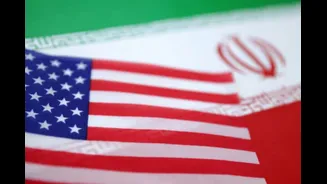
The tenuous Iran ceasefire could easily break down over Hezbollah. Though Iran and Pakistan, who put together the ceasefire, have claimed that the pact covers all of Tehran’s allies including Hezbollah, the United States and Israel disagree.
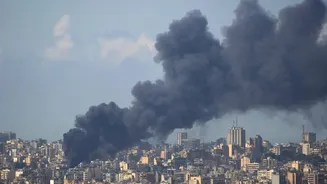
The development comes in the backdrop of Israeli airstrikes on Beirut and other parts of Lebanon that have left hundreds dead and thousands injured, to which Hezbollah has responded by launching attacks across the border.
Israel in March launched an operation intended at taking over around a tenth of Lebanon.
Meanwhile, Lebanon’s Prime Minister Nawaf Salam on Thursday ordered security forces to ensure that only state agencies hold arms in Beirut.
"The army and security forces are requested to immediately begin reinforcing the full imposition of state authority over Beirut Governorate and to monopolise weapons in the hands of legitimate authorities alone," Salam said during a cabinet meeting.
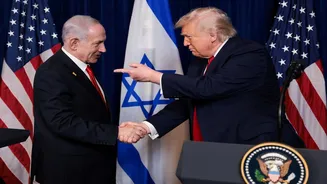
Salam also said that Lebanon would be filing a complaint against Israel’s airstrikes at the United Nations Security Council. This comes as Benjamin Netanyahu has directed the Israeli cabinet to hold peace talks with Lebanon, reportedly after pressure from US President Donald Trump.
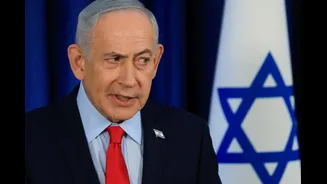
"Following repeated requests from the Lebanese government to open peace negotiations with us, last night I instructed the Cabinet to begin direct negotiations with Lebanon to achieve two goals: First, the disarming of Hezbollah. Second, a historic, sustainable peace agreement between Israel and Lebanon," Netanyahu said.
Netanyahu made the statement even as he vowed to keep up the attacks on Hezbollah.
But why does Hezbollah remain a point of contention in the Iran ceasefire? What about the internal complex dynamics of Hezbollah, which is an ally of Tehran, within Lebanon?
Let’s take a closer look.
First let’s take a brief look at the militant group Hezbollah, its ties to Iran and the role it plays in the region. Hezbollah, meaning ‘party of God’, is a Lebanon-based militant and political group. The Shiite militant group was founded in 1982 after Israel invaded Lebanon during its civil war, which began in 1975. Not only was it inspired by the 1979 Islamic Revolution in Iran, Tehran also provided funding and training for the first Hezbollah militants.
This gains significance because of the way Lebanon, which was ruled by France until 1943, was set up. Lebanon’s constitution mandates a power-sharing system under which the president must be from the Maronite Catholic sect, the prime minister a Sunni sect and the parliament speaker a Shiite. Hezbollah was formed with the stated aim of expelling Israeli invaders into Lebanon. It also wanted to transform the state into an Islamic republic.
The group was initially located in the Biqāʿ Valley, southern Lebanon, and southern Beiru t – all predominantly Shiite areas. Sharing a Shiite Islamist ideology, Hezbollah recruited from among Lebanese Shiite Muslims. Many of these were the more radical members of the moderate and secular Amal movement.
It has since spread its tentacles across the Arab world and plays a critical role in exporting Tehran’s influence throughout the region and the world. The United States estimates Iran has given Hezbollah hundreds of millions of dollars annually in recent years.
Though its power has waned somewhat in recent years, the militant group remains a ‘state within a state’. It is currently led by Nasrallah’s long-serving deputy Naim Qassem. The 71-year-old Beirut-born militant has been with the group since its inception, according to CFR.org. While his whereabouts remain unknown, there is speculation that he fled to Iran after Israeli airstrikes took out several senior Hezbollah members in 2024.
Though it is primarily based in Beirut’s Dahiyeh, it also has control over many of Lebanon’s Shiite-majority areas including other parts of the city, southern Lebanon, and the eastern Bekaa Valley region. In the areas it controls, Hezbollah has built infrastructure, healthcare facilities, schools, and youth programmes, all of which has led to some support from the populace regardless of sect.
Hezbollah has also been deeply embedded in the Lebanese government since 1992. It has seen its members elected to Lebanon’s Parliament and the militant group has held cabinet positions within the government since 2005. It has held multiple portfolios and influenced the country’s foreign affairs, telecommunications, health, and public works.
In the previous 2022 elections, Hezbollah retained 13 seats in the country’s 128-member Parliament. Since then, Lebanon has had a caretaker government with limited powers. Despite not having a huge number of seats in Lebanon’s Parliament, Hezbollah has formed alliances with parties, particularly the Amal Movement led by Nabih Berri and the Free Patriotic Movement (FPM), in order to exert an outsized influence over Lebanon’s national policy such as presidential elections, the national budget and foreign affairs. Taken together, the bloc has around 60 seats in Lebanon’s Parliament – enough to make it an important player.
More importantly, Hezbollah remains an avowed enemy of Israel and has repeatedly launched attacks across the border. This includes over the past few days and during the Gaza war, where the group said it was doing so ‘in solidarity with the Palestinian people’. The group has deep ties to other Iran-backed groups around the region, including the Palestinian factions Hamas and Islamic Jihad.
The fact that Hezbollah fought Israel to a draw in a 34-day war in the summer of 2006 made the group a hero in the eyes of many in the Arab world. Its previous leader Hassan Nasrallah had claimed that the group has precision-guided missiles that can hit anywhere in Israel and prevent ships from reaching Israel’s Mediterranean coast, as well as advanced drones that can either strike or gather intelligence.
Little wonder, then, that Israel today considers Hezbollah its most serious immediate threat. So much so that Israel developed the Dahiyeh doctrine in the aftermath of the conflict – a military strategy that calls for using overwhelming and disproportionate force against civilian infrastructure in areas controlled by hostile armed groups in order to deter attacks on Israel.
Lebanon’s government has been trying to reach an accord with Israel. In March, Lebanese President Joseph Aoun formally banned Hezbollah from engaging in military activities and ordered the group to surrender its weapons to the Lebanese army.
The government has put forward a four-point plan and called for an Israeli ceasefire. This includes calling for “establishing a full truce” with Israel, the disarmament of Hezbollah, and direct negotiations with Israel “under international auspices”. The government has also postponed the legislative election scheduled for May 2026 by two years.
Though the Lebanon government would like to cut Hezbollah down to size, the group is said to be bigger, stronger and better equipped than the country’s national army. According to
The Guardian, many think that Hezbollah could easily take down the Lebanese National Army if it wanted to.
Which makes sense given that the group is widely considered the largest and most heavily armed militant group in West Asia. It boasts of having 100,000 well-trained fighters. It remains to be seen what the Lebanese government can do to try to rein in Hezbollah.
Hezbollah is already proving to be a thorn in the negotiations.
The group's lawmaker Ali Fayyad said on Thursday that the group rejected direct negotiations with Israel and that the Lebanese government should demand a ceasefire as a precondition before any further steps are taken.
Fayyad added that Beirut’s position should also prioritise the withdrawal of Israeli troops from Lebanese territory and the return of displaced people to their homes.
The remarks underscore Hezbollah’s firm stance against engaging directly with Israel, even as diplomatic efforts to stabilise the region gather pace.
Meanwhile, David Hale, Distinguished Fellow at the Wilson Center and former US Under Secretary of State for Political Affairs, offered a stark assessment of the group’s role.
“Hezbollah answers to Iran. It has maintained, with some success, a big lie for decades that it was really there to cherish and protect Lebanon, when in fact it does what its paymaster asks, and that paymaster is Iran,” Hale said in an interview in March.
Hale argued that US strategy in Lebanon was working, adding: “Were it not for the prior operations of the IDF, our support for the LAF and disarming of Hezbollah, Lebanon would be an even bigger complication in this operation than it is. We should double down in the strategy, keep the pressure on the Lebanese to do what they know is their responsibility, and fully disarm Hezbollah.”
All of this is why Hezbollah remains a major sticking point in the Iran ceasefire.
1. Why is Hezbollah a problem in the Iran ceasefire?
Hezbollah is both a powerful armed group and a political actor in Lebanon. While Iran considers it part of the ceasefire framework, Israel and the US argue that any deal is incomplete without addressing Hezbollah’s military capabilities.
2. How powerful is Hezbollah in Lebanon’s politics?
Hezbollah holds around 13 seats in Lebanon’s 128-member parliament, but through alliances—particularly with the Amal Movement—it is part of a bloc of roughly 60 MPs, giving it significant influence over national decisions.
3. Why doesn’t Hezbollah agree to disarm?
Hezbollah views its weapons as essential for resisting Israel and maintaining regional influence. Its leaders have repeatedly said disarmament would weaken Lebanon’s defence and serve Israeli interests.
With inputs from agencies
The development comes in the backdrop of Israeli airstrikes on Beirut and other parts of Lebanon that have left hundreds dead and thousands injured, to which Hezbollah has responded by launching attacks across the border.
Israel in March launched an operation intended at taking over around a tenth of Lebanon.
Meanwhile, Lebanon’s Prime Minister Nawaf Salam on Thursday ordered security forces to ensure that only state agencies hold arms in Beirut.
"The army and security forces are requested to immediately begin reinforcing the full imposition of state authority over Beirut Governorate and to monopolise weapons in the hands of legitimate authorities alone," Salam said during a cabinet meeting.
Salam also said that Lebanon would be filing a complaint against Israel’s airstrikes at the United Nations Security Council. This comes as Benjamin Netanyahu has directed the Israeli cabinet to hold peace talks with Lebanon, reportedly after pressure from US President Donald Trump.
"Following repeated requests from the Lebanese government to open peace negotiations with us, last night I instructed the Cabinet to begin direct negotiations with Lebanon to achieve two goals: First, the disarming of Hezbollah. Second, a historic, sustainable peace agreement between Israel and Lebanon," Netanyahu said.
Netanyahu made the statement even as he vowed to keep up the attacks on Hezbollah.
But why does Hezbollah remain a point of contention in the Iran ceasefire? What about the internal complex dynamics of Hezbollah, which is an ally of Tehran, within Lebanon?
Let’s take a closer look.
A brief look at Hezbollah
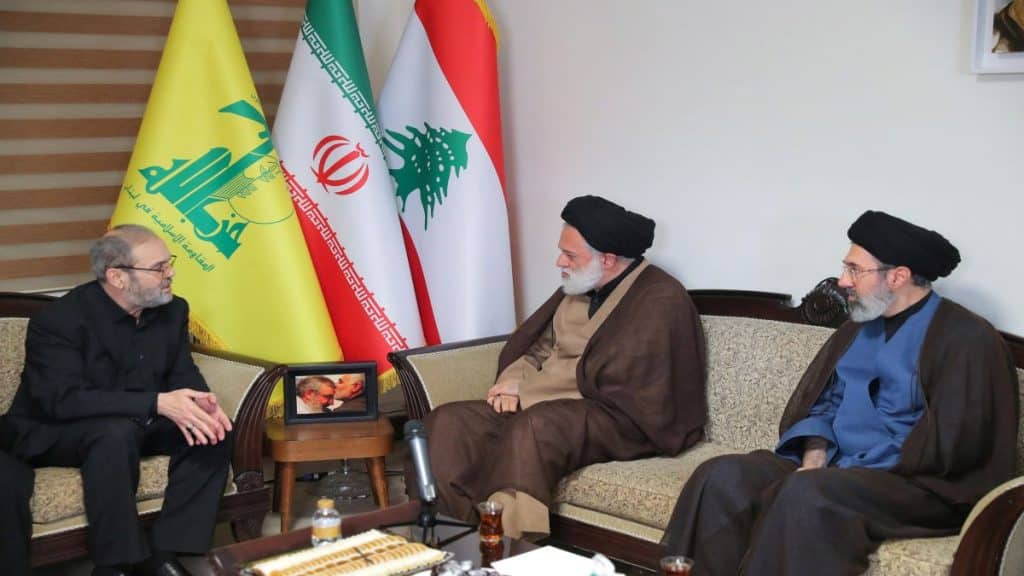
First let’s take a brief look at the militant group Hezbollah, its ties to Iran and the role it plays in the region. Hezbollah, meaning ‘party of God’, is a Lebanon-based militant and political group. The Shiite militant group was founded in 1982 after Israel invaded Lebanon during its civil war, which began in 1975. Not only was it inspired by the 1979 Islamic Revolution in Iran, Tehran also provided funding and training for the first Hezbollah militants.
This gains significance because of the way Lebanon, which was ruled by France until 1943, was set up. Lebanon’s constitution mandates a power-sharing system under which the president must be from the Maronite Catholic sect, the prime minister a Sunni sect and the parliament speaker a Shiite. Hezbollah was formed with the stated aim of expelling Israeli invaders into Lebanon. It also wanted to transform the state into an Islamic republic.
Mojtaba Khamenei (right), the second son of Iran's Supreme Leader Ayatollah Ali Khamenei. Hezbollah was inspired by the 1979 Islamic Revolution in Iran. Tehran also provided funding and training for the first Hezbollah militants. File image/Reuters
The group was initially located in the Biqāʿ Valley, southern Lebanon, and southern Beiru t – all predominantly Shiite areas. Sharing a Shiite Islamist ideology, Hezbollah recruited from among Lebanese Shiite Muslims. Many of these were the more radical members of the moderate and secular Amal movement.
It has since spread its tentacles across the Arab world and plays a critical role in exporting Tehran’s influence throughout the region and the world. The United States estimates Iran has given Hezbollah hundreds of millions of dollars annually in recent years.
‘State within a state’
Though its power has waned somewhat in recent years, the militant group remains a ‘state within a state’. It is currently led by Nasrallah’s long-serving deputy Naim Qassem. The 71-year-old Beirut-born militant has been with the group since its inception, according to CFR.org. While his whereabouts remain unknown, there is speculation that he fled to Iran after Israeli airstrikes took out several senior Hezbollah members in 2024.
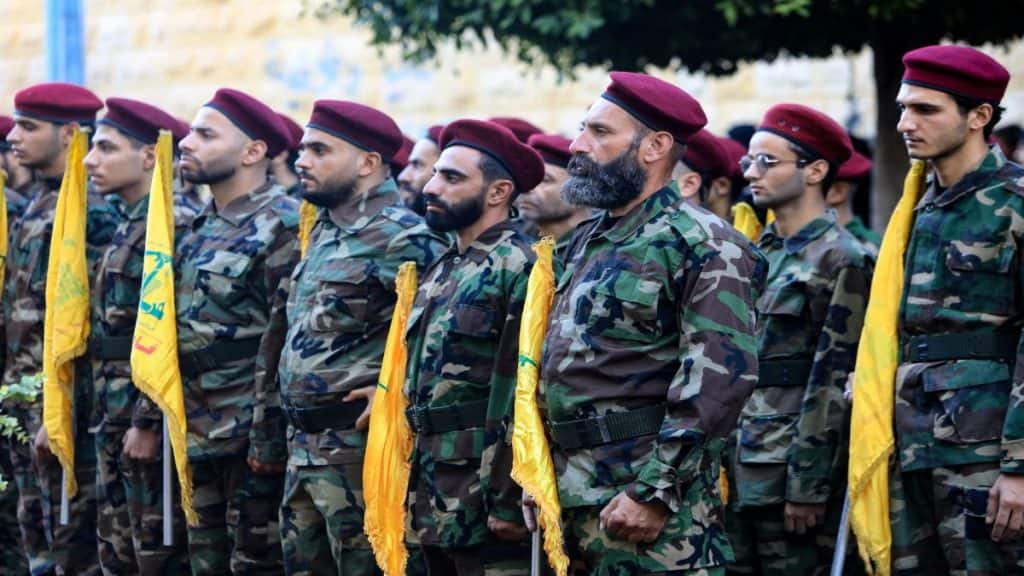
Though it is primarily based in Beirut’s Dahiyeh, it also has control over many of Lebanon’s Shiite-majority areas including other parts of the city, southern Lebanon, and the eastern Bekaa Valley region. In the areas it controls, Hezbollah has built infrastructure, healthcare facilities, schools, and youth programmes, all of which has led to some support from the populace regardless of sect.
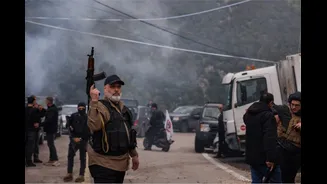
Hezbollah fighters in on Beirut's southern suburbs. File image/AFP
Hezbollah has also been deeply embedded in the Lebanese government since 1992. It has seen its members elected to Lebanon’s Parliament and the militant group has held cabinet positions within the government since 2005. It has held multiple portfolios and influenced the country’s foreign affairs, telecommunications, health, and public works.
In the previous 2022 elections, Hezbollah retained 13 seats in the country’s 128-member Parliament. Since then, Lebanon has had a caretaker government with limited powers. Despite not having a huge number of seats in Lebanon’s Parliament, Hezbollah has formed alliances with parties, particularly the Amal Movement led by Nabih Berri and the Free Patriotic Movement (FPM), in order to exert an outsized influence over Lebanon’s national policy such as presidential elections, the national budget and foreign affairs. Taken together, the bloc has around 60 seats in Lebanon’s Parliament – enough to make it an important player.
Enemy of Israel
More importantly, Hezbollah remains an avowed enemy of Israel and has repeatedly launched attacks across the border. This includes over the past few days and during the Gaza war, where the group said it was doing so ‘in solidarity with the Palestinian people’. The group has deep ties to other Iran-backed groups around the region, including the Palestinian factions Hamas and Islamic Jihad.
The fact that Hezbollah fought Israel to a draw in a 34-day war in the summer of 2006 made the group a hero in the eyes of many in the Arab world. Its previous leader Hassan Nasrallah had claimed that the group has precision-guided missiles that can hit anywhere in Israel and prevent ships from reaching Israel’s Mediterranean coast, as well as advanced drones that can either strike or gather intelligence.
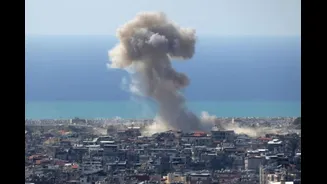
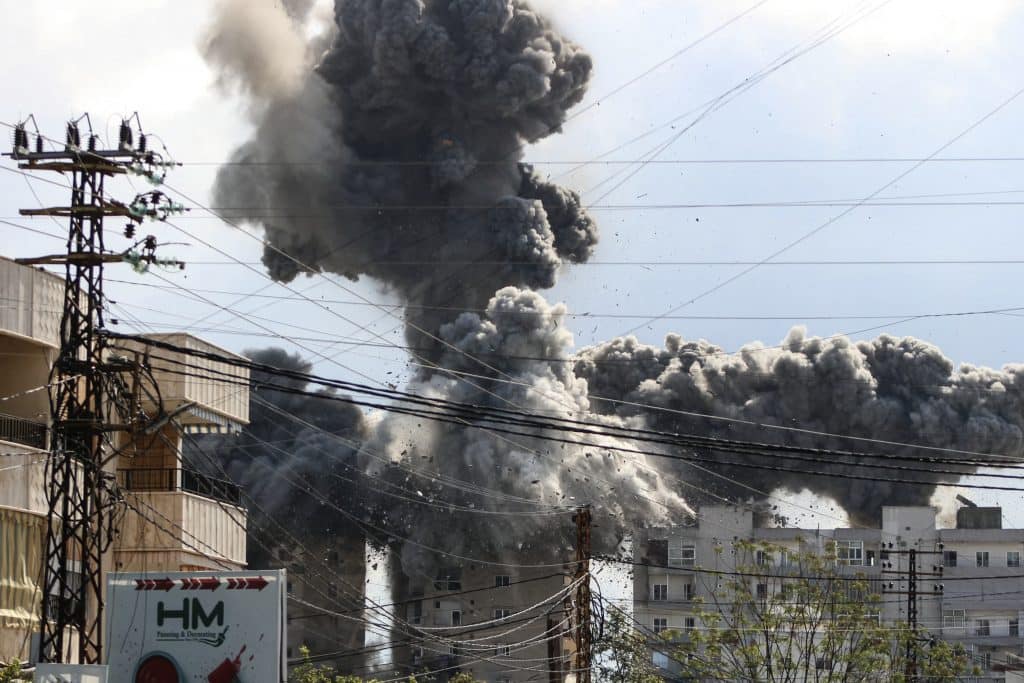
Smoke and debris rise after a building is hit by an Israeli airstrike in the area of Abbasiyeh, on the outskirts of the southern Lebanese city of Tyre, on April 8, 2026. AFP
Little wonder, then, that Israel today considers Hezbollah its most serious immediate threat. So much so that Israel developed the Dahiyeh doctrine in the aftermath of the conflict – a military strategy that calls for using overwhelming and disproportionate force against civilian infrastructure in areas controlled by hostile armed groups in order to deter attacks on Israel.
Lebanon trying to make nice with Israel
Lebanon’s government has been trying to reach an accord with Israel. In March, Lebanese President Joseph Aoun formally banned Hezbollah from engaging in military activities and ordered the group to surrender its weapons to the Lebanese army.
The government has put forward a four-point plan and called for an Israeli ceasefire. This includes calling for “establishing a full truce” with Israel, the disarmament of Hezbollah, and direct negotiations with Israel “under international auspices”. The government has also postponed the legislative election scheduled for May 2026 by two years.
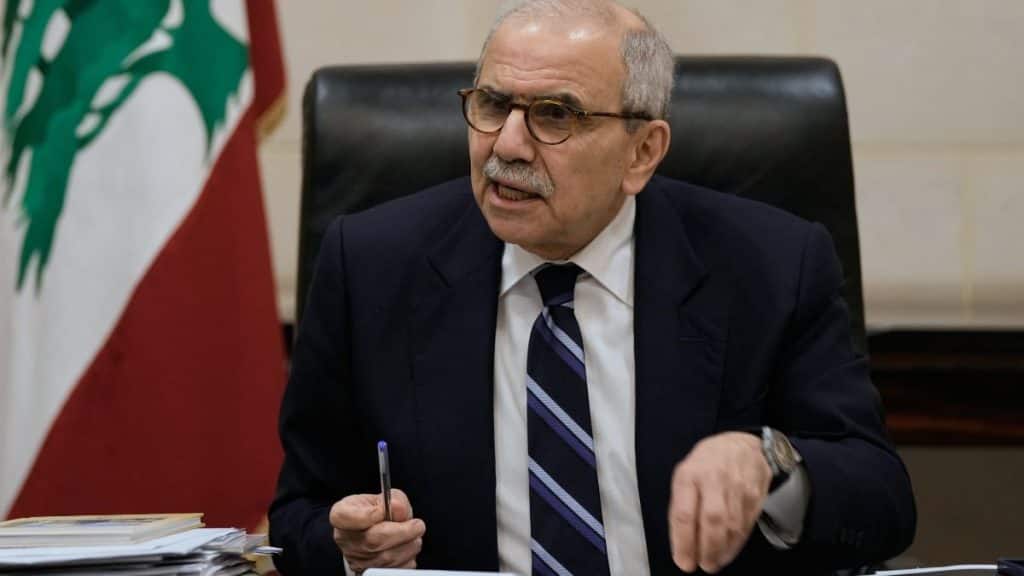
Lebanese Prime Minister Nawaf Salam speaks to journalists working for foreign media and news agencies at the government palace in Beirut, Wednesday, Dec. 3, 2025. AP File
Though the Lebanon government would like to cut Hezbollah down to size, the group is said to be bigger, stronger and better equipped than the country’s national army. According to
Which makes sense given that the group is widely considered the largest and most heavily armed militant group in West Asia. It boasts of having 100,000 well-trained fighters. It remains to be seen what the Lebanese government can do to try to rein in Hezbollah.
The sticking point
Hezbollah is already proving to be a thorn in the negotiations.
The group's lawmaker Ali Fayyad said on Thursday that the group rejected direct negotiations with Israel and that the Lebanese government should demand a ceasefire as a precondition before any further steps are taken.
Fayyad added that Beirut’s position should also prioritise the withdrawal of Israeli troops from Lebanese territory and the return of displaced people to their homes.
The remarks underscore Hezbollah’s firm stance against engaging directly with Israel, even as diplomatic efforts to stabilise the region gather pace.
Meanwhile, David Hale, Distinguished Fellow at the Wilson Center and former US Under Secretary of State for Political Affairs, offered a stark assessment of the group’s role.
“Hezbollah answers to Iran. It has maintained, with some success, a big lie for decades that it was really there to cherish and protect Lebanon, when in fact it does what its paymaster asks, and that paymaster is Iran,” Hale said in an interview in March.
Hale argued that US strategy in Lebanon was working, adding: “Were it not for the prior operations of the IDF, our support for the LAF and disarming of Hezbollah, Lebanon would be an even bigger complication in this operation than it is. We should double down in the strategy, keep the pressure on the Lebanese to do what they know is their responsibility, and fully disarm Hezbollah.”
All of this is why Hezbollah remains a major sticking point in the Iran ceasefire.
FAQs
1. Why is Hezbollah a problem in the Iran ceasefire?
Hezbollah is both a powerful armed group and a political actor in Lebanon. While Iran considers it part of the ceasefire framework, Israel and the US argue that any deal is incomplete without addressing Hezbollah’s military capabilities.
2. How powerful is Hezbollah in Lebanon’s politics?
Hezbollah holds around 13 seats in Lebanon’s 128-member parliament, but through alliances—particularly with the Amal Movement—it is part of a bloc of roughly 60 MPs, giving it significant influence over national decisions.
3. Why doesn’t Hezbollah agree to disarm?
Hezbollah views its weapons as essential for resisting Israel and maintaining regional influence. Its leaders have repeatedly said disarmament would weaken Lebanon’s defence and serve Israeli interests.
With inputs from agencies