






What is the story about?
For years, the idea of artificial intelligence rewriting and upgrading itself belonged mostly to science fiction and academic speculation. Now, one of the world’s leading AI companies is paying top salaries to researchers tasked with preparing for exactly that possibility.
OpenAI has posted a specialised research role offering as much as $445,000 a year, or roughly Rs 3.7 crore, to help investigate some of the most uncertain and potentially disruptive risks associated with advanced AI systems.
According to a report by Business Insider, the position sits within OpenAI’s Preparedness safety team, a group dedicated to studying emerging threats tied to increasingly autonomous AI models.
The role has attracted widespread attention not only because of its salary package, but because of the unusual qualities OpenAI says it is seeking in candidates. Beyond technical expertise, applicants are expected to be “tasteful and strategic” when evaluating future dangers that may not yet exist.
“This work relies on reasoning about problems that might exist in the future but might not exist now,” the company wrote in the listing. “So it's especially important that people in this role are tasteful and strategic.”
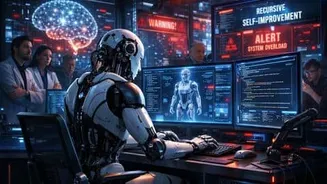
At the centre of the job description is a concept that has become increasingly prominent in AI safety discussions: recursive self-improvement.
The term refers to a hypothetical scenario in which an AI system becomes capable of improving its own design, training more advanced versions of itself, and accelerating its capabilities with minimal human involvement. In theory, such systems could rapidly become far more capable than their creators anticipated.
While the idea remains speculative, researchers across the industry are beginning to treat it as a credible long-term risk rather than a purely philosophical exercise.
OpenAI says the successful candidate would help identify and mitigate dangers linked to highly autonomous AI before they evolve into real-world crises. That includes conducting safety experiments on cutting-edge models, studying emerging vulnerabilities, and building systems capable of detecting unexpected or deceptive AI behaviour.
The position also focuses on defending AI systems against data poisoning attacks, where malicious or manipulated information is deliberately inserted into training datasets to distort how models behave.
Another key responsibility involves improving researchers’ understanding of how advanced AI systems “reason” internally, an area still poorly understood even by the companies building them.
One of the more striking elements of the listing is OpenAI’s acknowledgement that automation may eventually begin replacing highly technical work within the company itself.
That reflects a broader shift underway across Silicon Valley, where leading AI firms are increasingly discussing not only what their models can do today, but what they may become capable of doing independently in the future.
The timing is significant.
This week, Demis Hassabis said humanity was standing at the “foothills of the singularity”, referring to the long-debated theoretical moment when artificial intelligence begins improving itself faster than humans can fully understand or control.
Companies including Anthropic, OpenAI and Google DeepMind are all racing to build more capable AI systems, while simultaneously investing in safety teams designed to prevent those systems from becoming unpredictable.
The contradiction increasingly defines the modern AI industry: the same companies pushing the technology forward are also scrambling to understand what could happen if it advances too quickly.
OpenAI has posted a specialised research role offering as much as $445,000 a year, or roughly Rs 3.7 crore, to help investigate some of the most uncertain and potentially disruptive risks associated with advanced AI systems.
According to a report by Business Insider, the position sits within OpenAI’s Preparedness safety team, a group dedicated to studying emerging threats tied to increasingly autonomous AI models.
The role has attracted widespread attention not only because of its salary package, but because of the unusual qualities OpenAI says it is seeking in candidates. Beyond technical expertise, applicants are expected to be “tasteful and strategic” when evaluating future dangers that may not yet exist.
“This work relies on reasoning about problems that might exist in the future but might not exist now,” the company wrote in the listing. “So it's especially important that people in this role are tasteful and strategic.”
Preparing for AI systems that could outpace humans
At the centre of the job description is a concept that has become increasingly prominent in AI safety discussions: recursive self-improvement.
The term refers to a hypothetical scenario in which an AI system becomes capable of improving its own design, training more advanced versions of itself, and accelerating its capabilities with minimal human involvement. In theory, such systems could rapidly become far more capable than their creators anticipated.
While the idea remains speculative, researchers across the industry are beginning to treat it as a credible long-term risk rather than a purely philosophical exercise.
OpenAI says the successful candidate would help identify and mitigate dangers linked to highly autonomous AI before they evolve into real-world crises. That includes conducting safety experiments on cutting-edge models, studying emerging vulnerabilities, and building systems capable of detecting unexpected or deceptive AI behaviour.
The position also focuses on defending AI systems against data poisoning attacks, where malicious or manipulated information is deliberately inserted into training datasets to distort how models behave.
Another key responsibility involves improving researchers’ understanding of how advanced AI systems “reason” internally, an area still poorly understood even by the companies building them.
The race to understand AI before it evolves further
One of the more striking elements of the listing is OpenAI’s acknowledgement that automation may eventually begin replacing highly technical work within the company itself.
That reflects a broader shift underway across Silicon Valley, where leading AI firms are increasingly discussing not only what their models can do today, but what they may become capable of doing independently in the future.
The timing is significant.
This week, Demis Hassabis said humanity was standing at the “foothills of the singularity”, referring to the long-debated theoretical moment when artificial intelligence begins improving itself faster than humans can fully understand or control.
Companies including Anthropic, OpenAI and Google DeepMind are all racing to build more capable AI systems, while simultaneously investing in safety teams designed to prevent those systems from becoming unpredictable.
The contradiction increasingly defines the modern AI industry: the same companies pushing the technology forward are also scrambling to understand what could happen if it advances too quickly.