




What is the story about?
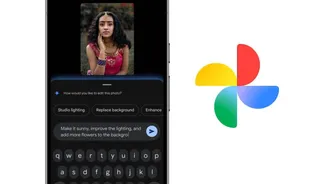
Editing photos is about to get a whole lot smarter. Google has started rolling out its AI-powered photo editing tools in India, allowing users to tweak and transform their pictures with just a few words or even a quick voice command.
Instead of fiddling with brightness sliders or colour filters, users can now simply describe what they want, and Google Photos will do the rest.
The new AI editing features, powered by Google’s Gemini model, are available for Android devices running version 8.0 or newer with at least 4GB of RAM.
Initially launched in select global markets last year, the tools are now expanding to India, making advanced image editing accessible to millions of users who may not have professional photo-editing skills.
According to a blog post by the tech giant, users in India can now ask Google Photos to perform a range of edits, such as blurring backgrounds, fixing glare, sharpening images, adjusting colours, or even removing reflections from windows, all through text or voice commands.
Users can now also combine multiple edits in a single request, like straightening a photo, enhancing colours, and brightening shadows simultaneously.
But the magic doesn’t stop there. Google Photos is also getting personalised editing features for people in photos, making it easier to fix group shots or portraits.
You can now ask the app to remove sunglasses, open closed eyes, or even make someone smile. These fine-tuned edits are powered by the app’s private face groups, which allow AI to make more accurate adjustments without compromising personal data privacy.
“Whether you’re improving lighting, fixing reflections, or changing someone’s expression, these tools make creative control as simple as saying what you want,” Google said in its blog post announcing the rollout.
Beyond traditional photo fixes, Google is also introducing a new creative feature dubbed Nano Banana, which takes AI editing to a whole new level. With it, users can reimagine scenes entirely, add furniture to a room, restore old or damaged photos, expand image compositions, or even place people and pets in new settings.
It’s a glimpse of how AI is reshaping photography, turning everyday snapshots into polished, imaginative works of art.
To make these advanced edits more accessible, Google Photos now supports several Indian languages, including Hindi, Tamil, Telugu, Marathi, Bengali, and Gujarati, alongside English. This multilingual support ensures that more users can interact with the AI naturally, regardless of their preferred language.
In a move towards responsible AI use, Google is also adding C2PA content credentials within Google Photos. This feature labels AI-edited images and includes an edit history log, helping users identify when and how a photo has been modified. It’s part of Google’s broader push for AI transparency and authenticity, especially as AI-generated content continues to blur the line between real and artificial imagery.
With Gemini at the core of these tools, Google is positioning Photos as more than just a storage app, it’s becoming a creative companion, a digital artist, and even a photo editor on demand. For Indian users, that means photo editing just got easier, smarter, and a lot more fun.
Instead of fiddling with brightness sliders or colour filters, users can now simply describe what they want, and Google Photos will do the rest.
Google Photos: Edit your photos with voice commands
The new AI editing features, powered by Google’s Gemini model, are available for Android devices running version 8.0 or newer with at least 4GB of RAM.
Initially launched in select global markets last year, the tools are now expanding to India, making advanced image editing accessible to millions of users who may not have professional photo-editing skills.
According to a blog post by the tech giant, users in India can now ask Google Photos to perform a range of edits, such as blurring backgrounds, fixing glare, sharpening images, adjusting colours, or even removing reflections from windows, all through text or voice commands.
Users can now also combine multiple edits in a single request, like straightening a photo, enhancing colours, and brightening shadows simultaneously.
But the magic doesn’t stop there. Google Photos is also getting personalised editing features for people in photos, making it easier to fix group shots or portraits.
You can now ask the app to remove sunglasses, open closed eyes, or even make someone smile. These fine-tuned edits are powered by the app’s private face groups, which allow AI to make more accurate adjustments without compromising personal data privacy.
“Whether you’re improving lighting, fixing reflections, or changing someone’s expression, these tools make creative control as simple as saying what you want,” Google said in its blog post announcing the rollout.
Beyond traditional photo fixes, Google is also introducing a new creative feature dubbed Nano Banana, which takes AI editing to a whole new level. With it, users can reimagine scenes entirely, add furniture to a room, restore old or damaged photos, expand image compositions, or even place people and pets in new settings.
It’s a glimpse of how AI is reshaping photography, turning everyday snapshots into polished, imaginative works of art.
To make these advanced edits more accessible, Google Photos now supports several Indian languages, including Hindi, Tamil, Telugu, Marathi, Bengali, and Gujarati, alongside English. This multilingual support ensures that more users can interact with the AI naturally, regardless of their preferred language.
In a move towards responsible AI use, Google is also adding C2PA content credentials within Google Photos. This feature labels AI-edited images and includes an edit history log, helping users identify when and how a photo has been modified. It’s part of Google’s broader push for AI transparency and authenticity, especially as AI-generated content continues to blur the line between real and artificial imagery.
With Gemini at the core of these tools, Google is positioning Photos as more than just a storage app, it’s becoming a creative companion, a digital artist, and even a photo editor on demand. For Indian users, that means photo editing just got easier, smarter, and a lot more fun.