







What is the story about?
In a move aimed at modernising astronaut tools, Nasa will begin flying the latest smartphones with its crews, starting with Crew-12 and the upcoming Artemis II lunar test flight. Nasa Administrator Jared Isaacman said the devices are intended to help astronauts “capture special moments for their families and share inspiring images and video with the world”, adding that qualifying modern hardware for spaceflight on an accelerated schedule marks a shift in long-standing processes.
“We are giving our crews the tools to capture special moments for their families and share inspiring images and video with the world… This is a small step in the right direction,” Isaacman wrote on X.
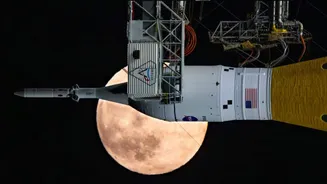
Nasa also announced that it had completed a wet dress rehearsal for the Artemis II test flight early Tuesday, successfully loading cryogenic propellant into the tanks of the Space Launch System, finalising closeout operations on the Orion capsule and safely draining the rocket.
The wet dress rehearsal was designed to identify issues ahead of launch. Engineers worked through multiple challenges across the two-day test, meeting many planned objectives.
Nasa will now target March as the earliest possible launch opportunity, allowing teams time to review data and conduct a second wet dress rehearsal.
With the February launch window no longer in play, Artemis II astronauts have been released from quarantine, which began on 21 January in Houston. They will re-enter quarantine roughly two weeks before the next targeted launch date.
Nasa began the 49-hour countdown on 31 January. Engineers monitored the effects of cold weather at the Kennedy Space Center, delaying tanking operations until interfaces reached acceptable temperatures.
During fuelling, teams spent several hours resolving a liquid hydrogen leak in an interface feeding propellant into the rocket’s core stage. Engineers attempted multiple fixes, including warming the interface to reseat seals and adjusting propellant flow.
All tanks in both the core stage and the interim cryogenic propulsion stage were eventually filled, and a team of five was dispatched to complete Orion closeout operations. A first run of terminal countdown procedures reached approximately T-5 minutes before the ground launch sequencer halted the test after detecting a spike in hydrogen leak rate.
“We are giving our crews the tools to capture special moments for their families and share inspiring images and video with the world… This is a small step in the right direction,” Isaacman wrote on X.
NASA astronauts will soon fly with the latest smartphones, beginning with Crew-12 and Artemis II. We are giving our crews the tools to capture special moments for their families and share inspiring images and video with the world. Just as important, we challenged long-standing…
— NASA Administrator Jared Isaacman (@NASAAdmin) February 5, 2026
Wet dress rehearsal completed for Artemis II
Nasa also announced that it had completed a wet dress rehearsal for the Artemis II test flight early Tuesday, successfully loading cryogenic propellant into the tanks of the Space Launch System, finalising closeout operations on the Orion capsule and safely draining the rocket.
The wet dress rehearsal was designed to identify issues ahead of launch. Engineers worked through multiple challenges across the two-day test, meeting many planned objectives.
Nasa will now target March as the earliest possible launch opportunity, allowing teams time to review data and conduct a second wet dress rehearsal.
New launch timeline
With the February launch window no longer in play, Artemis II astronauts have been released from quarantine, which began on 21 January in Houston. They will re-enter quarantine roughly two weeks before the next targeted launch date.
Nasa began the 49-hour countdown on 31 January. Engineers monitored the effects of cold weather at the Kennedy Space Center, delaying tanking operations until interfaces reached acceptable temperatures.
During fuelling, teams spent several hours resolving a liquid hydrogen leak in an interface feeding propellant into the rocket’s core stage. Engineers attempted multiple fixes, including warming the interface to reseat seals and adjusting propellant flow.
All tanks in both the core stage and the interim cryogenic propulsion stage were eventually filled, and a team of five was dispatched to complete Orion closeout operations. A first run of terminal countdown procedures reached approximately T-5 minutes before the ground launch sequencer halted the test after detecting a spike in hydrogen leak rate.