






What is the story about?
In their joint statement on geopolitical issues, G7 leaders on Wednesday vowed to contribute to the implementation of the US-Iran deal.
They said the multinational initiative led by France and the United Kingdom can play an important role in facilitating the resumption of maritime traffic in the Strait of Hormuz. They said the initiative could protect merchant ships, reassure ship operators, and support verification that all mines are removed.
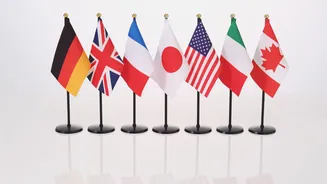
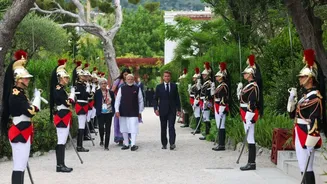
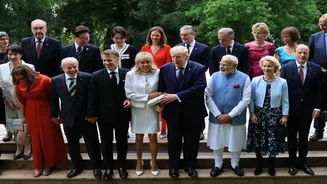
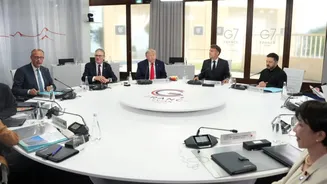
The leaders of the G7 —the United States, the UK, France, Germany, Italy, Canada, Japan, and the European Union (EU)— are currently holding their annual summit at Évian-les-Bains, France. The summit has been dominated by the repercussions of the botched American war on Iran.
Follow our live coverage of the G7 Summit here
Welcoming US President Donald Trump's announcement of a deal with Iran, G7 leaders said it provided a historic opportunity to prevent Iran from acquiring any nuclear weapon and tackling the threats related to its regional and ballistic activities — the 14-point memorandum of understanding (MoU) published by Iran explicitly excludes Iran's ballistic programme and support for armed groups in the region from the deal.
"We underline the need for the negotiation to this end to address the threats posed by Iran in the region and beyond and ensure that they never obtain a nuclear weapon. We agree that such a negotiation would benefit from the contributions from relevant regional and international partners, including the International Atomic Energy Agency (IAEA). We reaffirm that Iran will never obtain a nuclear weapon," the G7 leaders further said.
They also called for an immediate ceasefire in Lebanon, disarmament of Hezbollah, and protection of territorial integrity.
Israel's continuing attacks on Lebanon have emerged as a major irritant in Trump's negotiations with Iran, as the Islamic Republic has linked the deal to peace in the country, declaring that any Israeli strike in the country shall be seen as a violation of the deal.
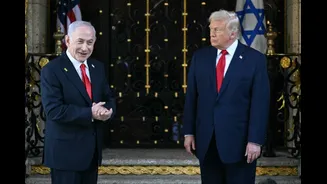
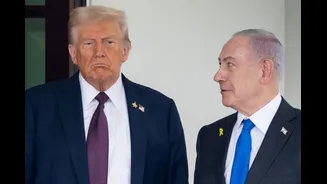
On the sidelines of the G7 Summit, Trump said that Israeli attacks on Lebanon cast a “negative light” on the deal with Iran, and slammed Netanyahu for the indiscriminate bombardment of the country. He said he was “not satisfied” with Netanyahu’s actions regarding Lebanon.
Since Trump announced the deal with Iran, Israeli attacks have killed at least five persons in Lebanon.
In addition to the Iran deal, they also called for the acceleration of humanitarian and reconstruction efforts regarding the Gaza Strip.
But, as with Lebanon, Netanyahu's refusal to end the occupation of Gaza and stop the bombardment of the strip has essentially stalled the Gaza peace process.
The G7 leaders also called for ending the Jewish settlers' violence against Palestinians in the West Bank.
As for the West Asia war-induced energy crisis, they pledged to accelerate the diversification of energy supply routes and welcomed the potential for Canada to deliver significant additional capacity to global markets in coming years.
They said the multinational initiative led by France and the United Kingdom can play an important role in facilitating the resumption of maritime traffic in the Strait of Hormuz. They said the initiative could protect merchant ships, reassure ship operators, and support verification that all mines are removed.
The leaders of the G7 —the United States, the UK, France, Germany, Italy, Canada, Japan, and the European Union (EU)— are currently holding their annual summit at Évian-les-Bains, France. The summit has been dominated by the repercussions of the botched American war on Iran.
Follow our live coverage of the G7 Summit here
Welcoming US President Donald Trump's announcement of a deal with Iran, G7 leaders said it provided a historic opportunity to prevent Iran from acquiring any nuclear weapon and tackling the threats related to its regional and ballistic activities — the 14-point memorandum of understanding (MoU) published by Iran explicitly excludes Iran's ballistic programme and support for armed groups in the region from the deal.
"We underline the need for the negotiation to this end to address the threats posed by Iran in the region and beyond and ensure that they never obtain a nuclear weapon. We agree that such a negotiation would benefit from the contributions from relevant regional and international partners, including the International Atomic Energy Agency (IAEA). We reaffirm that Iran will never obtain a nuclear weapon," the G7 leaders further said.
They also called for an immediate ceasefire in Lebanon, disarmament of Hezbollah, and protection of territorial integrity.
G7 Summit in Evian | G7 leaders’ statement on geopolitical issues |
On Ukraine - We, the Leaders of the G7, stand united in our unwavering support for Ukraine in defending its freedom, sovereignty, and territorial integrity. We reaffirm our solidarity with the Ukrainian… pic.twitter.com/EliRemLKjL
— ANI (@ANI) June 16, 2026
Israel's continuing attacks on Lebanon have emerged as a major irritant in Trump's negotiations with Iran, as the Islamic Republic has linked the deal to peace in the country, declaring that any Israeli strike in the country shall be seen as a violation of the deal.
On the sidelines of the G7 Summit, Trump said that Israeli attacks on Lebanon cast a “negative light” on the deal with Iran, and slammed Netanyahu for the indiscriminate bombardment of the country. He said he was “not satisfied” with Netanyahu’s actions regarding Lebanon.
Since Trump announced the deal with Iran, Israeli attacks have killed at least five persons in Lebanon.
In addition to the Iran deal, they also called for the acceleration of humanitarian and reconstruction efforts regarding the Gaza Strip.
But, as with Lebanon, Netanyahu's refusal to end the occupation of Gaza and stop the bombardment of the strip has essentially stalled the Gaza peace process.
The G7 leaders also called for ending the Jewish settlers' violence against Palestinians in the West Bank.
As for the West Asia war-induced energy crisis, they pledged to accelerate the diversification of energy supply routes and welcomed the potential for Canada to deliver significant additional capacity to global markets in coming years.