









What is the story about?
Venezuela’s oil industry is set for a major shift after Acting President Delcy Rodríguez on Thursday signed a new law opening the country’s oil sector to private companies, marking a sharp break from decades of state control over natural resources.
The move goes beyond a routine policy change and represents a reversal of the socialist framework that has long dominated Venezuela’s oil industry.
The decision comes as the Trump administration lifted a key restriction on US companies trading Venezuelan oil, easing certain sanctions shortly after the legislation was passed to improve access for foreign investors.
Venezuela holds some of the world’s largest oil reserves, and the newly signed law is expected to attract foreign investment aimed at reviving the struggling oil sector. The legislation is set to become a defining policy under Rodríguez’s interim leadership.
The shift follows dramatic political developments in Caracas. Less than a month ago, Venezuelan President Nicolás Maduro was captured from the capital by US forces in a military operation, after which Rodríguez assumed the role of acting president.
The law overturns a core principle of the socialist movement that has governed Venezuela for more than two decades.
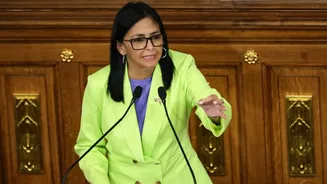
Rodríguez signed the legislation less than two hours after it was approved by the National Assembly, addressing oil workers and supporters of the ruling party.
A day earlier, she held talks with US President Donald Trump and Secretary of State Marco Rubio. Rubio had briefed US senators on Washington’s plans to manage the sale of tens of millions of barrels of Venezuelan oil and oversee revenue flows, according to the Associated Press.
Calling the move forward-looking, Rodríguez said the policy change was about “the future” and “the country that we are going to give to our children”.
Until now, Venezuela’s oil production and sales were controlled by the state-owned Petróleos de Venezuela SA (PDVSA), which held a monopoly over the sector. Under the new law, private companies will be allowed to take over production, sales, and pricing.
According to the legislation, a private firm will assume full management of oil activities “at its own expense, account, and risk” after proving its financial and technical capacity through a business plan approved by the Oil Ministry, the AP reported. While ownership of oil and gas reserves will remain with the state, private firms will be permitted to operate within them.
The law allows companies to take disputes to independent arbitration rather than resolving them exclusively in Venezuelan courts.
It also revises the tax framework by setting a maximum royalty rate of 30 percent and giving the government flexibility to adjust rates for individual projects based on factors such as investment needs and competitiveness.
Venezuela’s oil laws were last significantly amended about two decades ago during the presidency of Hugo Chávez.
The move goes beyond a routine policy change and represents a reversal of the socialist framework that has long dominated Venezuela’s oil industry.
US sanctions easing and investor push
The decision comes as the Trump administration lifted a key restriction on US companies trading Venezuelan oil, easing certain sanctions shortly after the legislation was passed to improve access for foreign investors.
Venezuela holds some of the world’s largest oil reserves, and the newly signed law is expected to attract foreign investment aimed at reviving the struggling oil sector. The legislation is set to become a defining policy under Rodríguez’s interim leadership.
Political upheaval in Caracas
The shift follows dramatic political developments in Caracas. Less than a month ago, Venezuelan President Nicolás Maduro was captured from the capital by US forces in a military operation, after which Rodríguez assumed the role of acting president.
The law overturns a core principle of the socialist movement that has governed Venezuela for more than two decades.
Swift passage and US engagement
Rodríguez signed the legislation less than two hours after it was approved by the National Assembly, addressing oil workers and supporters of the ruling party.
A day earlier, she held talks with US President Donald Trump and Secretary of State Marco Rubio. Rubio had briefed US senators on Washington’s plans to manage the sale of tens of millions of barrels of Venezuelan oil and oversee revenue flows, according to the Associated Press.
Calling the move forward-looking, Rodríguez said the policy change was about “the future” and “the country that we are going to give to our children”.
Private firms to take over oil operations
Until now, Venezuela’s oil production and sales were controlled by the state-owned Petróleos de Venezuela SA (PDVSA), which held a monopoly over the sector. Under the new law, private companies will be allowed to take over production, sales, and pricing.
According to the legislation, a private firm will assume full management of oil activities “at its own expense, account, and risk” after proving its financial and technical capacity through a business plan approved by the Oil Ministry, the AP reported. While ownership of oil and gas reserves will remain with the state, private firms will be permitted to operate within them.
Arbitration rights and tax changes
The law allows companies to take disputes to independent arbitration rather than resolving them exclusively in Venezuelan courts.
It also revises the tax framework by setting a maximum royalty rate of 30 percent and giving the government flexibility to adjust rates for individual projects based on factors such as investment needs and competitiveness.
Venezuela’s oil laws were last significantly amended about two decades ago during the presidency of Hugo Chávez.