


What is the story about?
The conclusion of the long-awaited India–European Union free trade agreement (FTA) on Tuesday (January 27), is being touted as the "mother of all deals".
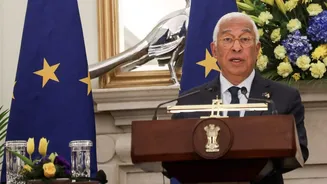
During the joint announcement in New Delhi, European Council President António Luís Santos da Costa offered a deeply personal moment that highlighted his historical, cultural, and emotional ties binding him to India — specifically to Goa.
As India and the European Union finalised what both sides hailed as a historic free trade agreement, Costa surprised the audience by producing his Overseas Citizen of India (OCI) card.
Standing alongside Prime Minister Narendra Modi and European Commission President Ursula von der Leyen, the European Council President spoke candidly about how the agreement resonated with him beyond diplomacy.
“I am the President of the European Council, but I am also an overseas Indian citizen,” Costa said, drawing smiles from those present.
He went on to explain why the moment carried particular emotional weight for him.
“As you can imagine, for me it has a special meaning. I am very proud of my roots in Goa, where my father's family came from, and the connection between Europe and India is something personal to me,” he added.
The light-hearted yet poignant intervention came as leaders from both sides marked the end of negotiations that had stretched across several years.
The agreement is expected to significantly deepen trade, manufacturing, and services cooperation between two of the world’s largest economic blocs.
António Luís Santos da Costa’s connection to India traces back several generations to Goa, which remained under Portuguese rule until its liberation in 1961.
Born in Lisbon in 1961, Costa is the son of a Portuguese-French mother and Orlando António Fernandes da Costa, a writer of Goan heritage.
His grandfather was born in Goa and spent much of his life there, while the family belonged to the Catholic Goan community that maintained close cultural links with Portugal during colonial rule.
Costa’s father was born and raised in Goa before moving to Portugal at the age of 18 following the end of Portuguese administration in the territory.
Despite settling in Lisbon, Orlando da Costa’s literary work consistently reflected his Goan upbringing, Indo-Portuguese identity, and the social changes surrounding the end of colonial rule.
Among family and friends, Costa was affectionately called “Babush” during his childhood — a Konkani nickname meaning a beloved young boy — a detail he himself has often referenced when speaking about his roots.
Orlando da Costa was a noted novelist and playwright whose works frequently explored Goan society, Portuguese colonialism, and post-colonial identity.
His novels and plays include ‘O Signo da Ira’ and ‘O Último Olhar de Manú Miranda’, both of which are widely regarded for their depiction of Goa’s cultural and political transformations.
During a visit to Goa in January 2017, when he was serving as Prime Minister of Portugal, Costa spoke at length about his father’s enduring emotional bond with the region. “My father went to Lisbon but never left Goa. Goa was always present in his works,” he said at the time.
That visit coincided with the release of the English translation of Orlando da Costa’s play ‘Sem Flores Nem Coroas’, published as ‘No Flowers No Wreaths’ by Goa 1556. Set on the night Portuguese rule ended in Goa, the play reflects the tensions and uncertainties of that historic moment.
Costa also recalled how deeply Goa shaped his upbringing through his father’s memories.
“From that moment my father made the Portuguese language is own. My father never left Goa because Goa never left him. The novels he wrote, from ‘O Signo da Ira’ to ‘O Último Olhar de Manú Miranda’, Goa was always present in his work. In Konkani, he only taught me two wordsBabush and Babulo. My father used these when he talked to me and my brother. We also got the scent of the beedi he smoked and the taste of sorpotel,” he said.
The Costa family’s ancestral home still stands in Margao, on Abade Faria Road, where members of his extended family continue to live.
During his 2017 visit, António Costa visited the house, met relatives, and spent time reconnecting with the town that shaped his family’s history.
That visit, he said, was as personal as it was official. Reflecting on his father’s words, Costa quoted from one of his books: “Wherever I go or wherever I’m taken to I will always be in my homeland.”
The emotional significance of that visit was marked when Prime Minister Narendra Modi presented Costa with ‘The Sign of Wrath’, the English translation of ‘O Signo da Ira’, considered Orlando da Costa’s most important literary work.
Often described as the “Gandhi of Lisbon” for his calm negotiating style and Goan heritage, the former Portuguese Prime Minister served from 2015 to 2024 before assuming the role of European Council President.
As von der Leyen formally announced the conclusion of the FTA, she said, “Europe and India are making history today. We have concluded the mother of all deals. We have created a free trade zone of two billion people, with both sides set to benefit. This is only the beginning. We will grow our strategic relationship to be even stronger.”
Prime Minister Modi also welcomed the agreement, describing it as the “Mother of all deals” and highlighting its potential to boost global confidence in India, strengthen manufacturing and services, and connect two economies that together account for roughly a quarter of global GDP.
While Costa now operates from Brussels at the centre of European decision-making, his remarks in New Delhi served as a reminder that his personal journey remains closely intertwined with India.
With inputs from agencies
During the joint announcement in New Delhi, European Council President António Luís Santos da Costa offered a deeply personal moment that highlighted his historical, cultural, and emotional ties binding him to India — specifically to Goa.
How Costa highlighted his link to India
As India and the European Union finalised what both sides hailed as a historic free trade agreement, Costa surprised the audience by producing his Overseas Citizen of India (OCI) card.
Standing alongside Prime Minister Narendra Modi and European Commission President Ursula von der Leyen, the European Council President spoke candidly about how the agreement resonated with him beyond diplomacy.
“I am the President of the European Council, but I am also an overseas Indian citizen,” Costa said, drawing smiles from those present.
He went on to explain why the moment carried particular emotional weight for him.
“As you can imagine, for me it has a special meaning. I am very proud of my roots in Goa, where my father's family came from, and the connection between Europe and India is something personal to me,” he added.
The light-hearted yet poignant intervention came as leaders from both sides marked the end of negotiations that had stretched across several years.
The agreement is expected to significantly deepen trade, manufacturing, and services cooperation between two of the world’s largest economic blocs.
Costa’s family story in Goa
António Luís Santos da Costa’s connection to India traces back several generations to Goa, which remained under Portuguese rule until its liberation in 1961.
Born in Lisbon in 1961, Costa is the son of a Portuguese-French mother and Orlando António Fernandes da Costa, a writer of Goan heritage.
His grandfather was born in Goa and spent much of his life there, while the family belonged to the Catholic Goan community that maintained close cultural links with Portugal during colonial rule.
Costa’s father was born and raised in Goa before moving to Portugal at the age of 18 following the end of Portuguese administration in the territory.
Despite settling in Lisbon, Orlando da Costa’s literary work consistently reflected his Goan upbringing, Indo-Portuguese identity, and the social changes surrounding the end of colonial rule.
Among family and friends, Costa was affectionately called “Babush” during his childhood — a Konkani nickname meaning a beloved young boy — a detail he himself has often referenced when speaking about his roots.
Orlando da Costa's literary legacy
Orlando da Costa was a noted novelist and playwright whose works frequently explored Goan society, Portuguese colonialism, and post-colonial identity.
His novels and plays include ‘O Signo da Ira’ and ‘O Último Olhar de Manú Miranda’, both of which are widely regarded for their depiction of Goa’s cultural and political transformations.
During a visit to Goa in January 2017, when he was serving as Prime Minister of Portugal, Costa spoke at length about his father’s enduring emotional bond with the region. “My father went to Lisbon but never left Goa. Goa was always present in his works,” he said at the time.
That visit coincided with the release of the English translation of Orlando da Costa’s play ‘Sem Flores Nem Coroas’, published as ‘No Flowers No Wreaths’ by Goa 1556. Set on the night Portuguese rule ended in Goa, the play reflects the tensions and uncertainties of that historic moment.
Costa also recalled how deeply Goa shaped his upbringing through his father’s memories.
“From that moment my father made the Portuguese language is own. My father never left Goa because Goa never left him. The novels he wrote, from ‘O Signo da Ira’ to ‘O Último Olhar de Manú Miranda’, Goa was always present in his work. In Konkani, he only taught me two wordsBabush and Babulo. My father used these when he talked to me and my brother. We also got the scent of the beedi he smoked and the taste of sorpotel,” he said.
A lasting physical link to Margao
The Costa family’s ancestral home still stands in Margao, on Abade Faria Road, where members of his extended family continue to live.
During his 2017 visit, António Costa visited the house, met relatives, and spent time reconnecting with the town that shaped his family’s history.
That visit, he said, was as personal as it was official. Reflecting on his father’s words, Costa quoted from one of his books: “Wherever I go or wherever I’m taken to I will always be in my homeland.”
The emotional significance of that visit was marked when Prime Minister Narendra Modi presented Costa with ‘The Sign of Wrath’, the English translation of ‘O Signo da Ira’, considered Orlando da Costa’s most important literary work.
Often described as the “Gandhi of Lisbon” for his calm negotiating style and Goan heritage, the former Portuguese Prime Minister served from 2015 to 2024 before assuming the role of European Council President.
As von der Leyen formally announced the conclusion of the FTA, she said, “Europe and India are making history today. We have concluded the mother of all deals. We have created a free trade zone of two billion people, with both sides set to benefit. This is only the beginning. We will grow our strategic relationship to be even stronger.”
Prime Minister Modi also welcomed the agreement, describing it as the “Mother of all deals” and highlighting its potential to boost global confidence in India, strengthen manufacturing and services, and connect two economies that together account for roughly a quarter of global GDP.
While Costa now operates from Brussels at the centre of European decision-making, his remarks in New Delhi served as a reminder that his personal journey remains closely intertwined with India.
With inputs from agencies