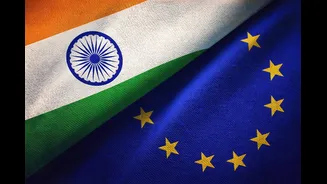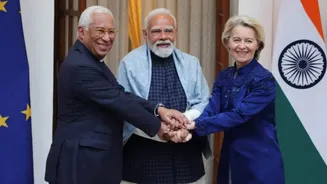








In a moment that blended high-level diplomacy with deeply personal heritage, European Council President António Costa hailed the newly signed India-EU Free Trade Agreement (FTA) as the "most ambitious" in the bloc’s history, punctuated by a proud declaration of his own lineage.
“I am from Goa,” Costa told a captivated audience at Hyderabad House, referencing his ancestral roots in the Indian coastal state. Costa recalled his personal connection to India, saying he is an Indian citizen by origin and thanked India for inviting him to the Republic Day celebrations. He said he was proud of his roots in Goa, adding that India-EU ties are deeply personal for him.
He said the summit sends a strong message to the world—that India and the European Union stand together as strategic and reliable partners. “We are taking our partnership to the next level,” he said, stressing that both sides are working hand in hand to help shape a resilient global order.
Shared prosperity and security
Costa stressed that India and the European Union need to work closely to ensure shared prosperity and security, describing trade as a key geopolitical stabiliser. He said the proposed India-EU free trade agreement is among the most ambitious ever negotiated, with added importance in a multipolar global order.
“In a multipolar world, India and the EU are working for shared prosperity,” he said, before adding a cautionary note: “But prosperity does not exist without security.”
On defence and security ties, Costa said the India-EU partnership is now taking its first tangible steps, sending a strong and ambitious message of deeper cooperation in the security sphere.
How would the FTA benefit India?
The India-EU Free Trade Agreement is expected to significantly boost India’s economy by expanding market access and reducing trade barriers with the European Union.
Indian exporters in sectors like textiles, leather, gems and jewellery, chemicals and pharmaceuticals will gain easier entry into Europe’s huge market, enhancing competitiveness and export volumes.
The deal will cut tariffs on over 90% of traded goods, deepen services and investment ties, and attract more foreign investment. By diversifying export destinations and strengthening supply chain integration, the pact aims to create jobs, boost growth, and reduce dependency on volatile markets.