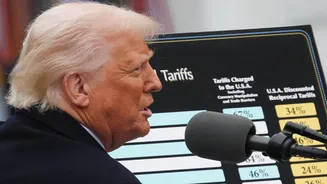

The fate of Donald Trump’s tariffs, which he imposed on almost all of America’s trading partners last year, will be decided today (January 9) as the US Supreme Court is expected to provide an expedited ruling on their legality.
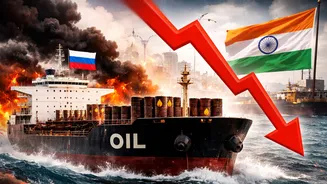
Since coming to office for a second term, the US president has used tariffs as a tool to get other countries to abide by his terms and conditions. He’s also used them as leverage and a tool of punishment — he imposed an additional 25 per cent tariff on India last August for purchasing Russian crude. So much so, Trump has said that tariffs is his favourite word in the English dictionary.
So, what happens today?
Judgment day in court
It is expected that the US Supreme Court will issue a verdict in the matter of Trump’s tariffs today (January 9). Though it’s not clear if the court will make its ruling, it scheduled Friday as a “decision day” for handing down opinions, and there is widespread speculation that the tariff case will come up.
The US Supreme Court is expected to tackle two issues when it comes to the matter of Trump’s tariffs: firstly, does the administration have the authority to impose tariffs under the International Emergency Economic Powers Act (IEEPA), and secondly, if that’s found to be improper, whether the US must reimburse importers who have already paid these tariffs.
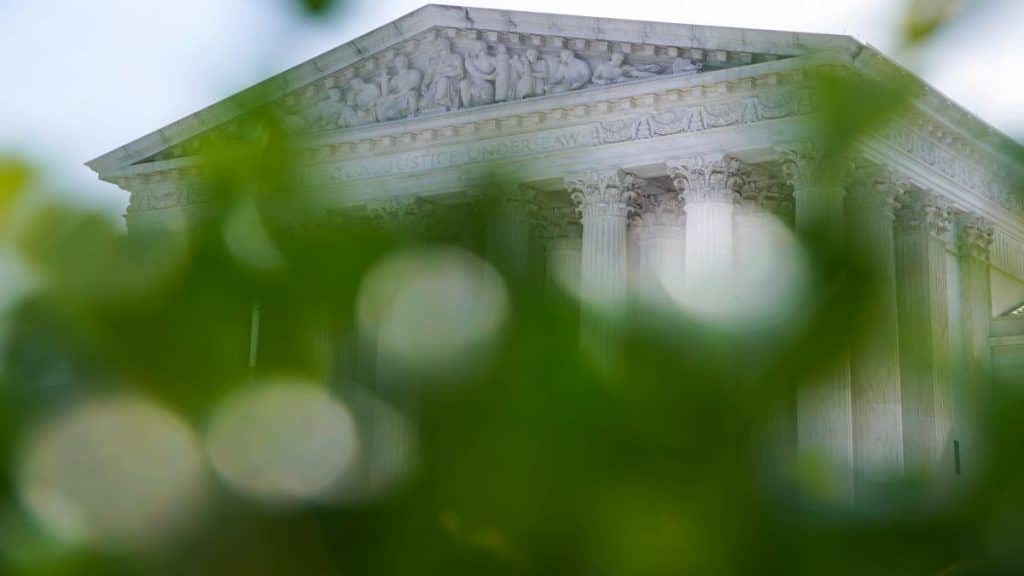
The US Supreme Court building is seen ahead of likely ruling on Donald Trump's tariffs. File image/Reuters
Previous court rulings on Trump’s tariffs
The matter in the US Supreme Court comes after Trump’s tariffs were earlier litigated in lower courts.
First, the US Court of International Trade ruled that because of the Constitution’s “express allocation of the tariff power to Congress,” IEEPA does not “delegate an unbounded tariff authority to the President”.
The ruling noted that Trump’s initial executive order exceeded the president’s authority under the emergency law. Moreover, the tariffs hitting goods from Mexico and Canada was also deemed illegal because those levies did not attempt to address the emergency used to justify them.
The US Court of International Trade also noted that Trump’s imposition of tariffs was “impermissible not because it is unwise or ineffective, but because [federal law] does not allow it.” This decision was upheld by the
In another case, a federal judge in Washington declared unlawful a number of Trump’s tariffs related to trade with China and other countries. US District Judge Rudolph Contreras limited his decision to the pair of family-owned toy manufacturing businesses that sued.
Then, last November, the matter of the tariffs reached the US Supreme Court during which the judges expressed doubts whether Trump, in fact, has the authority to unilaterally impose tariffs under the 1977 law that gives the president special powers during emergency situations.
At the time, Justice Neil Gorsuch noted, “Congress, as a practical matter, can’t get this power back once it’s handed it over to the president.”
Ahead of the likely decision today, Trump has been frequently expressing concern over the ruling, saying losing the ability to tariff other countries would be a “terrible blow” to the US. On January 5, Trump said, “Because of tariffs, our country is financially, and from a national security standpoint, far stronger and more respected than ever before.”
Implications of US Supreme Court’s ruling
The upcoming decision by the US Supreme Court has major consequences for the Trump administration and the world. Experts have noted that if the Supreme Court were to side with the Trump administration, it could lend the US president the power to tax with the same authority and broad swaths as he did with the tariffs in question.
As Timothy Meyer, professor of international business law at Duke University, told Fortune: “The law at issue here — IEEPA — doesn’t only apply to imports; it authorises the president to regulate imports, exports, sales, use, holding, a whole bunch of activity. If the government were to win just on this interpretation of this law, the president would have the ability to tax, to impose sales taxes, he could impose property taxes.”
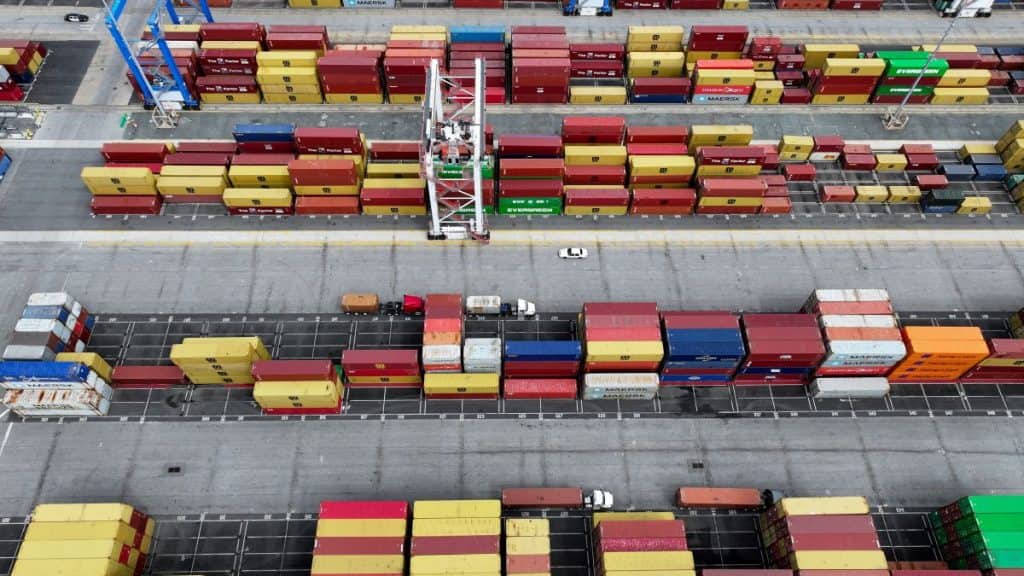
A drone view shows containers at the Port of Baltimore, Maryland. File image/Reuters
“If the president has the ability to impose taxes on the basis of a law that doesn’t mention taxes,” Meyer added, “We really are in a world in which there is very little that the president is not going to feel empowered to do based on broadly-worded statutes.”
However, what happens if the US Supreme Court rules against Trump and his tariffs? Not only would the US administration not be able to collect the tariffs under the IEEPA, it would also face demands to refund those that have already been paid.
As per data available, the Trump administration has collected IEEPA-related tariffs worth $133.5 billion between February 4 and December 14.
However, importers and companies believe that even if the court orders for a refund, it will not be an easy process. “It’s not in the government’s DNA to give back money. And Trump would not want to give back money,” Jim Estill, CEO of Danby Appliances, a Canadian company that sells small refrigerators, microwaves and laundry equipment through big-box stores including Home Depot, was quoted as telling
Experts have, however, noted that even if the US Supreme Court strikes down the Trump ruling, the administration has workarounds. Jose Torres, senior economist at Interactive Brokers, told CNBC, “If the court blocks the tariffs, the administration is going to find workarounds. President Trump is very ambitious in getting this agenda through despite potential controversies that could surround such a decision.”
US Treasury Secretary Scott Bessent has said that the administration has at least three other options through the 1962 Trade Act that will keep most of the tariffs in place. However, he also has worried that reimbursements could place a strain on the administration and its effort to drive down the fiscal deficit.
We shall wait and watch to see how it unfolds, but tariff drama seems to be going nowhere.
With inputs from agencies