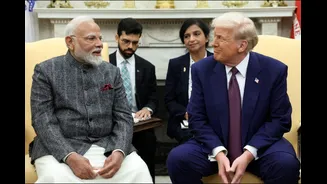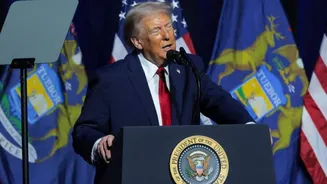

A razor-thin majority and open disagreements between establishment Republicans and hard-right members further deepened the standstill. Routine business was repeatedly stalled, leadership votes became prolonged battles, and major policy proposals struggled to reach the floor.
By year’s end, the House had enacted fewer laws than in any modern session, offering a stark measure of how Trump’s influence—combined with internal Republican fractures—left Congress unable to fully use the power it held.
Speaker’s strategy limits House activity
Speaker Mike Johnson spent much of the year attempting to keep the House operational while navigating internal party tensions and resistance to measures opposed by the president. The chamber was left out of session for nearly eight weeks, a period that coincided with the longest government shutdown in history.
Johnson also worked to avoid politically sensitive votes, including proposals to cancel Trump’s tariffs, compel the release of files related to Jeffrey Epstein, and extend health care subsidies nearing expiration. These manoeuvres heightened tensions within the Republican conference.
Backbench rebellion breaks tradition
Growing frustration among rank-and-file Republicans led to repeated efforts to bypass leadership by forcing legislation to the floor through discharge petitions, a mechanism historically viewed as symbolic rather than effective.
In 2025, however, several such efforts succeeded. Legislation related to the Epstein matter was enacted last fall, and the House later passed a bill restoring health care subsidies, though its path to enactment remains uncertain in an election year.
Votes and laws fall to near-record lows
The House recorded just 362 votes in 2025, the second-lowest total in the past 25 years. The only year with fewer votes during that period was 2020, when the COVID-19 pandemic disrupted congressional operations in the United States.
It was also the fewest votes cast in a non-election year since 1990. The reduced legislative calendar directly contributed to a sharp decline in enacted laws.
Only one year since 2001 saw Congress enact fewer bills than in 2025. That was 2023, a year marked by turmoil that culminated in the removal of Kevin McCarthy as speaker after he worked with Democrats to pass spending legislation.
Unlike 2023, when divided government constrained output, Republicans in 2025 controlled the House, the Senate and the White House, underscoring the scale of the breakdown.
While Congress moved quickly to pass Trump’s tax cut and domestic policy package, Johnson repeatedly blocked or delayed measures opposed by the president. He relied on obscure procedural tactics to prevent votes on cancelling tariffs and resisted efforts to advance other bipartisan proposals.
As a result, lawmakers increasingly concluded that the House had sidelined itself, with broader congressional authority effectively ceded to the White House.
Censures, exits and shrinking margins
As legislative momentum stalled, the House became increasingly consumed by internal disciplinary actions. Six official rebukes were brought to the floor in 2025, matching the total from 2023.
That earlier year included the expulsion of George Santos, who faced 23 federal criminal charges and was found to have lied extensively to voters about his background.
Disillusionment with the chamber’s direction prompted several Republicans to exit Congress, including Marjorie Taylor Greene of Georgia, further eroding the party’s already narrow majority.