








What is the story about?
A new startup in New York is offering residents free apartment cleaning, but the real product may not be the service itself. It may be the data collected inside people’s homes.
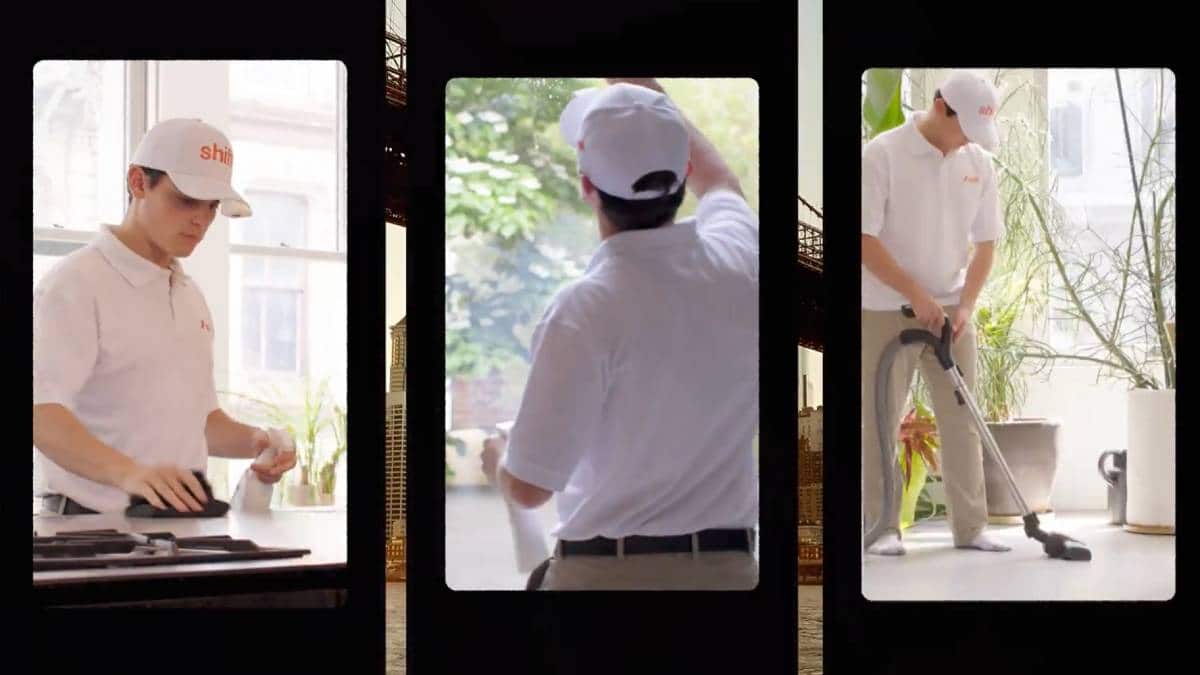
The company, called Shift, announced its launch this week through a social media post outlining an unusual business model. Customers in New York City can book a free cleaning session where a “vetted shift operator” arrives wearing one of the company’s recording devices, cleans the apartment and leaves without charging anything.
In return, Shift records the cleaning process.
According to the company, the footage will be used to help train robotics and physical AI systems designed to learn how humans perform everyday tasks. Shift claims any personal information captured during the process will be anonymised before the recordings are processed.
The startup framed the idea as part of a broader societal transition towards AI-driven services.
“Robotics is being built on data about how people do daily tasks,” the company wrote in its launch announcement. “The value of that recording is what funds the service.”
Shift also suggested its ambitions extend far beyond apartment cleaning. The company said future services could include repairs, errands and handyman work in cities around the world.
The pitch sounds futuristic and efficient. But it is also raising uncomfortable questions about privacy, surveillance and whether homes are quietly becoming training grounds for the next generation of AI-powered machines.
Shift is not the only company exploring this model.
In India, household services startup, Pronto appears to be evolving beyond its public image as a platform connecting customers with cleaners, cooks, laundry workers and gardeners.
Behind the company’s rapid growth story may sit a much larger ambition: becoming a real-world data collection layer for physical AI and robotics.
The clearest indication reportedly comes from investor documents reviewed by Entrackr.
In an internal memo, investment firm Glade Brook Capital stated that “Pronto is seeking to formalize India’s vast informal labor markets and in the process generate data to help train physical AI and robotics.”
The document goes further, claiming the company is already “piloting real world training data with leading physical AI labs”.
That detail significantly changes how the startup may need to be viewed.
Until now, Pronto had largely been seen as another fast-growing home services company. Founded in 2025 by Anjali Sardana, the startup expanded rapidly across India’s top cities while attracting strong investor attention.
However, the investor memo suggests Pronto’s longer-term strategy may revolve around something much bigger than domestic services alone.
According to the note, the company is “developing a data business leveraging its workforce to capture real-world household data for robotics labs”. It also reportedly states that early partnership interest has been “encouraging” and that the company is “moving quickly to commercialize the strategy”.
The emergence of companies such as Shift and Pronto points to a growing trend within the AI industry, and that is using ordinary human activity as training material for future robots.
For robotics companies, household environments represent extremely valuable data. Every action, from washing dishes and folding clothes to organising kitchens and cleaning floors, can help AI systems learn how humans navigate physical spaces.
But the warning signs are deeply concerning.
Unlike social media or internet browsing data, these recordings take place inside private homes, often capturing highly personal details about families, routines and living conditions.
Questions are also emerging around transparency and consent.
Pronto’s privacy policy, last updated on November 9, 2024, reportedly makes no mention of video recording, AI training, physical AI laboratories or children’s data. This was before India formally notified its Digital Personal Data Protection Rules in November 2025.
Yet the company has publicly claimed it spent months ensuring its programme collecting footage inside customers’ homes for physical AI training went “above and beyond” legal requirements.
The larger concern is that AI companies increasingly need enormous amounts of real-world behavioural data to build useful humanoid robots. And unlike internet data, that information cannot easily be scraped online. It must be captured in physical spaces where people live and work.
For now, startups such as Shift present the arrangement as a practical exchange: free services in return for data.
But as AI systems move deeper into everyday life, homes may slowly become one of the technology industry’s most valuable and least understood data sources.
The company, called Shift, announced its launch this week through a social media post outlining an unusual business model. Customers in New York City can book a free cleaning session where a “vetted shift operator” arrives wearing one of the company’s recording devices, cleans the apartment and leaves without charging anything.
In return, Shift records the cleaning process.
Today, we're launching shift. We're starting by cleaning your apartment in New York City, for free.
Here's how it works. Book a shift cleaning. A vetted shift operator comes to your home wearing one of our devices. They clean. They leave. You pay nothing.
In exchange, we record… pic.twitter.com/oBrCXcEz5G
— shift (@joinshiftX) May 28, 2026
According to the company, the footage will be used to help train robotics and physical AI systems designed to learn how humans perform everyday tasks. Shift claims any personal information captured during the process will be anonymised before the recordings are processed.
The startup framed the idea as part of a broader societal transition towards AI-driven services.
“Robotics is being built on data about how people do daily tasks,” the company wrote in its launch announcement. “The value of that recording is what funds the service.”
Shift also suggested its ambitions extend far beyond apartment cleaning. The company said future services could include repairs, errands and handyman work in cities around the world.
The pitch sounds futuristic and efficient. But it is also raising uncomfortable questions about privacy, surveillance and whether homes are quietly becoming training grounds for the next generation of AI-powered machines.
Shift in New York is Pronto in India
Shift is not the only company exploring this model.
In India, household services startup, Pronto appears to be evolving beyond its public image as a platform connecting customers with cleaners, cooks, laundry workers and gardeners.
Behind the company’s rapid growth story may sit a much larger ambition: becoming a real-world data collection layer for physical AI and robotics.
The clearest indication reportedly comes from investor documents reviewed by Entrackr.
In an internal memo, investment firm Glade Brook Capital stated that “Pronto is seeking to formalize India’s vast informal labor markets and in the process generate data to help train physical AI and robotics.”
The document goes further, claiming the company is already “piloting real world training data with leading physical AI labs”.
That detail significantly changes how the startup may need to be viewed.
Until now, Pronto had largely been seen as another fast-growing home services company. Founded in 2025 by Anjali Sardana, the startup expanded rapidly across India’s top cities while attracting strong investor attention.
However, the investor memo suggests Pronto’s longer-term strategy may revolve around something much bigger than domestic services alone.
According to the note, the company is “developing a data business leveraging its workforce to capture real-world household data for robotics labs”. It also reportedly states that early partnership interest has been “encouraging” and that the company is “moving quickly to commercialize the strategy”.
The concerning part
The emergence of companies such as Shift and Pronto points to a growing trend within the AI industry, and that is using ordinary human activity as training material for future robots.
For robotics companies, household environments represent extremely valuable data. Every action, from washing dishes and folding clothes to organising kitchens and cleaning floors, can help AI systems learn how humans navigate physical spaces.
Pronto turns one this week. Last month we crossed 500,000 fulfilled bookings, reaching 22,000 daily bookings by March-end
None of this happens without the more than 5,000 Pros who trust us with their livelihoods and the families who welcome them in. This responsibility shapes… pic.twitter.com/aYVsC4AdPA
— Anjali Sardana (@anjalisardana) April 2, 2026
But the warning signs are deeply concerning.
Unlike social media or internet browsing data, these recordings take place inside private homes, often capturing highly personal details about families, routines and living conditions.
Questions are also emerging around transparency and consent.
Pronto’s privacy policy, last updated on November 9, 2024, reportedly makes no mention of video recording, AI training, physical AI laboratories or children’s data. This was before India formally notified its Digital Personal Data Protection Rules in November 2025.
Yet the company has publicly claimed it spent months ensuring its programme collecting footage inside customers’ homes for physical AI training went “above and beyond” legal requirements.
The larger concern is that AI companies increasingly need enormous amounts of real-world behavioural data to build useful humanoid robots. And unlike internet data, that information cannot easily be scraped online. It must be captured in physical spaces where people live and work.
For now, startups such as Shift present the arrangement as a practical exchange: free services in return for data.
But as AI systems move deeper into everyday life, homes may slowly become one of the technology industry’s most valuable and least understood data sources.