






What is the story about?
47.6 degrees Celsius on April 27- The hottest April day since 1951
48.2 degrees Celsius on Tuesday (May 19)
48 degrees Celsius on Wednesday (May 20)
44 degrees Celsius today (May 21).
This is the temperature that Banda, Uttar Pradesh, has been recording lately. The sustained reading has positioned Banda among India’s most extreme heat locations- a distinction long implied with Rajasthan's Churu and Jaisalmer.
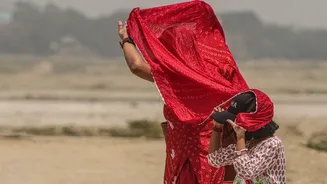
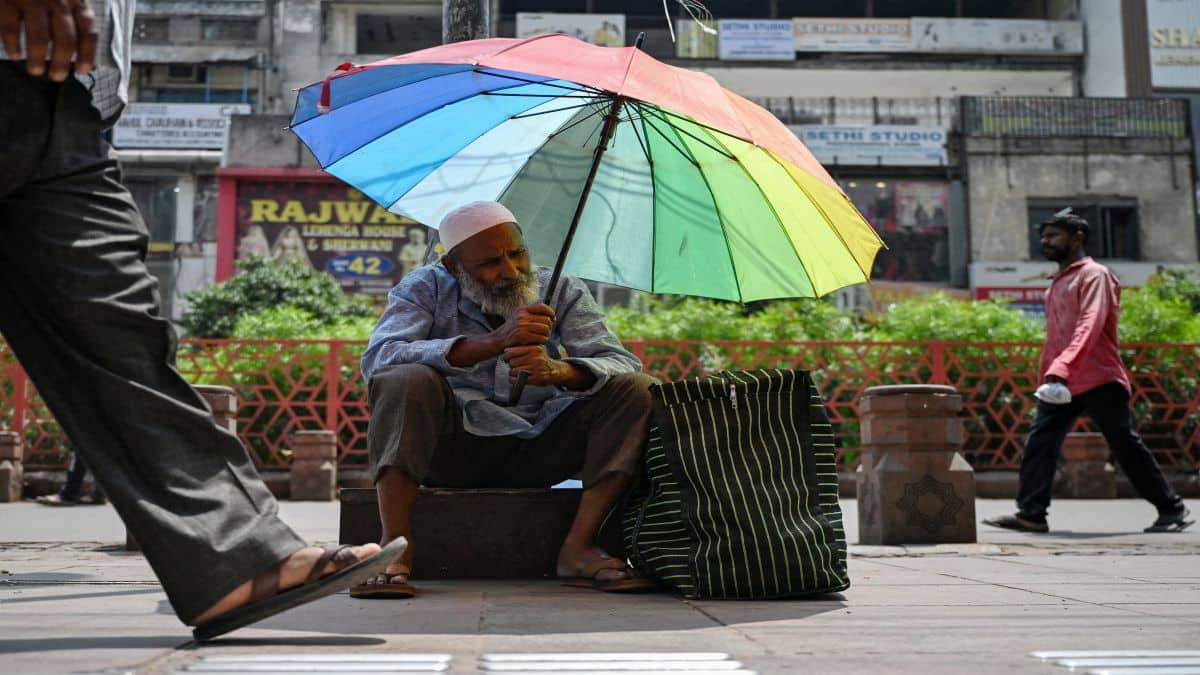
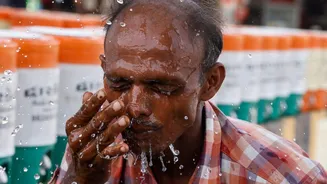
With shops, roads and streets shut empty after 10 am every day, the heat has disrupted daily life in Banda.
But why is the major city of the Bundelkhand region repeatedly emerging as one of the hottest places on Earth? Experts point to the cause as beyond a temporary heatwave.
Let's take a closer look.
With Banda recording 48.2 degrees Celsius on Tuesday (May 19), the India Meteorological Department (IMD) has issued a red alert across over 11 districts in Uttar Pradesh, cautioning people that temperatures are likely to remain 3-4 degrees Celsius above normal.
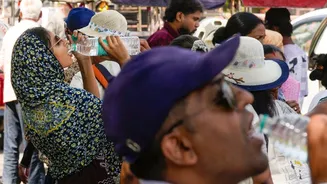
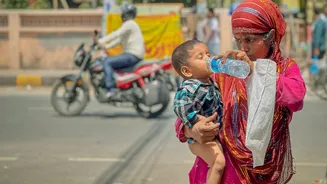
The city was once known for its harsh summer, and it's now emerging as one of India's “heat islands”- a place where markets fall silent after 10 am, and residents remain indoors just to escape the heat, which is too much to handle for them.
Lakhan Gupta, a Jeweller in Attara town, now starts the work before sunrise. Gupta's normal life has now turned into a daily struggle.
He told the Hindustan Times, "Since April, I have sold almost nothing. After 10 am, Banda becomes deserted. At first, you see one or two people outside. Then, as the day rises, there is only silence."
A local resident noted, "I now work inside the office from morning till evening. Going out into the field during the day has become nearly impossible."
The impact of heat is visible everywhere.
Farmers work at night with the help of LED floodlights, as daytime work due to the heat has become unbearable.
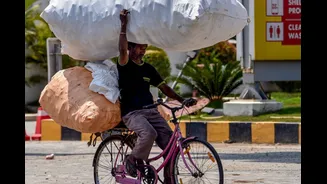
Contractors say many labourers are voluntarily giving up as much as 40 per cent of their earnings to avoid working between 10 am and 5 pm.
Food stalls that once stayed open through the afternoon are now only open after sunset, while migration from villages is reportedly starting earlier than usual this year.
Prahlad Valmiki, a resident of Bhadedu village, told HT: "The time has come to look at this seriously. Otherwise, Banda will not remain livable."
Extreme temperatures are also affecting the district's power infrastructure, which is struggling to cope with the strain. According to reports, electricity department workers are continuously pouring water onto more than 1,379 transformers at 44 substations after repeated failures caused by excessive load.
Experts and researchers point to years of ecological decline across the Bundelkhand landscape as the key reason for the worsening temperature.
A study published in the Journal of Extension Systems, co-authored by Arjun P Varma, a researcher at Banda Agriculture University, found that between 1991-92 and 2021-22, the district lost about one-sixth of its dense forest cover. Open forests also declined at a similar pace.
Varma told HT that the major reasons for the unbearable heat are large-scale mining and agricultural encroachment inside forest land.
Deforestation, dust from stone-crushing units, and shrinking moisture levels are collectively raising temperatures, Professor Dinesh Saha, head of the meteorological department at Banda Agriculture University, noted.
Saha added, "All these factors compound each other. The same pattern is unfolding in Banda’s rivers," according to Moneycontrol.
Some experts point to sand mining in the Ken River basin as the biggest contributor to Banda’s intensifying heat.
Uma Shankar Pandey, a Padma Shri awardee and water conservation expert who has conducted extensive research on the Ken River, said that rampant mining has stripped the river of its natural cooling mechanism.
“Excessive extraction has removed the natural river sand that helped retain water and recharge groundwater. In its place, exposed rocky surfaces increase runoff and reduce water retention," Pandey explains, News18 reported.
Geologists also argue about Banda’s very poor green cover. According to experts, only around 3 per cent of the district currently has green cover — among the lowest figures in UP.
"The city is trapped in the vicious circle of heat," said Prof Dhruv Sen Singh from the geology department of Lucknow University.
“Banda has become a heat island because of loss of green cover, loss of moisture, increase in sandy surfaces, decline in water bodies and the hot westerly winds coming from the Thar Desert."
“The surface heats throughout the day, and before it can cool down at night, another intensely hot morning begins. This cycle leaves almost no respite...The Bundelkhand region comprises rocky terrain, which intensifies heat absorption. Low vegetation and shrinking rivers like the Ken and Baghain have further worsened the situation," he added.
Scientists note the Banda city crisis shows the larger threat posed by climate change across northern India. The impact of climate change is colliding with environmental degradation, making Banda highly vulnerable.
With inputs from agencies
48.2 degrees Celsius on Tuesday (May 19)
48 degrees Celsius on Wednesday (May 20)
44 degrees Celsius today (May 21).
This is the temperature that Banda, Uttar Pradesh, has been recording lately. The sustained reading has positioned Banda among India’s most extreme heat locations- a distinction long implied with Rajasthan's Churu and Jaisalmer.
With shops, roads and streets shut empty after 10 am every day, the heat has disrupted daily life in Banda.
But why is the major city of the Bundelkhand region repeatedly emerging as one of the hottest places on Earth? Experts point to the cause as beyond a temporary heatwave.
Let's take a closer look.
Banda: A giant heat trap
With Banda recording 48.2 degrees Celsius on Tuesday (May 19), the India Meteorological Department (IMD) has issued a red alert across over 11 districts in Uttar Pradesh, cautioning people that temperatures are likely to remain 3-4 degrees Celsius above normal.
The city was once known for its harsh summer, and it's now emerging as one of India's “heat islands”- a place where markets fall silent after 10 am, and residents remain indoors just to escape the heat, which is too much to handle for them.
Lakhan Gupta, a Jeweller in Attara town, now starts the work before sunrise. Gupta's normal life has now turned into a daily struggle.
He told the Hindustan Times, "Since April, I have sold almost nothing. After 10 am, Banda becomes deserted. At first, you see one or two people outside. Then, as the day rises, there is only silence."
A local resident noted, "I now work inside the office from morning till evening. Going out into the field during the day has become nearly impossible."
The impact of heat is visible everywhere.
Farmers work at night with the help of LED floodlights, as daytime work due to the heat has become unbearable.
Contractors say many labourers are voluntarily giving up as much as 40 per cent of their earnings to avoid working between 10 am and 5 pm.
Food stalls that once stayed open through the afternoon are now only open after sunset, while migration from villages is reportedly starting earlier than usual this year.
Prahlad Valmiki, a resident of Bhadedu village, told HT: "The time has come to look at this seriously. Otherwise, Banda will not remain livable."
Extreme temperatures are also affecting the district's power infrastructure, which is struggling to cope with the strain. According to reports, electricity department workers are continuously pouring water onto more than 1,379 transformers at 44 substations after repeated failures caused by excessive load.
Ecological decline, sand mining... reasons battering Banda with heat
Experts and researchers point to years of ecological decline across the Bundelkhand landscape as the key reason for the worsening temperature.
A study published in the Journal of Extension Systems, co-authored by Arjun P Varma, a researcher at Banda Agriculture University, found that between 1991-92 and 2021-22, the district lost about one-sixth of its dense forest cover. Open forests also declined at a similar pace.
Varma told HT that the major reasons for the unbearable heat are large-scale mining and agricultural encroachment inside forest land.
Deforestation, dust from stone-crushing units, and shrinking moisture levels are collectively raising temperatures, Professor Dinesh Saha, head of the meteorological department at Banda Agriculture University, noted.
Saha added, "All these factors compound each other. The same pattern is unfolding in Banda’s rivers," according to Moneycontrol.
Some experts point to sand mining in the Ken River basin as the biggest contributor to Banda’s intensifying heat.
Uma Shankar Pandey, a Padma Shri awardee and water conservation expert who has conducted extensive research on the Ken River, said that rampant mining has stripped the river of its natural cooling mechanism.
“Excessive extraction has removed the natural river sand that helped retain water and recharge groundwater. In its place, exposed rocky surfaces increase runoff and reduce water retention," Pandey explains, News18 reported.
Geologists also argue about Banda’s very poor green cover. According to experts, only around 3 per cent of the district currently has green cover — among the lowest figures in UP.
"Banda is trapped in a vicious circle of heat"
"The city is trapped in the vicious circle of heat," said Prof Dhruv Sen Singh from the geology department of Lucknow University.
“Banda has become a heat island because of loss of green cover, loss of moisture, increase in sandy surfaces, decline in water bodies and the hot westerly winds coming from the Thar Desert."
“The surface heats throughout the day, and before it can cool down at night, another intensely hot morning begins. This cycle leaves almost no respite...The Bundelkhand region comprises rocky terrain, which intensifies heat absorption. Low vegetation and shrinking rivers like the Ken and Baghain have further worsened the situation," he added.
Scientists note the Banda city crisis shows the larger threat posed by climate change across northern India. The impact of climate change is colliding with environmental degradation, making Banda highly vulnerable.
With inputs from agencies