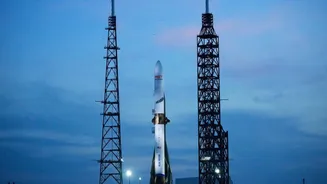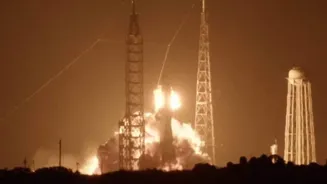

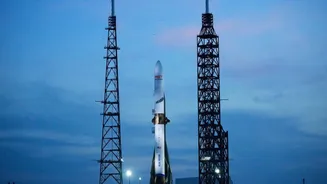

Blue Origin’s 321-foot New Glenn rocket exploded into flames during a hotfire engine test at Cape Canaveral’s Space Launch Complex 36. Around 9:00 pm Eastern Time, what was supposed to be a routine, chained-to-the-ground ignition of the rocket's powerful BE-4 engines instead turned into a ground-shaking explosion that painted the Florida coastline bright orange and rattled windows miles away in Cocoa Beach.
'A very rough day'
Blue Origin was quick to enter damage control, issuing a statement confirming a major "anomaly" during the static fire. The silver lining in an otherwise disastrous evening was human safety. Both Blue Origin and the Cape Canaveral Space Force Station confirmed that all personnel were safely accounted for, with zero injuries reported.
Taking to X (formerly Twitter) to address the situation, Jeff Bezos said, "It's too early to know the root cause but we're already working to find it."
"Very rough day, but we'll rebuild whatever needs rebuilding and get back to flying. It's worth it."
Even bitter rival Elon Musk paused his usual digital sparring to offer some rare solidarity, tweeting: "Most unfortunate. Rockets are hard."
Watch the explosion here:
Some of the best footage yet of tonight’s explosion involving Blue Origin’s New Glenn, during a Static Fire Test at Cape Canaveral Launch Complex 36 (LC-36) in Florida. LC-36 appears to have suffered significant damage, with several towers and other structures entirely missing,…
— OSINTdefender (@sentdefender) May 29, 2026
A massive setback for Amazon and Nasa
The timing of the explosion could not possibly be worse for Blue Origin. The vehicle on the pad, designated for the upcoming NG-4 mission, was being prepped to launch 48 low-Earth orbit satellites for Amazon’s Project Kuiper, Bezos's direct broadband competitor to Musk’s Starlink.
The satellites were not yet loaded onto the rocket, sparing Amazon a massive payload loss, but the launch schedule is now firmly in tatters.
The collateral damage extends far beyond Amazon's internet ambitions. Earlier this week, Nasa had selected Blue Origin over SpaceX to lead the first of three uncrewed lunar missions aimed at kickstarting construction on a $20 billion permanent Moon base. New Glenn is also tightly woven into Nasa's broader Artemis programme, slated to launch the heavy "Blue Moon" lander for the Artemis III mission.
Space journalists and industry analysts are already painting a bleak picture. Because Space Launch Complex 36 is Blue Origin’s only operational pad capable of handling the heavy-lift New Glenn, any significant damage to the ground support infrastructure could ground the company's lunar ambitions for a year or more.
Grounded again
This disaster comes just days after the Federal Aviation Administration (FAA) had cleared New Glenn to return to flight on May 22. The rocket had been grounded following an April 19 upper-stage engine failure that left an AST SpaceMobile satellite stranded in the wrong orbit.
The FAA stated it is aware of Thursday night's explosion but noted that because it occurred during a static test rather than an active launch attempt, it technically falls "outside the scope of FAA licensed activities."